Last Updated: October 17, 2026
Last Updated: October 17, 2026





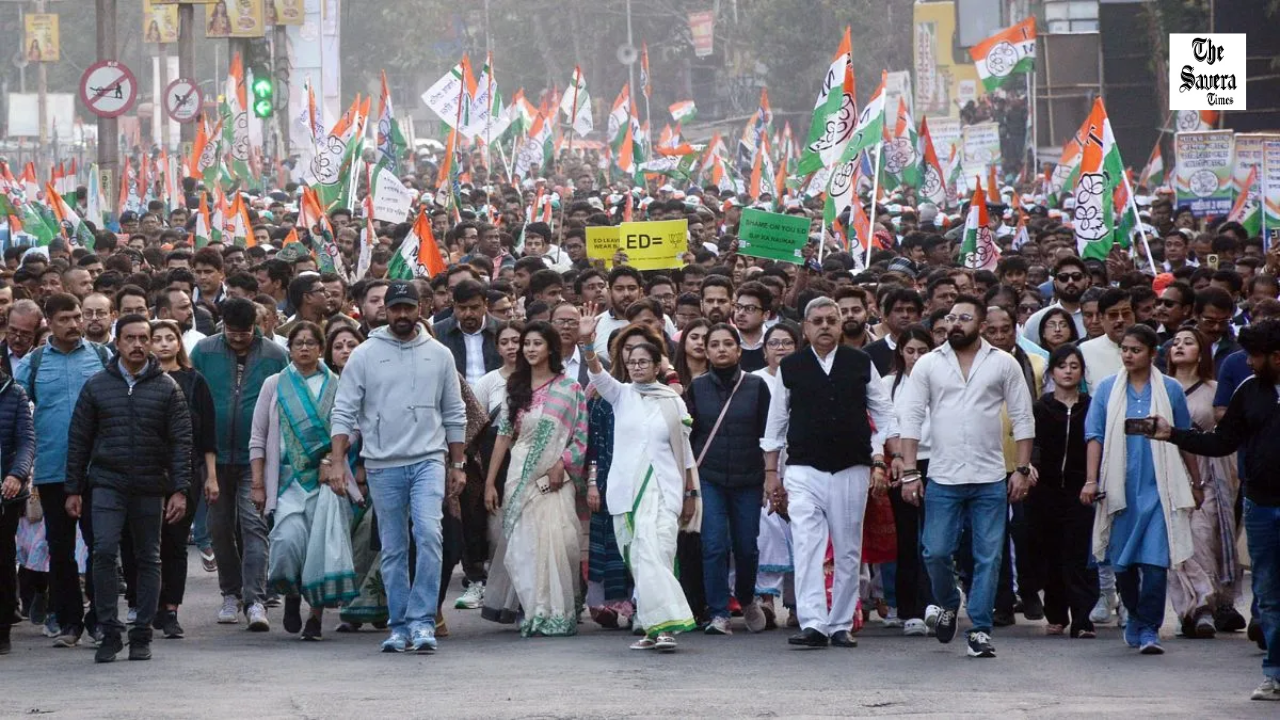
The controversy over the Enforcement Directorate’s (ED) raids on political consultancy group Indian Political Action Committee (I-PAC) and its director’s residence has escalated into a full-blown legal battle, reaching the Supreme Court of India. The ED carried out coordinated searches in Kolkata and Delhi in connection with an alleged money-laundering probe linked to a coal smuggling case, triggering sharp political reactions and legal challenges from the West Bengal government.
The case took a dramatic turn when the West Bengal government filed a caveat in the Supreme Court, seeking that no order be passed without first hearing its views on the matter, signaling an escalation in the face-off between the central agency and the state administration.
The ED alleges that the raids were legally sanctioned under the Prevention of Money Laundering Act (PMLA) and part of a probe into alleged financial irregularities tied to coal pilferage funds. According to ED petitions, West Bengal Chief Minister Mamata Banerjee and her aides obstructed the searches, taking away key documents and digital devices from the I-PAC office and the residence of its co-founder, Pratik Jain. The agency has urged further investigation including a CBI probe into alleged obstruction of justice.
On the other side, political leaders and opposition voices have criticized the ED’s actions as politically motivated, especially with the 2026 West Bengal Assembly elections approaching. Critics argue that the raids target sensitive political data, including campaign strategies and electoral roll-related information, which they allege is unrelated to any scheduled offence under PMLA.
I-PAC itself condemned the raids, calling them an “unsettling precedent” that raises concerns about the role of investigative agencies in the democratic process. The firm emphasized its contributions as a political consultancy across parties and stated its intention to cooperate fully with legal processes while safeguarding its integrity.
Meanwhile, tensions have spilled into protests and parliamentary responses, with senior politicians stressing that federal institutions should uphold democratic norms and not be used for political ends, further fueling debate on federal balance and agency overreach.
As the matter moves to the Supreme Court, legal experts will watch closely how the apex judiciary balances national investigative powers with state rights, electoral integrity, and political neutrality. The court’s eventual ruling could set important precedent on the limits of central agency action and guardrails for future investigations.
Mumbai: Bollywood actor Imran Khan has filed a writ petition in the Bombay High Court seeking a stay...

What if a decision taken in Washington could influence India’s oil bills, export earnings and trade relations with...

Apia: Minister of State (MoS) for External Affairs, Pabitra Margherita, on Saturday interacted with members of the Indian...
At least five workers were killed and six injured after a 15-kilolitre reactor exploded during a hydrogenation process...

New Delhi: Union Minister of State Jitendra Singh has said that India’s space economy — currently valued at...

New Delhi: The Supreme Court-constituted High Powered Enquiry Committee (HPEC) has started inviting complaints and representations from people...
Aries: The day will be auspicious...