Last Updated: October 21, 2026
Last Updated: October 21, 2026





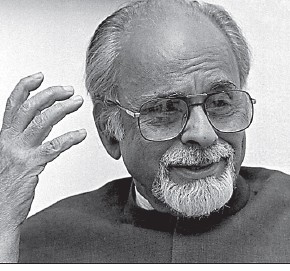
Inder Kumar Gujral, who passed away on November 30, 2012, in Gurugram, India, was a distinguished politician remembered for his brief yet impactful tenure as the 12th Prime Minister of India and for his pioneering foreign policy vision, widely known as the Gujral Doctrine. Born on December 4, 1919, in Jhelum, then part of British India and now in Pakistan, Gujral grew up in a family deeply engaged in the country’s struggle for independence.
His upbringing in such an environment nurtured his understanding of politics, diplomacy, and public service. The Gujral family was prominent, and his younger brother, Satish Gujral, would go on to gain fame as an artist and sculptor, bringing further distinction to the family name.Gujral’s formative years were spent in Lahore, where he attended DAV College, Hailey College of Commerce, and Forman Christian College. During his student years, he developed an early interest in politics, serving as president of the Lahore Students’ Union and general secretary of the Punjab Students’ Federation. These early leadership roles laid the foundation for a lifetime dedicated to public service and diplomacy. In 1964, Gujral entered the Rajya Sabha, the upper house of India’s parliament, as a member of the Congress Party.
Over the next twelve years, he held several key ministerial roles in Prime Minister Indira Gandhi’s government. Known for his principled stand on democratic values, Gujral made headlines in 1975 when he opposed the government’s directive to censor news bulletins during the state of emergency. Choosing integrity over political expediency, he resigned from his post as Minister of Information and Broadcasting and was appointed India’s ambassador to the Soviet Union from 1976 to 1980, a crucial diplomatic assignment during the Cold War era.
The 1980s marked a shift in Gujral’s political journey. He left the Congress Party and joined the Janata Dal, led by V.P. Singh, aligning with a broader movement that challenged the dominant political establishment. In 1989, he was elected to the Lok Sabha, the lower house of parliament, and was appointed Minister of External Affairs in Singh’s government. His tenure in foreign affairs showcased his diplomatic skills and commitment to fostering regional cooperation, traits that would define his legacy. Gujral returned to the Rajya Sabha in 1992 and, when the Janata Dal-led United Front assumed power in 1996, he again took up the mantle of External Affairs Minister.
Gujral’s ascent to the prime ministership came under extraordinary circumstances. In April 1997, H.D. Deve Gowda, the sitting Prime Minister, lost a vote of confidence. The United Front chose Gujral as the consensus leader, and he was sworn in on April 21, 1997, with the Congress party’s support. His tenure lasted less than a year, ending in March 1998 when the Congress withdrew its backing. Despite its brevity, Gujral’s administration left a lasting mark, particularly through the Gujral Doctrine. This policy emphasized India’s proactive and unconditional outreach to neighboring countries, promoting diplomacy without expecting reciprocity. The doctrine sought to build trust and regional stability and became a guiding principle for India’s foreign relations in the years that followed.
Even after stepping down, Gujral remained active in politics. He was re-elected to the Lok Sabha in 1998, continuing to influence policy and mentor younger leaders. His career was distinguished not only by the offices he held but by the integrity and thoughtfulness with which he approached governance and international relations.
Gujral’s legacy extends beyond the realm of politics. His approach to diplomacy—patient, principled, and rooted in the idea of moral responsibility—remains a model for contemporary statesmanship. He demonstrated that leadership is not only about power but about vision and the courage to uphold democratic ideals. His life also reflected a rare blend of personal modesty and professional gravitas, characteristics that earned him respect across party lines and among India’s diplomatic corps.In retrospect, Inder Kumar Gujral’s life is a testament to dedication, principle, and the pursuit of regional harmony. From the streets of Jhelum and Lahore to the halls of the Indian parliament and the global stage, his journey embodies the story of a leader who prioritized values over ambition and diplomacy over confrontation. Today, the Gujral Doctrine continues to shape India’s relations with its neighbors, serving as a reminder of the enduring influence of a statesman whose vision transcended the constraints of time and politics. Gujral’s life and work illustrate that the true measure of leadership lies not in tenure but in the lasting impact of one’s ideas and actions on the nation and the world.
State Bank of India has confirmed that 3,897 customer records containing personal information were found on the dark...

A fire in a hut in Nonapar village of Deoria district claimed three lives, including those of a...

Amit Shah paid tribute to police personnel who died in the line of duty at the National Police...
Reduced water levels at Har Ki Pauri and other Haridwar ghats have inconvenienced pilgrims during the Upper Ganga...

Six people returning from a Dussehra Mela were seriously injured when a car hit them on National Highway...

Two people were killed and ten injured after a passenger bus met with an accident at Gala Pachound...

Aries: The day will be auspicious...