Last Updated: October 21, 2026
Last Updated: October 21, 2026






Informed decision-making remains the key to progress in professional and personal life, as this is always the test of whether a leader is a knowledgeable individual. The more information-savvy such an individual was in terms of the ability to reach out to various sources of information and grasp the significance of the reality that knowledge came in ‘integral packages’, the better was the prospect of his or her being ahead of others in business or in any other avocation.
The advent of Artificial Intelligence (AI) aids a leader in all three areas – accessing information, speeding up the communication of knowledge for sharing it within the ‘need to know’ principle and facilitating the analysis of data from the required angles.
New ‘AI assistants’ are being discovered to simultaneously work in all these segments – they are transforming the business world, the traditional organisational concepts and the interpersonal as well as customer relationships.
Interestingly, the ‘perils’ of AI are being talked of even more than its ‘promises’, and the best approach in all of this is to believe that
AI would have to have a ‘symbiotic relationship with the human mind’.
Information can be defined as ‘an intelligible fact or data that tells you something you did not know’. It thus grades people in terms of who was better informed in a context and was therefore likely to have an edge over others. Information makes a difference between a ‘decision’ and a ‘guess’ and therefore brings one closer to success in an age where knowledge – based decision – making was its primary determinant. There is a whole lot of information available in the public domain for the reason that information is shared no sooner than it is created in print, online in social media or through a voice mail – unless its originator consciously made it confidential.
The information-seeker has to have certain attributes to successfully retrieve it. He or she should work with a certainty that what was looked for was available somewhere, should have the right questions in mind about the what, where and why of the search and should generally have a sense of purpose behind the quest of knowledge so that one did not run into the problem of ‘information overload’.
An analytical mind is the key to success in the age of the knowledge economy, and this should enhance, among other things, the ability to evaluate the reliability of data used for decision-making.
In these times of misinformation and fake news, it is supremely important that one acts only on trustworthy information. Even an AI application rested on the reliability of the data banks for its utility- it was subject to the inevitable ‘input-output’ principle.
AI backed by Large Language Models (LLMs) is transforming knowledge work across industries, basically by making operations more efficient, ensuring faster delivery and assisting in complex problem-solving through data analytics.
Cost reduction and time saving are the natural gains of ‘efficiency’, which is measured by productivity per unit of resource used, including ‘time’ that is now regarded as a new resource. The need for giving a reorientation to the available ‘knowledge workers’ should moderate the threat of lay-offs.
Leveraging AI for automating, for processing diverse data sets to derive value for decision-making and for tasks ranging from document creation to productivity enhancement in specific sectors, are the principal applications that were already yielding results.
Collecting and interpreting data is a truly transformative application of AI, and it is benefiting businesses in a significant way. Domain knowledge of workers is being used for handling data types and identifying digital coworkers, and this is carrying the industry forward.
It is giving a thrust to personalised customer relationships based on the study of data pertaining to the purchasing habits and the lifestyle of potential clients. Customer feedback for improving the products or services is now a well-organised online practice.
Going forward, the route to success is the leveraging of AI co-partners for overcoming the cognitive limitation of humans to process the vast amount of data lying in different structures swiftly enough. This has improved delivery as well as the quality of work.
At present the gains of AI are helping businesses to flourish by strengthening the supply chains, opening up new ways of promotion that enhanced the outreach to customers, increasing the efficiency of business operations, injecting cost effectiveness that had a direct bearing on productivity or profitability and through data analytics facilitating knowledge based decision- making that brought in a crucial competitive advantage.
The cutting-edge advancement of AI is its application for producing knowledge of what possibly could happen in the future-predicting market trends, rate of economic growth and impact of technology on businesses.
Intelligence is information that tells you ‘what lies ahead’.
AI-assisted data analytics combined with ‘machine learning’ can, to an extent, make a reading ‘for the future’ by detecting the ‘modus operandi’ of the enemy, particularly in the area of the latter’s covert operations, where there were chances of the adversary habitually repeating the pattern of an operation.
In the corporate world, the importance of ‘business intelligence’ has multiplied as the application of AI has helped to analyse the vast data from various angles that interest a particular business. Reliability of data is the only caveat here.
In India, digital advances made in recent years have put the country at the forefront of AI adoption and development, with language, voice and video interface growing very fast. India is making significant strides in AI because of strong government initiatives and the availability of a vast AI talent pool.
We are very proud that at present India is the number one country in the world by surpassing...

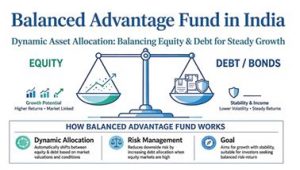
Every investor wants the wealth-creating power of equity and the reassuring stability of debt. Balanced Advantage Funds attempt...
Tourism is a major source of government revenue in our country. There are different types of tourism. Scenic...

Good Evening Viewers! Catch up on the day's biggest stories with The Savera Times Evening Bulletin. Get the...

Congress leaders continued their protest outside the Jaipur Police Commissionerate on Tuesday, demanding the registration of a zero...

On the auspicious occasion of Vijayadashami, Prime Minister Narendra Modi on Tuesday called on the countrymen to unite...

Aries: The day will be auspicious...