Last Updated: October 21, 2026
Last Updated: October 21, 2026






Pakistan is passing through a moment defined by deliberate opacity. The comparison to the political fiction of House of Cards feels apt because power in Pakistan today is exercised not through open confrontation, but through silence, controlled narratives, and the systematic removal of a political figure from public view.
Imran Khan, once the country’s most visible and assertive political leader, has been reduced to an abstraction. For several weeks, he was neither seen nor heard, prompting rising fear among his family and supporters. His sons and sisters publicly stated that they had no proof of his wellbeing and worried that something irreversible might have occurred. This anxiety eased only after authorities at Rawalpindi’s Adiala Jail allowed a brief, supervised meeting between Khan and his sister Uzma Khanum, as reported by The Dawn.
Uzma stated that Khan appeared physically fine and looked healthy. Independent media also supported these observations. However, she said the broader conditions remained unchanged. Khan continues to be held in solitary confinement, cut off from his family, his legal team, and his personal physician. According to Uzma, the restrictions amount to mental pressure and are designed to isolate him beyond the basic requirements of custody.
This limited confirmation of his wellbeing removes the most extreme concerns, but it does little to address the deeper crisis. The state’s handling of Khan signals a method of governance that relies on enforced invisibility. By denying consistent access to a former prime minister, the authorities demonstrate how institutional checks can be overridden, and how public accountability can be reduced to a vague formality. The controlled blackout around Khan’s condition suggests that constitutional guarantees of due process and humane treatment remain vulnerable to political calculations.
The supervised visit appears less like a concession and more like tactical containment. It managed to ease immediate pressure without altering the broader strategy. The state retains complete control over who may see Khan, under what circumstances, and what information may emerge from his confinement. His political relevance is restricted not through public trials or open censure but through silence and separation.
Imran Khan remains alive, but his presence is diminished to the point of political erasure. His voice is muted, his visibility curtailed, and his capacity to influence public life significantly reduced. The uncertainty surrounding his future continues to shape Pakistan’s political climate, raising questions about power, accountability, and the limits of dissent.
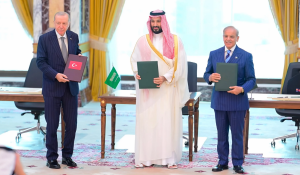
Pakistan, battling insurgencies at home and tensions along multiple borders, is too overstretched to offer meaningful military support...
The World Bank Group has launched its first comprehensive digital strategy, placing artificial intelligence, affordable internet access and...

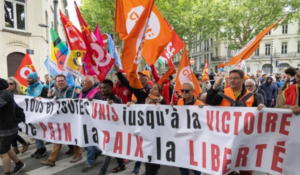
Fifty-four organisations and movements associated with France's October protests, along with their wider networks of supporters and international...
In the aftermath of the Indian agencies cracking down heavily on Indian influencers who were promoting pro-Pakistan content,...

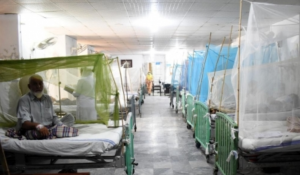
Nearly 100 new cases of dengue have been reported in Pakistan's Khyber Pakhtunkhwa province in the last 24...
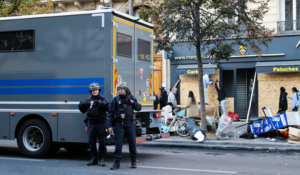
Following violent protests and looting in France, the government has decided to impose new curfews in different areas...
Aries: The day will be auspicious...