Last Updated: October 13, 2026
Last Updated: October 13, 2026





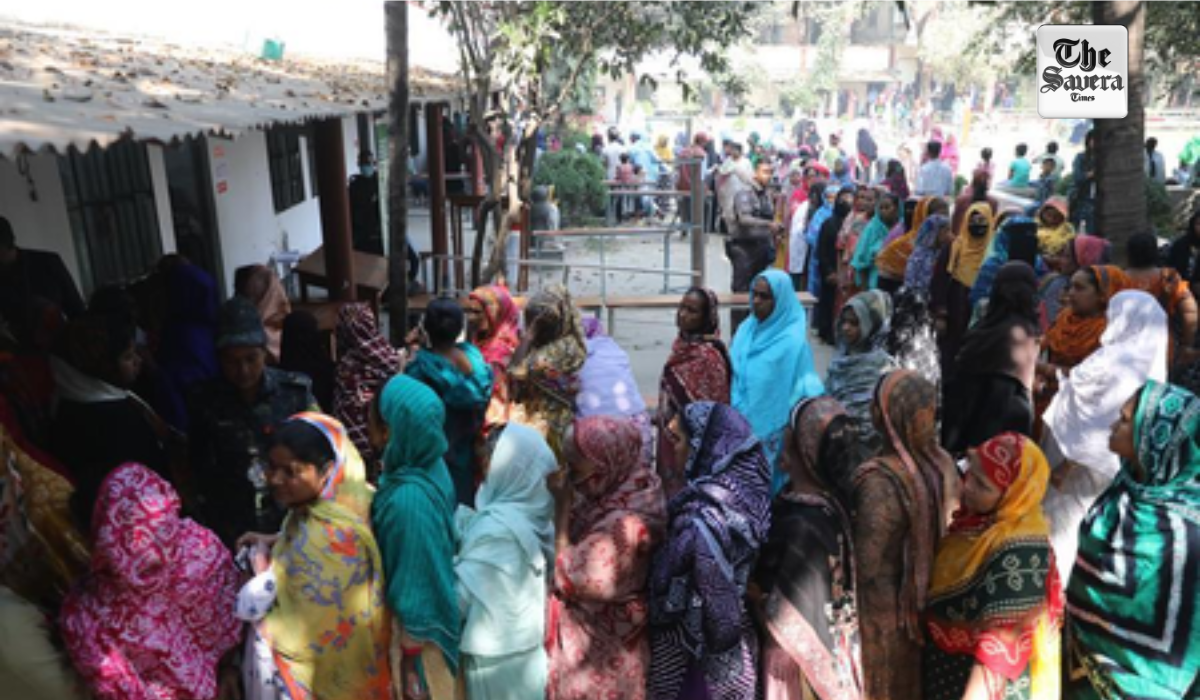
Women in Bangladesh have faced mounting social, cultural and political resistance against them amid rising visibility, reflecting a troubling backlash fuelled by the active resurgence of extremist sentiments. Citing Bangladesh Bureau of Statistics (BBS) and United Nations Population Fund (UNFPA) data. Most incidents remain hidden as abuse is still frequently treated as a “strictly domestic or private matter”, reinforcing the culture of silence that normalises violence. The proliferation of digital technology has, at the same time, given rise to new forms of violence, including online harassment, blackmail, the dissemination of misinformation and the misuse of personal photographs. Among the issues, attacks launched by online activists affiliated with religious groups are a frequent topic of discussions. Consequently, while women’s participation and visibility have, indeed, increased, they have been met with a corresponding surge in attempts at control and resistance that has created the reality of a structural ‘gender backlash.’ The resistance to women’s presence in public spaces is equally visible – whether on city streets, on university campuses or at cultural events – where they continue to face significant challenges. They are often subjected to control through social surveillance, moral policing and, at times, outright violence. Furthermore, the fear of going ‘viral’, perpetuated through social media and a patriarchal mobile journalism landscape, instils deep anxiety in many women. The rise of ‘ bot armies’ has only exacerbated this sense of alarm. In recent years, several incidents of harassment targeting women in public spaces have triggered widespread debate, reflecting that women continue to face safety concerns even in modern and educated environments. This highlights the absence of a “genderneutral” environment in public spaces across Bangladesh. Emphasising the prevalence of online abuse, the report stated that the gender backlash has taken on a more complex dimension in the digital sphere, where a significant number of women experience online violence. There has been a surge in coordinated trolling, doxing or leaking of personal information, image manipulation and character assassination, targeting journalists, politically active women and university students. Research has identified these acts collectively as ‘doxing-style harassment. In many instances, religious and moral narratives are weaponised to portray women as ‘sources of instability’ or ‘agents of moral decay’. Consequently, online violence has evolved from mere personal attacks into a calculated organisational strategy aimed at stifling women’s freedom of expression and their participation in the public sphere
A major train accident occurred on Tuesday in the Multan district of Pakistan's Punjab province. At least four...

Canadian Foreign Minister Anita Anand will arrive in New Delhi on an official visit on Tuesday. During her...
International human rights organization Amnesty International has expressed serious concern over the alleged arbitrary arrests of prominent leaders...

US President Donald Trump says Vladimir Putin may be more willing than Volodymyr Zelenskyy to reach a peace...

A magnitude 6.1 earthquake struck Panama early Tuesday at a depth of 10 kilometres. The tremor followed a...

US President Donald Trump has indicated the possibility of meeting North Korean leader Kim Jong Un during his...

Aries: The day will be auspicious...