Last Updated: October 12, 2026
Last Updated: October 12, 2026





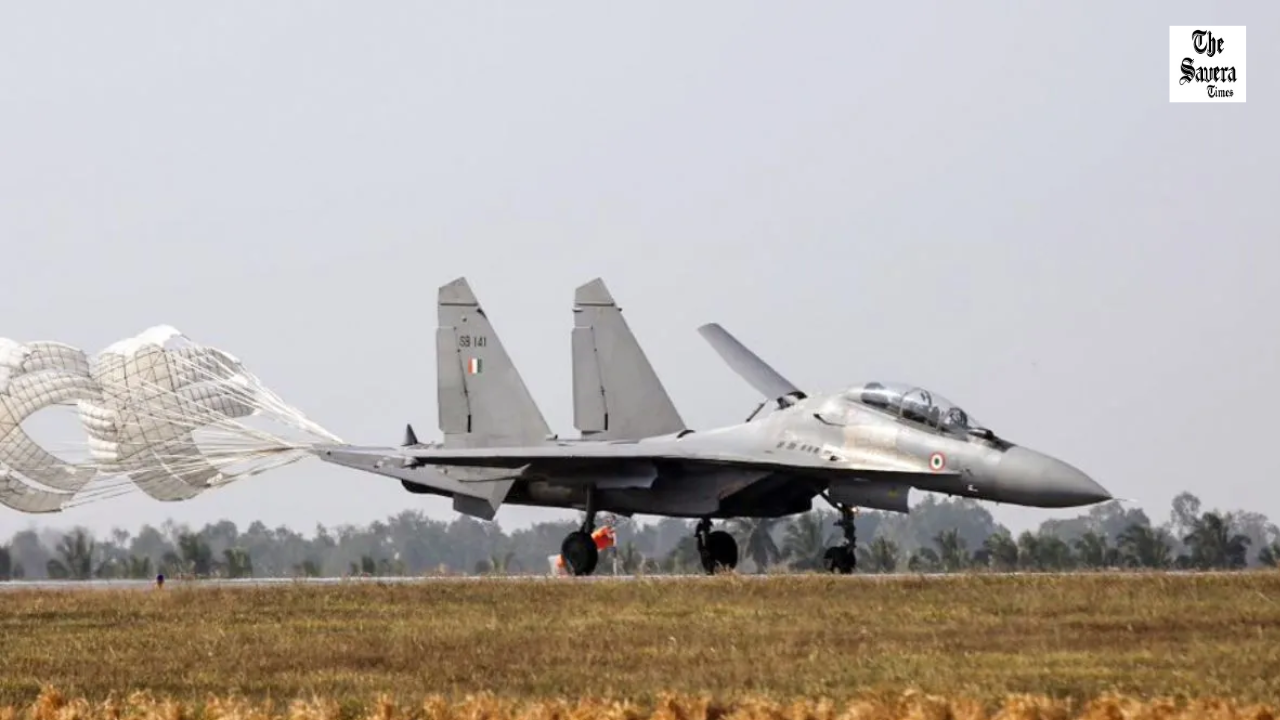
A new Swiss military analysis report titled “Operation Sindoor: The India-Pakistan Air War (7–10 May 2025)” asserts that India maintained operational and escalation dominance over Pakistan during the conflict, ultimately compelling Islamabad to seek a ceasefire, largely due to India’s superior air power and strategic control of the aerial theatre.
The independent study, prepared by the Centre d’Histoire et de Prospective Militaires (CHPM) in Switzerland, concludes that India’s air operations constrained Pakistan’s ability to mount effective counteractions, significantly degrading its air defence capability while preserving its own key systems.
Operation Sindoor was launched by India in May 2025 in response to cross-border terrorism and escalating hostilities. Over several days of intense military engagement, Indian forces especially the Indian Air Force (IAF) executed precision strikes on key Pakistani military targets including radar installations, hangars, command centres and forward bases. These operations were coordinated alongside land and naval actions.
According to Indian military sources, fewer than 50 precision strikes were enough to establish air supremacy and inflict substantial damage on Pakistan’s air defence infrastructure, forcing Islamabad to reconsider further escalation.
The Swiss report underscores several crucial points:
Escalation Dominance: India retained both strategic and tactical control throughout the aerial engagement, preventing Pakistan from gaining momentum.
Air-Defence Resilience: Despite repeated attacks by Pakistan’s drones, missiles, and aircraft waves, Indian air defence systemincluding mobile surface-to-air missile batteries effectively neutralised threats and continued operations.
De-escalation on Indian Terms: The analysis notes that de-escalation occurred without third-party mediation, as Pakistan’s capacity to sustain large-scale offensive operations waned in the face of India’s aerial advantage.
The report says that aircraft losses reported by both sides were exaggerated, reflecting the “fog of modern air warfare,” where electronic warfare and incomplete damage assessments complicate accurate counts.
Earlier commentary from Indian military leaders corroborates the idea that India’s coordinated air and defence operations forced Pakistan to seek a ceasefire. According to statements by senior commanders, the IAF’s precision strikes achieved a level of domination not seen in previous engagements, prompting Islamabad to scale back hostilities within days of the conflict’s peak.
Pakistan’s plea for a halt in military operations was reportedly initiated by its Director General of Military Operations (DGMO) and accepted by India, resulting in a ceasefire agreement on May 10, 2025.
Security analysts say the Swiss report reinforces India’s growing reputation as a dominant air power in the region, underscoring advanced strategic planning, integrated air defence posture, and precision targeting capability.
The findings may influence future defence policy discussions both within India and among regional military observers, as Operation Sindoor is increasingly seen as a case of “escalation dominance” were air superiority effectively shaped conflict termination.
The Pakistan security establishment has issued an urgent directive recalling retired army personnel for re-enlistment to combat severe...
Islamabad: A child was killed and four other people injured as rains continue to wreak havoc in Mardan...

Drug menace in Punjab is not only Punjab’s problem, it is a national problem. Punjab shares 553 kms...

The current phase of the conflict in Pakistan’s Balochistan province resurfaced in the early 21st century, driven by...
Patna: Four minor girls drowned while bathing in a pond in Bankat village under the Paharpur police station...

Kabul: Pakistan’s actions have imposed a heavy human toll on Afghan civilians, with millions of refugees displaced, tens...
Aries: The day will be auspicious...