Last Updated: October 22, 2026
Last Updated: October 22, 2026





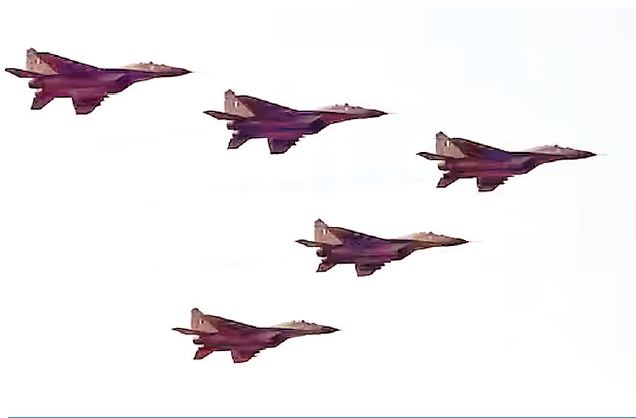
India has concluded its two-decade-long military presence at the Ayni airbase in Tajikistan, marking the end of a strategic chapter in New Delhi’s engagement with Central Asia. The withdrawal followed the lapse of a bilateral agreement between India and Tajikistan in 2022, which had allowed India to develop and jointly operate the base since 2002.
Located near Tajikistan’s capital Dushanbe, the Ayni airbase had served as a crucial logistical and strategic foothold for India. It provided the Indian Air Force (IAF) proximity to Afghanistan and Pakistan, enhancing New Delhi’s regional leverage. The base’s closure underscores a shifting regional balance influenced by the growing roles of Russia and China in Central Asia.
End of the Agreement
According to reports, India vacated the Ayni airbase after Tajikistan decided not to renew the lease that had allowed Indian forces to operate there. Sources told PTI that India pulled out its personnel and military equipment in 2022 after the agreement expired. ThePrint reported that Tajikistan had formally informed India of its decision not to extend the lease, bringing the long-standing cooperation to an end.
The base housed IAF helicopters, a repair and maintenance facility, and logistics infrastructure that supported India’s regional operations. However, the Taliban’s takeover of Afghanistan in 2021 altered the strategic calculus. The fall of Kabul reduced the airbase’s operational value for India, and the agreement for its use was allowed to lapse.
Sources cited by the Economic Times said the decision was also influenced by pressure from Russia and China, both of which opposed the presence of non-regional military forces in Tajikistan. Following India’s withdrawal, Russian troops reportedly assumed control of the base by early 2023. Despite the pullout, Indian officials maintain that New Delhi continues to retain a diplomatic and developmental presence in the wider Central Asian region.
How India Came to Operate the Base
India’s involvement with the Ayni airbase dates back to the early 2000s. In the aftermath of the Soviet Union’s collapse, the airbase—originally built during the Soviet era—had fallen into disrepair. Around 2001–2002, officials in India’s Ministry of External Affairs (MEA) and security establishment proposed reviving the facility as part of a broader strategy to enhance India’s regional reach.
The project was approved under the leadership of then Defence Minister George Fernandes and received strong backing from National Security Adviser Ajit Doval and former Air Chief Marshal BS Dhanoa. The MEA funded the construction and upgrading of the airbase, which was carried out jointly by a private contractor and India’s Border Roads Organisation (BRO).
India reportedly invested close to 100 million dollars in the project. The development included extending the airstrip to 3,200 metres, building aircraft hangars, and establishing refuelling and maintenance infrastructure. The upgraded facility could support a range of aircraft, including fighter jets.
At various times, the IAF is believed to have deployed Su-30MKI fighter aircraft and helicopters to Ayni for limited periods. Reports suggested that around 150 to 200 Indian military personnel, primarily from the Army and Air Force, were stationed there to oversee operations and maintenance.
The Ayni airbase also played an operational role during crises. In 2021, India used the facility to assist in evacuating its nationals and officials from Afghanistan after the Taliban captured Kabul, demonstrating the airbase’s continuing logistical value at the time.
Strategic Importance of Ayni Airbase
India’s initial interest in Tajikistan’s Ayni airbase stemmed from its support for the Northern Alliance, the anti-Taliban resistance led by Ahmad Shah Masood, in the late 1990s and early 2000s. During that period, India operated a military hospital in Farkhor, southern Tajikistan, which treated Northern Alliance fighters and was where Masood was taken after a fatal attack in 2001.
The establishment of the Ayni base gave India a rare military footprint in Central Asia, a region traditionally dominated by Russia and increasingly influenced by China. The base’s geographic position offered India significant strategic advantages. Situated about 20 kilometres from Afghanistan’s Wakhan Corridor, it placed Indian military assets within range of Pakistan’s northern territories, including areas close to Peshawar and Pakistan-occupied Kashmir.
This proximity effectively extended India’s strategic reach. Analysts argued that during a potential conflict, the existence of the Ayni base could have forced Pakistan to divert military resources from its eastern front to the west, thereby reducing pressure on India’s borders.
Beyond its military relevance, Ayni was a symbol of India’s ambition to expand its influence into Central Asia. It aligned with New Delhi’s broader regional strategy of securing access to energy-rich Central Asian states and maintaining a foothold near Afghanistan, especially during the years when India supported reconstruction efforts there.
Changing Geopolitical Dynamics
Tajikistan’s refusal to renew the lease reflected evolving geopolitical realities in the region. Russia, which maintains a significant military presence in Tajikistan through its 201st Motor Rifle Division, is believed to have been uneasy about India’s long-term presence at the base. China, which has expanded its own security and economic influence in Central Asia under the Belt and Road Initiative, reportedly shared similar concerns about external powers operating military facilities in the region.
With India’s withdrawal, Russian forces have reportedly assumed operational control of the Ayni base, reinforcing Moscow’s dominant role in Tajikistan’s defense network. The move also consolidates China’s position as a key external power shaping Central Asian security.
Impact on India’s Regional Role
India’s exit from Ayni reduces its direct military reach in Central Asia and limits its ability to project power westward through Afghanistan. Analysts view the withdrawal as a strategic setback that narrows India’s regional influence at a time when both Russia and China are deepening their presence across the region.
However, experts suggest that India could compensate by strengthening its economic and diplomatic engagements with Central Asian republics. A July analysis by Andrea Stauder, senior analyst at the British International Security Initiative (BISI), noted that while Russia and China remain dominant, India retains opportunities to expand its role through trade, connectivity projects, and regional cooperation.
The closure of the Ayni airbase concludes an important phase in India’s military diplomacy. It underscores how regional power shifts and changing alliances continue to shape New Delhi’s security calculus in one of the world’s most strategically contested regions.
Good Evening Viewers! Get the latest updates from India and around the world with The Savera Times Evening...

Bharatiya Janata Party (BJP) National General Secretary Smriti Zubin Irani launched a scathing attack on Congress MP and...

New Delhi: Cockroach Janata Party (CJP) leaders Saurav Das and Ashutosh Ranka will be released from judicial custody...

According to police, three suspicious young men are seen in CCTV footage. Efforts are underway to identify them....
A video has surfaced of an alleged attempted assault on Jan Suraj Party's Bihar president Manoj Bharti. The...
Two accused have been convicted and sentenced to 10 years of rigorous imprisonment in a 2017 drug trafficking...

Aries: The day will be auspicious...