Last Updated: October 21, 2026
Last Updated: October 21, 2026





Abhishek Vij
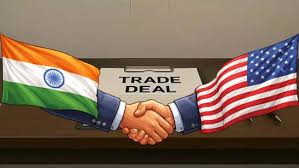
Indian Prime Minister Narendra Modi deserves credit for brokering the India-US trade agreement, as US President Donald Trump praised him highly when the agreement was first announced. A joint statement on the framework has been issued, but the final agreement, including the signing of the agreement, and the joint statement are yet to be presented. The interim trade deal framework statement provides complete details about the trade agreement.
The key takeaway is that the US has a $30 trillion market where Indian exports can be sold, and India, with a population of 1.42 billion, has a large demand market where the US can sell its goods. The statement states that India has pledged to purchase US goods worth $500 billion over the next five years. This includes US energy products, aircraft and aircraft components, precious metals, technology products, and coal. US tariffs on Indian exports will be reduced from the previous 50 percent to 18 percent. India will purchase dry grains, red sorghum for animal feed, nuts, fresh and processed fruits, soybeans, oil, wine, and spirits at zero or very low duty. Increased exports to India will create millions of jobs as new factories will be set up to meet these exports.
The goods we will import include textiles, leather, footwear, plastic and rubber products, organic chemicals, home furnishings, handicrafts, and select machinery. Based on this, we envision India becoming an export-oriented economy rather than an import-dependent one. India’s budget deficit will decrease, and the value of the Indian rupee may appreciate against the dollar. India will reduce import duties and reduce them to zero on generic medicines, gemstones, diamonds, and aircraft components. Regarding agriculture and farmer protection, India has announced that it will protect maize, wheat, soy, poultry, milk, cheese, ethanol fuel, tobacco, some vegetables, and meat and dairy products. It also stated that if there are any difficulties in the transaction, the two countries will work together to find a solution.
Meanwhile, as soon as the communiqué was issued, opposition parties in India launched a rhetoric that the agreement did not protect the interests of Indian farmers and that fruit imports left the Indian market at the mercy of the US. The two countries’ understanding of crude oil is also unclear. The US says India will completely stop purchasing crude oil from Russia, while India maintains that it will buy oil from wherever it can find the cheapest and best oil.
Russia has also stated that India has not given any formal notice of stopping the purchase of Russian oil. The US has threatened to impose further fines if India does not stop oil imports from Russia. India’s response is that what the fines will be, we are going to seek a refund from the US for the already imposed fines. Thus, it is impossible to predict the trade situation in five years. Trade agreements with both the US and the European Union have opened up significant potential for Indian textile exports. Textile producers are expected to reap the rewards. These agreements have raised high hopes for the Indian market, but many difficulties remain to be resolved. One key factor at the moment is the reduction
Bharatiya Janata Party (BJP) National General Secretary Smriti Zubin Irani launched a scathing attack on Congress MP and...
New Delhi: Cockroach Janata Party (CJP) leaders Saurav Das and Ashutosh Ranka will be released from judicial custody...
According to police, three suspicious young men are seen in CCTV footage. Efforts are underway to identify them....
A video has surfaced of an alleged attempted assault on Jan Suraj Party's Bihar president Manoj Bharti. The...
Two accused have been convicted and sentenced to 10 years of rigorous imprisonment in a 2017 drug trafficking...
The Delhi Police on Wednesday sought a three-day extension in the judicial custody of Cockroach Janata Party (CJP)...
Aries: The day will be auspicious...