Last Updated: October 15, 2026
Last Updated: October 15, 2026





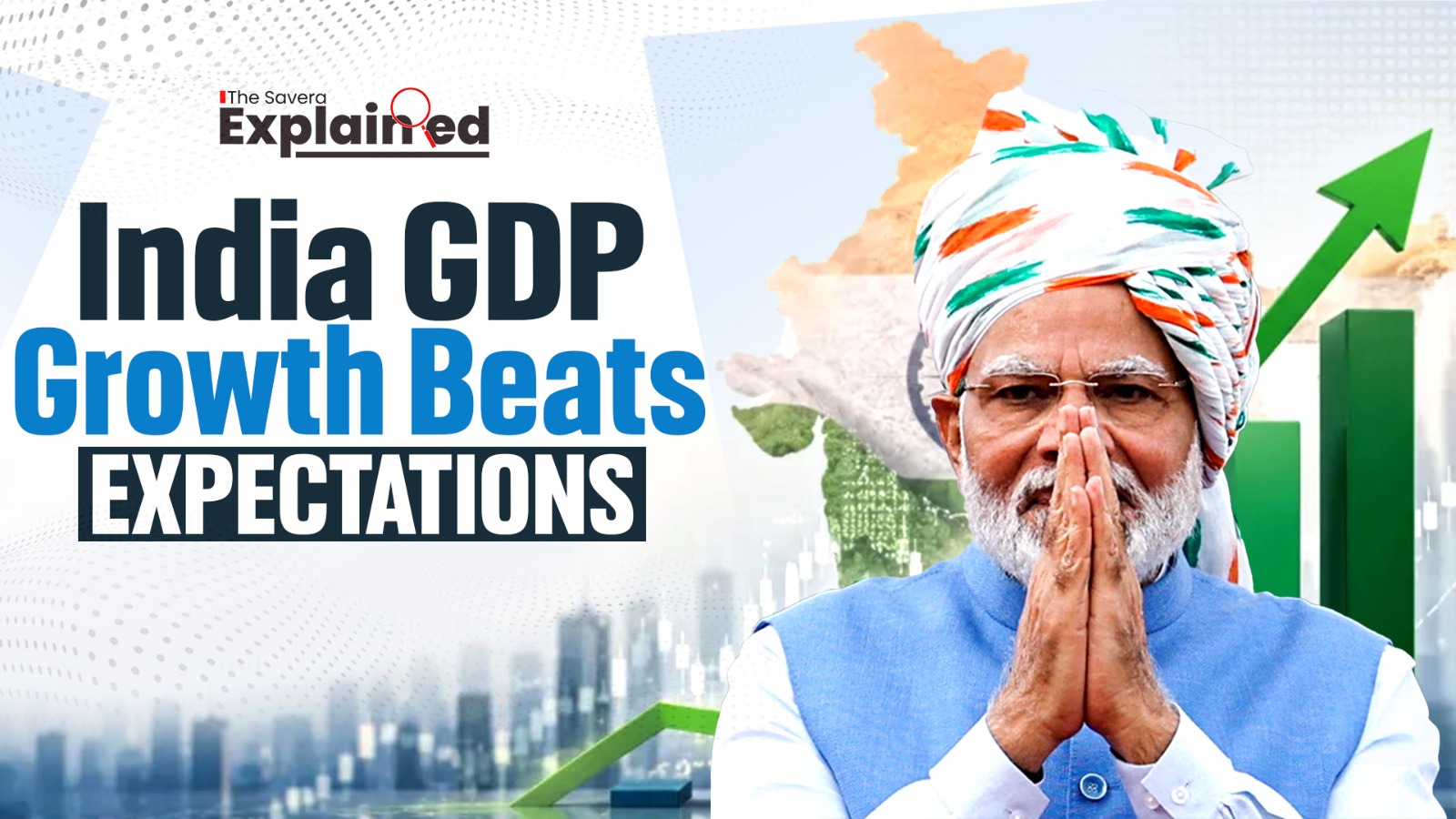
India’s economy has delivered a number that was stronger than expected — but the real story is not just the 7.8 per cent GDP growth. The bigger question is: what kept the economy growing so strongly when India was facing global uncertainty, higher energy prices and geopolitical tensions?
India’s real GDP grew 7.8 per cent in the April-June quarter of FY27. This was higher than the 7 per cent growth projected by the Reserve Bank of India and the roughly 7.1 per cent expected by economists in a Reuters poll. However, growth was lower than the revised 8.6 per cent recorded in the previous quarter.
So, what drove this surprise?
Investment Became a Major Growth Engine
One of the biggest reasons was a sharp improvement in investment.
Gross Fixed Capital Formation, a measure of investment in assets such as machinery, infrastructure and equipment, grew 11.9 per cent in the April-June quarter. That was much stronger than the 5.8 per cent growth recorded a year earlier.
This suggests that the investment cycle is gaining strength. Government infrastructure spending has remained supportive, while private companies are also increasing spending in areas such as data centres, power and metals. SBI Research had already pointed to strong government capital expenditure and rising credit as signs of improving economic activity.
Manufacturing Surprised on the Upside
Manufacturing was another major contributor.
The manufacturing sector grew 9.2 per cent in Q1 FY27. This is important because stronger manufacturing means higher factory output, investment and demand for inputs across the economy.
The performance also came despite concerns about global trade and geopolitical uncertainty.
Services Kept the Economy Moving
India’s services sector continued to be a strong pillar of growth, expanding by around 10 per cent.
Within services, the financial, real estate, information technology and professional services segment grew 12.1 per cent.
This was supported by strong financial activity and credit growth. In other words, the economy was not depending on manufacturing alone. Services provided another major source of momentum.
Consumers Continued to Spend
Domestic consumption also remained resilient.
Private consumption grew 7.1 per cent, showing that households continued to spend despite concerns about the global economy.
This matters because domestic demand gives India a cushion when exports or global markets come under pressure. A large part of India’s growth is driven internally, which makes the economy less dependent on external demand.
Exports Also Added Support
Exports provided another positive surprise.
Exports grew around 12 per cent during the quarter. This is significant because India was dealing with global trade uncertainty and geopolitical tensions.
Strong services exports, along with resilience in merchandise exports, helped support overall economic activity.
Credit Growth Shows Economic Activity Is Broadening
Another important signal is bank credit.
Credit growth remained strong, supporting both businesses and consumers. Stronger lending can help companies finance expansion and can also support spending across sectors.
This is one reason economists are seeing signs that the investment cycle may be becoming broader rather than being driven only by government spending.
India Absorbed the Global Shock
And perhaps the most important part of the story is the external environment.
The quarter came amid geopolitical tensions, including the conflict involving the US and Iran, concerns over energy prices and uncertainty in global trade.
These factors were expected to put pressure on India’s growth. But strong domestic consumption, investment, manufacturing and services helped absorb much of that shock. A broadly supportive monsoon outlook also provided some comfort for rural demand.
But 7.8 Per Cent Does Not Mean All Risks Are Gone
The GDP number is strong, but there are still risks ahead.
Higher crude oil prices can increase India’s import bill and inflation. Continued geopolitical tensions can disrupt energy supplies and global trade. Rural demand will also depend on the monsoon and food prices.
And there is another important point: 7.8 per cent is a better-than-expected number, but it is not an acceleration from the previous quarter, because Q4 FY26 GDP has now been revised to 8.6 per cent.
So, the key takeaway is simple.
India beat GDP expectations because several engines were working together — investment, manufacturing, services, consumption, credit and exports.
The bigger test now is whether this momentum can continue in the coming quarters, especially if global energy prices and geopolitical risks remain high.
Pakistan is heading into its wheat-growing season with a serious water problem. The country is facing a projected...

New Delhi: India’s wholesale price inflation (WPI) came in at 11.39 per cent in September against 9.92 per...
Mumbai: The Indian stock market opened with a decline on Wednesday, but both key indices, Sensex and Nifty,...

Singapore: The Quad grouping officials from India, Japan, Australia and the United States on Tuesday vowed to defend...

Mumbai: Benchmark equity indices rebounded sharply on Tuesday, recovering from the previous session’s losses as investor sentiment improved...

The decision to implement a 0.4% Merchant Discount Rate (MDR) on select UPI payments above ₹2,000 has been...

Aries: The day will be auspicious...