Last Updated: October 15, 2026
Last Updated: October 15, 2026





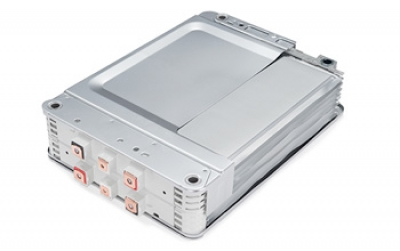
The Central Government is accelerating India’s clean-energy transition by supporting the establishment of 50 GWh Advanced Chemistry Cell (ACC) battery storage capacity under the Production Linked Incentive (PLI) scheme. The initiative aims to promote domestic manufacturing of next-generation battery cells essential for electric mobility, renewable-energy storage, and grid stability. The Ministry of Heavy Industries has already received strong industry participation, reflecting rising confidence in India’s battery-storage market.
REVIEW OF EXISTING ELECTRIC VEHICLE POLICY
The Ministry of Heavy Industries (MHI) is implementing the following schemes to encourage Electric Vehicles in the country :-
Production Linked Incentive (PLI) Scheme for Automobile and Auto Component Industry in India (PLI-Auto): The… pic.twitter.com/iKq4crOUWW
— PIB India (@PIB_India) December 9, 2025
According to government updates, around 10 companies have expressed interest in participating under the ACC PLI programme. Collectively, these firms have indicated potential manufacturing capabilities of approximately 178 GWh over the coming years—far exceeding the initial 50 GWh target set by the Centre. This robust response highlights the expanding demand for battery storage solutions across sectors such as EVs, solar-energy storage, and large-scale grid applications.
The PLI scheme mandates companies to make significant early-stage investments and gradually increase domestic value addition in their products. Beneficiary firms are required to invest a minimum of ₹225 crore per GWh within the first two years and must reach 25% value addition initially, rising to 60% within five years. This framework ensures that India develops a competitive, self-reliant battery-manufacturing ecosystem rather than depending heavily on imports.
The government has already allocated 40 GWh of capacity to four major manufacturers, including a recent 10 GWh award to Reliance New Energy Battery Ltd. Earlier rounds in 2022 had granted 30 GWh to three companies, and the latest allocation pushes the scheme closer to its final 50 GWh target. Projects under the programme are expected to roll out incrementally, helping accelerate India’s transition to clean mobility and renewable-based power systems.
The ACC PLI scheme forms a crucial pillar of India’s long-term sustainability goals. By building competitive domestic capabilities in battery manufacturing, the government aims to reduce import dependence, create high-value jobs, and support the rapid expansion of electric vehicles and renewable-energy integration. With industry participants planning capacities far beyond the scheme’s initial mandate, India is positioned to emerge as a major global hub for advanced battery technologies in the coming decade.
The Centre has rejected Elon Musk’s claim that “certain oligarchs” are blocking Starlink in India, saying all three...

A team of Indian researchers developed a metal free porous material that can perform nearly as well as...
From Gaganyaan and Chandrayaan-4 to Shukrayaan and the Bharatiya Antariksh Station, India is entering a new phase of...

As AI becomes more accessible in Bangladesh, concerns are emerging over digital safety, misinformation, education and the need...

NASA and Boeing have set out a phased plan to return the Starliner spacecraft to service after technical...

The United States and China agreed on more favourable tariff treatment for USD 30 billion of non-sensitive goods...

Aries: The day will be auspicious...