Last Updated: October 21, 2026
Last Updated: October 21, 2026





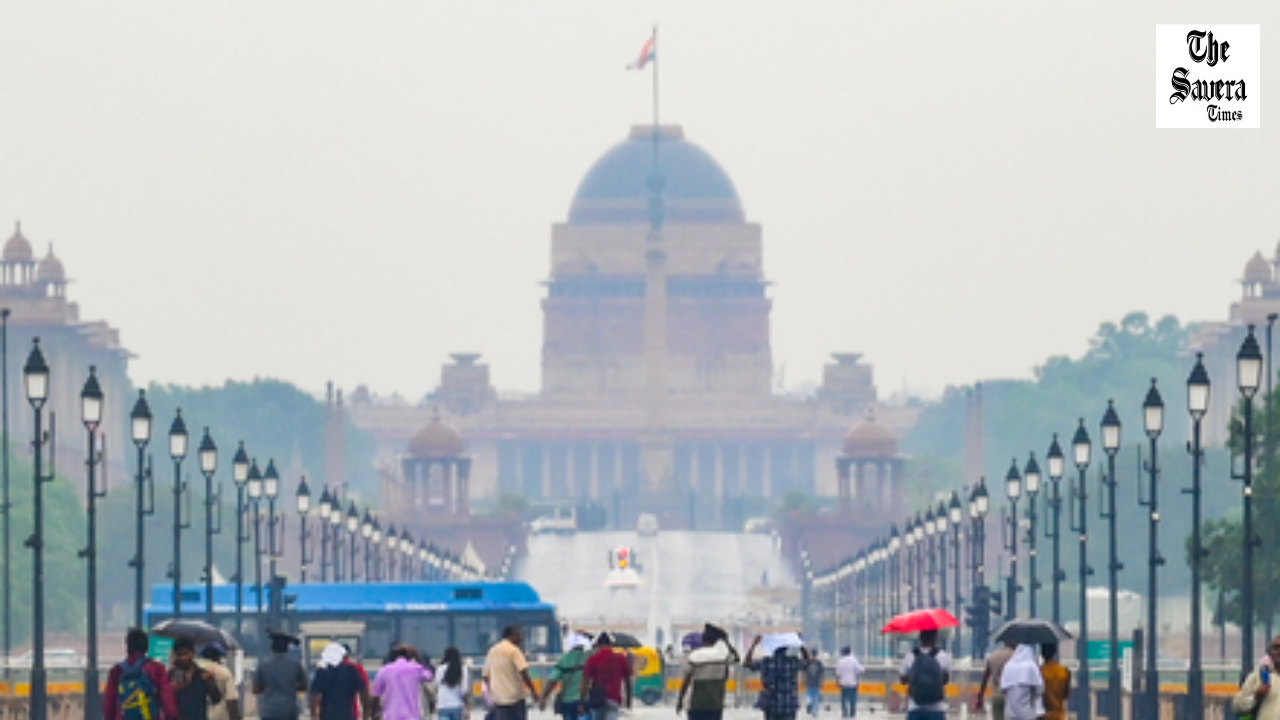
The Central Pollution Control Board launched the Sameer app in 2016 to give citizens realtime access to the National Air Quality Index. Sameer 2.0, released in September 2025 on CPCB’s 51st Foundation Day, brought a cleaner interface, location-based services and improved engagement features. It is a serious piece of public infrastructure. On the recent World Environment Day, the United Nations is asking a deceptively simple question: what signals are we sending back to a planet already in motion? The 2026 theme places climate change at the centre. For India, that conversation cannot begin without the air we breathe. Beyond the dashboard, Sameer carries a grievance redressal channel. A citizen can photograph a burning garbage heap or a smoke-belching truck and file a complaint directly with CPCB. It frames the citizen not as a passive recipient of data, but as an active participant in environmental accountability — a digital expression of Jan Bhagidari. But intent and impact are two different audits. The honest question is not whether Sameer was well designed. It is whether it was designed for what air quality communication in India actually needs to achieve. If the AQI in your city reads 320 — “very poor” — what happens next? The app has done its job and informed you. But information, on its own, rarely changes outcomes at scale. It does not tell your child’s school whether to cancel outdoor sports or trigger a protocol at the nearest primary health centre. It does not prompt a district health officer to issue a public advisory or adjust the care pathway for a tuberculosis patient whose lungs are especially vulnerable to pollution spikes. And for a lung cancer patient, every sustained spike is not a discomfort. It is a clinical event that no Indian care guideline currently accounts for. The number is accurate and it is visible. But without a corresponding system of action, it is largely inert. Monitoring came first, as it should. The harder work — translating data into institutional action — must be the next phase. Internationally, peerreviewed studies of AirForU in the United States, AirRater in Australia and Canada’s air quality alert programme converge on a single finding: information changes behaviour only when it is paired with health-linked messaging, personalised design and active community engagement. India’s own experience makes the gap clear. CPCB’s citizen guidelines for Delhi-National Capital Region mandate that complaints filed through Sameer be redressed within 24 hours. Yet in Hyderabad, 96 such complaints remained unresolved as of January 2025, with CPCB itself acknowledging to the Deccan Chronicle that, outside the NCR, the app simply forwards complaints by email to State Pollution Control Boards. But this chain breaks if no one is reading the inbox. As of May 2026, nearly a decade after launch, Sameer carries a 2.3-star rating on Google Play across roughly 1,700 reviews and more than 100,000 downloads, in a country of 1.4 billion people. Complaints filed and closed without resolution appear repeatedly in recent user reviews. When we consider who bears the heaviest burden of air pollution in India, it is rarely the smartphone-owning urban professional who might download an app like Sameer. The greatest risks are faced by the construction worker labouring outdoors when AQI levels soar above 400, often with little access to protective measures. They are borne by families living in poorly ventilated homes in coal-belt districts, where an ASHA worker may be the only link to the healthcare system. They are also carried by lung cancer patients, for whom every spike in pollution represents a serious clinical threat rather than a temporary inconvenience. For these populations, a better app is not the primary need. What is needed is the translation of air quality information into practical public health action through ASHA training modules, districtlevel health advisories, school safety protocols, tuberculosis programmes, and cancer prevention and care guidelines that account for seasonal fluctuations in pollution exposure. Achieving this does not require new technology. It requires connecting the knowledge we already possess with the health and governance systems that already serve these communities
We are very proud that at present India is the number one country in the world by surpassing...
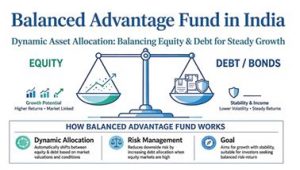
Every investor wants the wealth-creating power of equity and the reassuring stability of debt. Balanced Advantage Funds attempt...
Tourism is a major source of government revenue in our country. There are different types of tourism. Scenic...
Good Evening Viewers! Catch up on the day's biggest stories with The Savera Times Evening Bulletin. Get the...

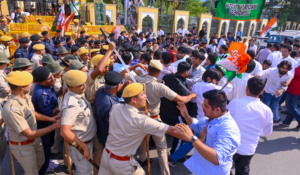
Congress leaders continued their protest outside the Jaipur Police Commissionerate on Tuesday, demanding the registration of a zero...
On the auspicious occasion of Vijayadashami, Prime Minister Narendra Modi on Tuesday called on the countrymen to unite...
Aries: The day will be auspicious...