Last Updated: October 21, 2026
Last Updated: October 21, 2026





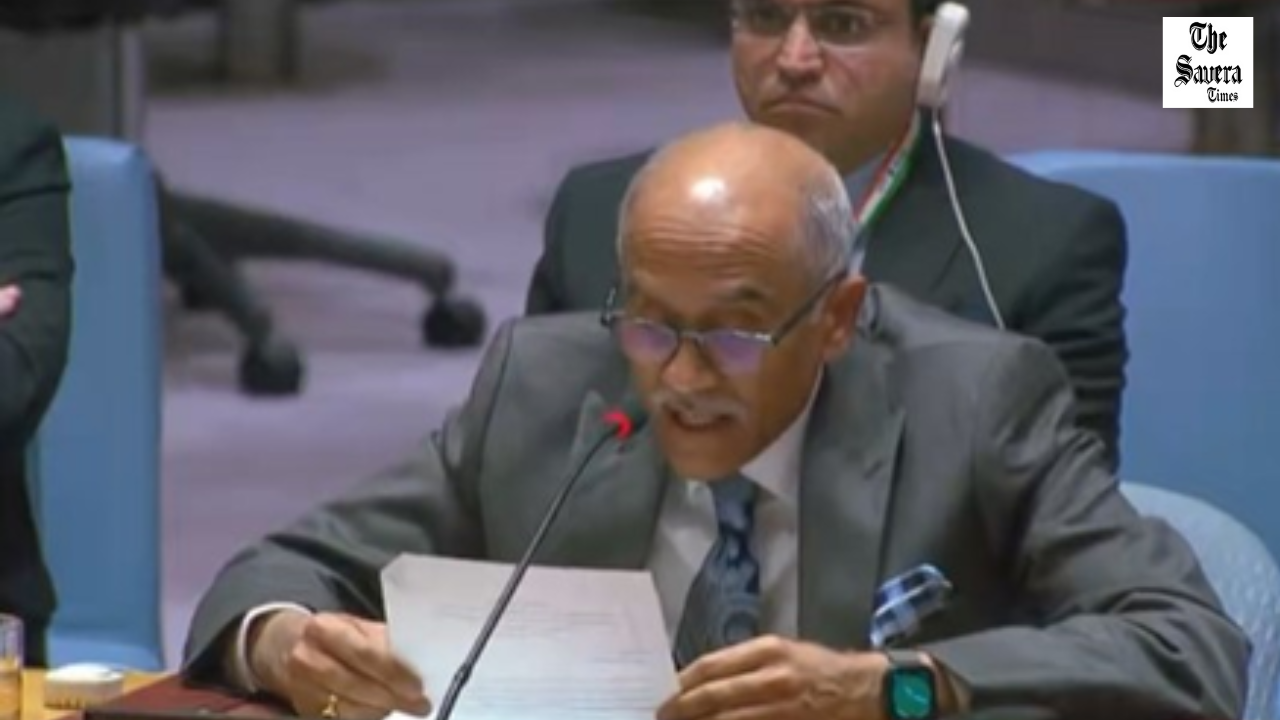
India has strongly criticised Pakistan for carrying out airstrikes in Afghanistan during the holy month of Ramadan, calling the move hypocritical and a violation of international law. The remarks were made at a United Nations Security Council (UNSC) briefing on Afghanistan by India’s Permanent Representative to the UN, Ambassador P. Harish.
India said the attacks contradicted Pakistan’s claims of promoting “Islamic solidarity,” pointing out that the strikes allegedly caused heavy civilian casualties, including women and children.
Harish said it was contradictory for Pakistan to speak about international law and religious solidarity while conducting military operations that harmed innocent civilians during a sacred period for Muslims.
According to reports cited by India at the UNSC, the airstrikes have led to significant civilian casualties in Afghanistan. India noted that around 185 civilians were reported killed by early March, with over half of them being women and children.
India described the strikes as a “flagrant violation of international law, the UN Charter and the principle of state sovereignty.” The statement also highlighted the humanitarian consequences of the attacks, stressing the need to protect civilians during armed conflicts.
Afghan authorities have also alleged that Pakistani strikes hit residential areas and civilian structures, although Pakistan has disputed some of these claims.
Pakistan has defended its military action, stating that the airstrikes targeted militant hideouts and terrorist groups operating from Afghan territory. Islamabad has accused Afghanistan of allowing groups such as the Tehreek-e-Taliban Pakistan (TTP) and other militants to launch cross-border attacks inside Pakistan.
Pakistani officials maintain that the strikes were “intelligence-based operations” aimed at dismantling terrorist infrastructure responsible for deadly attacks within Pakistan.
However, Afghanistan’s Taliban-led government has strongly rejected these claims and described the strikes as a violation of its sovereignty.
The airstrikes are part of a broader escalation in tensions between Pakistan and Afghanistan along their shared border. Cross-border clashes between the two countries have intensified in recent weeks, resulting in casualties on both sides and the displacement of thousands of civilians.
International organisations, including the United Nations, have expressed concern over the growing conflict, warning that continued hostilities could worsen the humanitarian crisis in Afghanistan.
The fighting has also disrupted trade routes and increased the prices of basic goods in the already fragile Afghan economy.
While criticising Pakistan’s military action, India also highlighted the broader issue of terrorism in the region. At the UN briefing, the Indian envoy stressed the need for coordinated global efforts to eliminate terrorist organisations such as ISIS, Al-Qaida, Lashkar-e-Taiba, and Jaish-e-Mohammed.
India emphasised that terrorism remains a major global threat and called on the international community to ensure that groups involved in cross-border terrorism are prevented from operating anywhere.
Experts warn that the growing conflict between Pakistan and Afghanistan could destabilise South Asia if tensions continue to escalate. With ongoing clashes along the border and diplomatic disputes at international forums, the situation remains volatile.
India’s condemnation at the UN reflects rising regional concern over the humanitarian impact of the conflict and the need for diplomatic efforts to prevent further escalation.
Ten people were killed and 44 others injured in a horrific road accident in Pakistan's Punjab province. The...
North Korean leader Kim Jong-un's influential sister, Kim Yo-jong, and a military marshal inspected fortification work along the...

New Delhi: US Secretary of State Marco Rubio has assured India that America’s relations with any country in...

The family of 5-year-old Fabiana Cabello in New York City, USA, is in deep shock after her death....

A Cessna 177A crashed onto Capitol Expressway in San Jose on October 17. Three people on board, including...

Protests in Jakarta, Yogyakarta and Bandung brought students onto the streets over rising costs, forest fires and civil...
Aries: The day will be auspicious...