Last Updated: October 22, 2026
Last Updated: October 22, 2026





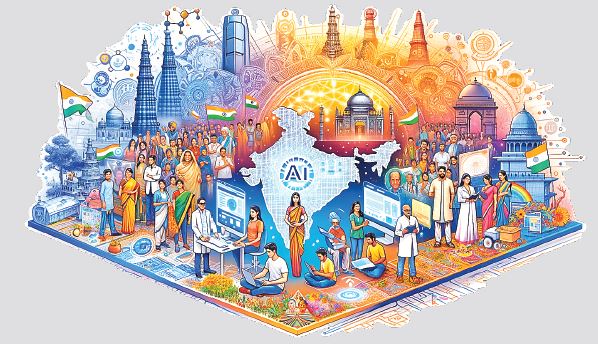
India is preparing to tighten control over artificial intelligence-generated content, with the government set to amend the Information Technology (IT) Rules, 2021, to address concerns about misinformation and deepfakes. The Ministry of Electronics and Information Technology (MeitY) has issued a notification detailing the proposed changes, aimed at ensuring that users can distinguish between authentic and AI-generated content while making social media platforms accountable for spreading manipulated material. The new rules are scheduled to come into effect on November 15, 2025.
What the Amendments Involve
According to the government notification, the amendment to Rule 3(1)(d) of the IT Rules seeks to make the process of removing unlawful online content more transparent, proportionate, and accountable. Under the revised rule, only a senior officer not below the rank of Joint Secretary in the government or an equivalent position will be authorized to order the removal of unlawful information.
In cases where the police are involved, only an officer of the rank of Deputy Inspector General (DIG) or above will have the authority to issue such orders. Each removal order must include a clear explanation of the legal basis and statutory provisions invoked, along with details about the nature of the unlawful act and the specific URLs or identifiers of the content to be taken down.
The amendment replaces the earlier broad reference to “notifications” with a “reasoned intimation,” aligning the process with Section 79(3)(b) of the IT Act, which requires “actual knowledge” before intermediaries act against content. The ministry has also mandated a monthly review of all such takedown orders by an officer not below the rank of Secretary to ensure they remain necessary, lawful, and proportionate.
MeitY said these changes are designed to balance citizens’ constitutional rights with the powers of the State, ensuring accountability in content moderation decisions.
A Global Trend in AI Regulation
India’s move comes as several countries have introduced or are in the process of developing laws to address the spread of AI-generated misinformation, particularly deepfakes — synthetic media that can convincingly depict events or statements that never occurred.
China’s AI Identification Law
China has already implemented one of the most comprehensive frameworks for managing AI-generated content. Its “Measures for Identifying Artificial Intelligence-Generated Synthetic Content,” which came into force in September 2024, establishes a standardized system for identifying text, images, audio, video, and virtual environments produced using AI.
The law was jointly issued by the Cyberspace Administration of China, the Ministry of Industry and Information Technology, the Ministry of Public Security, and the National Radio and Television Administration. It requires service providers to mark AI-generated content explicitly — through visible labels, watermarks, or symbols — and implicitly, using metadata embedded in the files.
Platforms hosting synthetic content must ensure proper labelling, issue warnings when required, and encourage users to mark their own AI-generated material. Beijing has stated that these rules are intended to promote responsible AI use and safeguard public interest, while ensuring that all AI-generated content aligns with China’s “core socialist values.”
UAE’s Ban on AI Use for National Symbols
The United Arab Emirates (UAE) has prohibited the use of AI for generating content related to national symbols or public figures without prior approval. The UAE Media Council warned that spreading misinformation, defamation, or attacks on societal values through AI-generated content violates national media laws.
To enforce this, the Council signed an agreement with global data firm Presight in May to monitor and validate digital content in real time, ensuring compliance with the country’s media standards and cultural values.
Italy’s Deepfake Penalties
Italy has taken a legal approach by introducing criminal penalties for those who create and distribute deepfakes that cause harm. Under the law passed by Prime Minister Giorgia Meloni’s government, offenders can face prison sentences ranging from one to five years for disseminating manipulated AI-generated material.
The law also includes provisions requiring parental consent for children under 14 to access AI technologies. The Agency for Digital Italy and the National Cybersecurity Agency will oversee enforcement. The Italian government has said the objective is to encourage human-centric, transparent, and secure AI use while protecting privacy and innovation.
Denmark’s Proposed Deepfake Copyright Law
Denmark is preparing to introduce a copyright law aimed at addressing the growing misuse of deepfakes. The proposed legislation would grant individuals ownership rights over their digital likeness, including their voice and appearance.
It defines deepfakes as realistic digital imitations of a person and provides for the right to have such content removed if shared without consent. Victims could also claim compensation. The law, however, makes exceptions for parodies and satire, protecting artistic and comedic expression.
Spain’s AI Transparency Bill
Spain’s government has taken steps to introduce strict penalties for companies that fail to label AI-generated content. In March 2025, it approved a bill that classifies such violations as serious offences, punishable with fines of up to 40.6 million dollars (approximately Rs 356.8 crore) or 7 per cent of a company’s global turnover.
The bill also proposes the creation of the Spanish Agency for the Supervision of Artificial Intelligence (AESIA), which will oversee enforcement. In addition, it bans the use of subliminal techniques and manipulative content, particularly targeting vulnerable groups. For example, AI chatbots that encourage gambling or toys that prompt children to perform dangerous activities would fall under this prohibition. The bill is still awaiting approval from Spain’s lower house of Parliament.
The European Union’s Landmark AI Act
The European Union (EU) has taken a comprehensive approach with its AI Act, which includes Article 50 of Regulation (EU) 2024/1689. From August 2026, the EU will require all AI-generated images, videos, voices, and text to be labelled as artificially generated if they could reasonably be mistaken for authentic.
The legislation mandates that deployers of AI systems must disclose manipulation or generation of media, especially when used for public communication or journalistic purposes. Violations can result in heavy fines, ranging from 8.7 million dollars (Rs 76.5 crore) or 1.5 per cent of turnover, to 40.6 million dollars (Rs 356.8 crore) or 7 per cent of global turnover, depending on severity. The AI Act also bans practices such as social scoring, predictive policing, and mass scraping of facial data from public sources.
The United States and Others
In contrast, the United States continues to rely largely on voluntary compliance and a fragmented system of state-level regulations. While there have been discussions about introducing federal legislation, progress remains slow. Some states, including California and Texas, have introduced laws against political or pornographic deepfakes, but there is no unified national framework.
Other nations such as Australia, Brazil, Japan, and Israel are also in the process of drafting their own AI governance frameworks.
India’s Step Toward Accountability
With the latest amendments to the IT Rules, India joins the growing list of countries taking legal steps to address the challenges of AI-generated misinformation. The move reflects a broader global consensus that AI content must be transparent, traceable, and accountable to protect both citizens’ rights and democratic processes.
Once implemented, the rules are expected to strengthen India’s digital governance framework and set clearer boundaries for responsible use of artificial intelligence in the public domain.
Good Evening Viewers! Get the latest updates from India and around the world with The Savera Times Evening...

Bharatiya Janata Party (BJP) National General Secretary Smriti Zubin Irani launched a scathing attack on Congress MP and...
New Delhi: Cockroach Janata Party (CJP) leaders Saurav Das and Ashutosh Ranka will be released from judicial custody...

According to police, three suspicious young men are seen in CCTV footage. Efforts are underway to identify them....

A video has surfaced of an alleged attempted assault on Jan Suraj Party's Bihar president Manoj Bharti. The...

Two accused have been convicted and sentenced to 10 years of rigorous imprisonment in a 2017 drug trafficking...
Aries: The day will be auspicious...