Last Updated: October 21, 2026
Last Updated: October 21, 2026






India is at a crucial juncture in its economic journey, poised to leverage technological advancements to redefine its global standing. The country’s unique combination of policy stability, deepening economic reforms, a robust domestic market, and a favorable demographic dividend has positioned it as the fifth-largest economy in the world, with a GDP of around $4 trillion. Amid global uncertainties, India continues to maintain a growth rate of 7-8 percent, making it the fastest-growing major economy. With strategic investments in infrastructure, manufacturing, and digital innovation, India is well-placed to take a leading role in the emerging Intelligent Age.
The Intelligent Age is defined by transformative technologies such as artificial intelligence (AI), robotics, biotechnology, quantum computing, and advanced digital infrastructure. Just as industrialization reshaped societies in the past, this new era promises to change how people live, work, and interact. Harnessing this transformation effectively requires collective effort and collaboration between governments, private enterprises, and civil society. The World Economic Forum emphasizes the need for public-private partnerships to develop policies, pilot programs, and regulatory frameworks that ensure technology benefits society and the environment.
India has already demonstrated notable progress in digital innovation through its Digital Public Infrastructure (DPI), which serves as a model for the world. The country has a vast talent pool, with a young, educated, and ambitious population capable of driving adoption of new technologies. Programs such as the National Quantum Mission and the India Semiconductor Mission reflect India’s efforts to move beyond low-cost manufacturing toward high-quality production powered by AI, robotics, and data analytics. The traditional Make in India initiative is evolving into “Make Smart in India,” aligning industrial production with the needs of the Intelligent Age.
A strategic advantage for India lies in its massive population, which generates enormous volumes of data daily. Properly harnessed, this data can fuel innovation, enhance productivity, and create economic opportunities. India is also shaping itself as a global leader in data governance and ethics, underpinned by initiatives like the Personal Data Protection Bill and emerging regulatory frameworks. By setting standards for responsible data use, India can contribute to equitable benefit-sharing while fostering innovation.
The country’s thriving startup ecosystem further strengthens its position. With over 130,000 startups and more than 110 unicorns, India is creating a fertile environment for technological innovation and entrepreneurship. Young professionals are adept at adopting and adapting to emerging technologies, making India a hub for digital innovation. This combination of talent, innovation, and policy support allows India to maximize the potential of AI, IoT, 5G, and other frontier technologies.However, India faces challenges in fully leveraging the Intelligent Age. Current research and development (R&D) spending stands at less than 0.7 percent of GDP, significantly below the global average of 1.8 percent. To compete internationally, India must invest more in R&D, particularly in semiconductors, AI, and advanced technologies. Developing a workforce equipped for future jobs will require curriculum reforms emphasizing AI, machine learning, and data science, alongside vocational training programs aligned with industry needs. Partnerships with global technology firms and investment in STEM education are critical to preparing the next generation for the Intelligent Age.
India’s strategic infrastructure and governance reforms also play a key role. Enhancing ease of doing business, investing in next-generation digital infrastructure, and streamlining regulatory processes are essential to attract global companies while fostering homegrown innovation. By focusing on these enablers, India can set a trajectory toward a $10 trillion economy, fulfilling the vision of Viksit Bharat 2047.
Technology in India is being positioned as a bridge rather than a barrier. In recent years, government initiatives have ensured inclusive growth, delivering services and welfare to billions of people. India’s approach during its G20 presidency showcased its commitment to equitable global governance, exemplified by the historic inclusion of the African Union as a permanent member. The country continues to advocate for technology that drives human-centered development while minimizing environmental impact. India’s model demonstrates how technology can advance social and economic progress without compromising sustainability.
Good Evening Viewers! Catch up on the day's biggest stories with The Savera Times Evening Bulletin. Get the...

Congress leaders continued their protest outside the Jaipur Police Commissionerate on Tuesday, demanding the registration of a zero...

On the auspicious occasion of Vijayadashami, Prime Minister Narendra Modi on Tuesday called on the countrymen to unite...

A historic milestone was achieved on Tuesday in the expansion of Chhattisgarh's rail networkA historic milestone was achieved...

Model Shraddha Dubey, one of the main accused in the death of Lucknow businessman Shiv Sharma, has been...

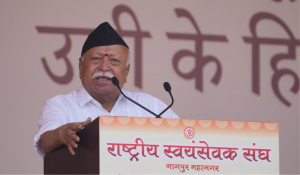
Rashtriya Swayamsevak Sangh (RSS) chief Mohan Bhagwat on Tuesday called for strengthening national unity, social harmony, indigenous practices...
Aries: The day will be auspicious...