Last Updated: October 21, 2026
Last Updated: October 21, 2026





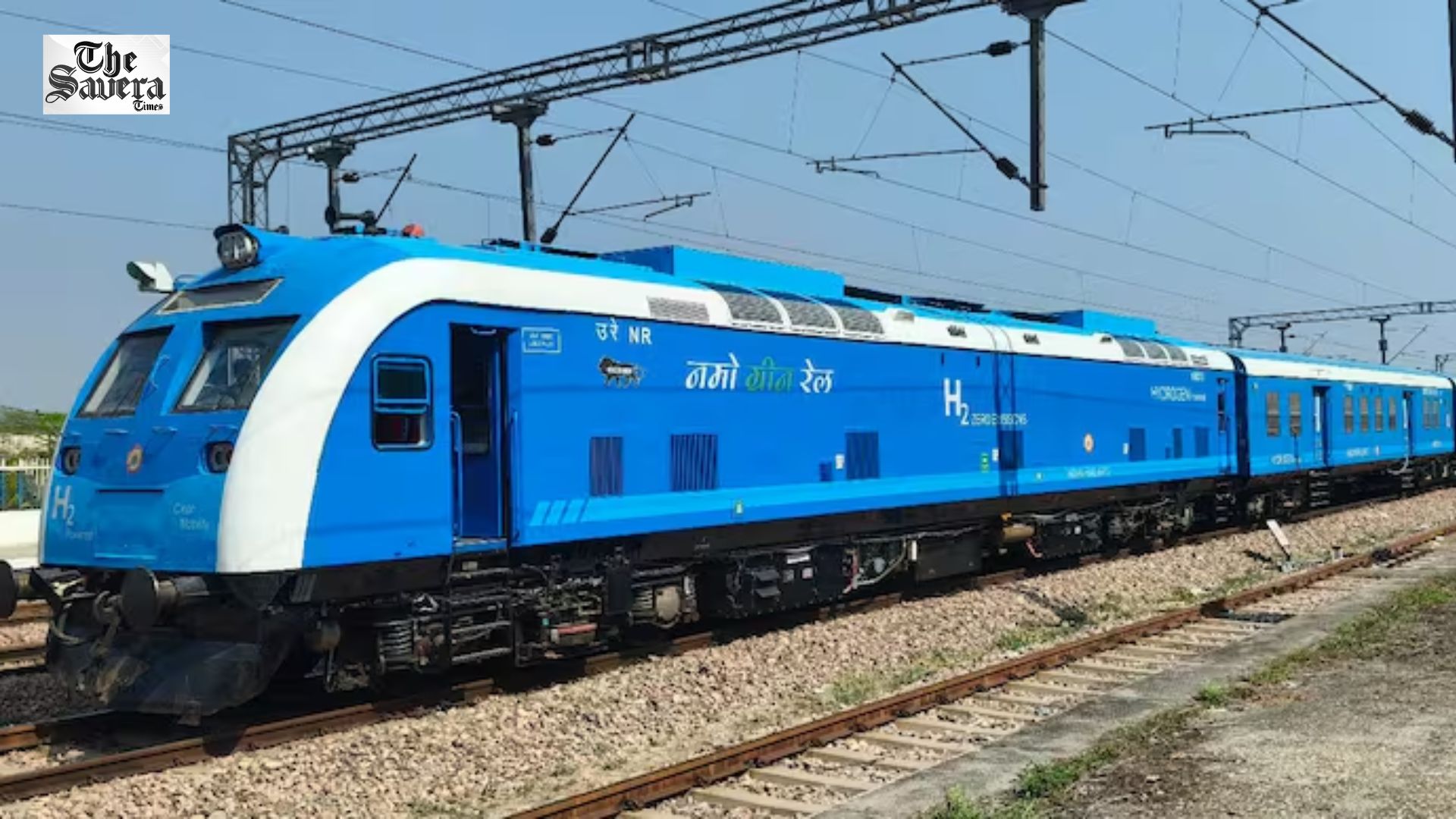
India is set to achieve a major milestone in sustainable rail transport with the launch of its first hydrogen-powered passenger train from Jind in Haryana on July 17. Prime Minister Narendra Modi is expected to flag off the train, which will operate on the 89-km Jind–Sonipat route under Northern Railway. The project is part of Indian Railways’ green mobility initiative aimed at reducing dependence on fossil fuels and promoting clean transportation.
The hydrogen-powered train has successfully completed trial runs and is expected to begin commercial services soon after its inauguration. Built at the Integral Coach Factory (ICF), Chennai, the train uses hydrogen fuel cell technology, which generates electricity by combining hydrogen and oxygen, emitting only water vapour instead of harmful exhaust gases.
Route and fare
The train will operate between Jind and Sonipat, covering nearly 89 kilometres. Railway officials have kept fares affordable, with tickets expected to range from ₹5 to ₹25, making the service accessible to daily commuters. The train is expected to make two round trips daily and will operate six days a week, with one day reserved for maintenance.
Capacity and speed
The train has two driving power cars and eight passenger coaches, offering 682 seats and a total capacity of around 2,600 passengers, including standing commuters. While the train underwent trials at speeds of up to 120 km/h, officials have indicated that its operational speed on the Jind–Sonipat route will be around 75 km/h for safety and operational requirements.
Powered by hydrogen fuel cells
Unlike conventional diesel trains, the new train runs on hydrogen fuel cells, which produce electricity through a chemical reaction between hydrogen and oxygen. The only by-products are water vapour and heat, making it a zero-emission alternative that supports India’s long-term goal of achieving net-zero carbon emissions by 2070.
The train is equipped with advanced hydrogen storage cylinders, leak detection systems, fire detection equipment and other safety mechanisms designed to meet international safety standards.
A milestone for Indian Railways
The hydrogen train represents one of Indian Railways’ biggest investments in clean mobility. It has been developed under the ‘Make in India’ initiative, with indigenous engineering and manufacturing playing a key role in the project. The government also plans to introduce similar hydrogen-powered trains on selected heritage and hill routes in the coming years as part of its green transportation strategy.
Jind to become a hydrogen hub
To support regular operations, a dedicated hydrogen refuelling facility has been developed in Jind, making it one of the country’s first railway hubs equipped for hydrogen-powered train operations. The facility will supply fuel for the train and support future expansion of hydrogen-based rail services.
Why the project matters
The launch of India’s first hydrogen train marks an important step towards cleaner public transport. By replacing diesel-powered operations with hydrogen fuel technology, Indian Railways aims to lower emissions, reduce fuel dependence and modernise the country’s rail network while offering passengers an environmentally friendly travel option.
Good Evening Viewers! Catch up on the day's biggest stories with The Savera Times Evening Bulletin. Get the...

Congress leaders continued their protest outside the Jaipur Police Commissionerate on Tuesday, demanding the registration of a zero...

On the auspicious occasion of Vijayadashami, Prime Minister Narendra Modi on Tuesday called on the countrymen to unite...
A historic milestone was achieved on Tuesday in the expansion of Chhattisgarh's rail networkA historic milestone was achieved...
Model Shraddha Dubey, one of the main accused in the death of Lucknow businessman Shiv Sharma, has been...

Rashtriya Swayamsevak Sangh (RSS) chief Mohan Bhagwat on Tuesday called for strengthening national unity, social harmony, indigenous practices...
Aries: The day will be auspicious...