Last Updated: October 10, 2026
Last Updated: October 10, 2026





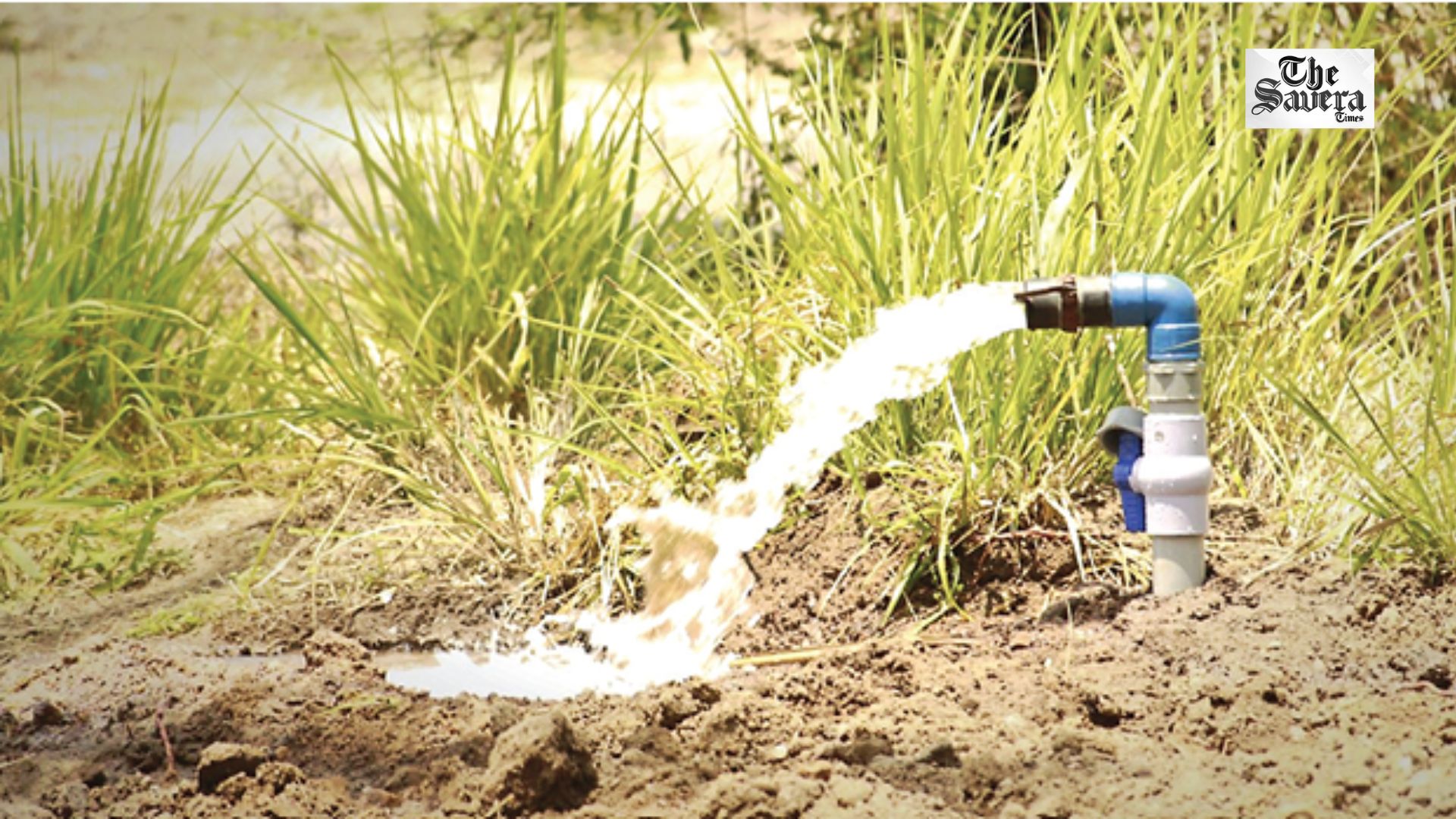
In India’s groundwater levels are declining persistently. This was what revealed in the recent report of the State of Global Water Resources 2025 by the World Meteorological Organization (WMO).
Dipping groundwater levels are widely acknowledged in India, particularly in the north and northwest parts of the country. But the latest global assessment warns that the decline is now persistent over several years, indicating a rupture in the water balance: more groundwater is being extracted than recharged.
Persistent groundwater deficits were observed during 2022–2025 in parts of the Americas, Europe, the Middle East, India, southern Africa and Australia, with over-abstraction identified as an important driver in several regions.
Globally, 34 per cent of groundwater observation stations reported below-normal to muchbelow-normal levels in 2025, compared with 25 per cent in 2024. Around 31 per cent of observation stations reported above-normal to much-above-normal groundwater levels in 2025.
The percentages are derived from regions with available groundwater monitoring data, and indicate a shift towards more widespread belownormal groundwater conditions compared to 2024. Groundwater levels were measured against the 20-year reference period from 2001 to 2020 According to the WMO analysis, groundwater trends indicate cumulative depletion and a multiyear drying pattern.
The State of Global Water Resources report has now been published for five years, giving comparable data on key parameters across the water cycle and allowing longer-term trends to emerge. Rivers across the globe in 2025 had one of the driest years in more than three decades.
It shows a continuation of the long-term decline in Earth’s freshwater storage and in glacier retreat — trends with serious implications for people and economies in the future. Northern India also reported below-normal terrestrial water storage in 2025, as in many other major regions. Global terrestrial water storage has shown a declining trend since 2014–2016 — a persistent, decade-long signal.
For the fourth consecutive year, every major glaciated region on Earth lost ice mass. Groundwater tells a similar story: nearly two-thirds of monitored wells worldwide showed conditions outside the historical norm in 2025, and the balance shifted further toward deficit compared with 2024, not toward recovery. (Courtesy: DTE)
A couple of days back in my write up, I advocated coordinated response to subdue the drug menace,...

Pakistan using artillery and air power against people of its own country in Balochistan and Khyber Pakhtunkhwa provinces...

India-US ties for much of the past quarter-century were anchored in the belief that a stronger India served...

India is the world’s largest democracy and the sanctity of its electoral process is a matter of national...

For thousands of Indian tech workers in the United States, a job offer is only the beginning of...

Mumbai: Mumbai Police’s Crime Branch Unit-12 has busted a racket involved in the illegal sale of call detail...

Aries: The day will be auspicious...