


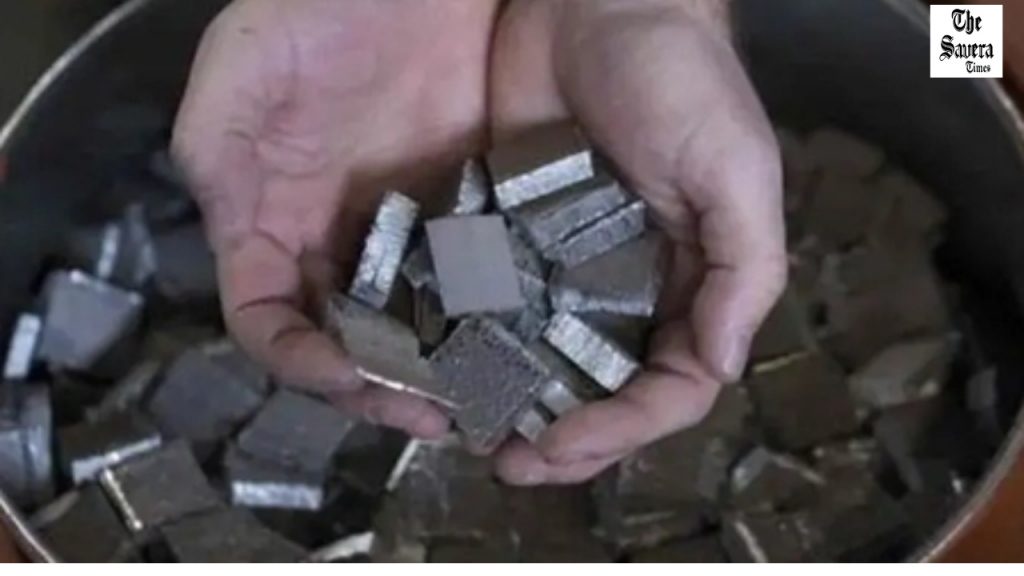
New Delhi, March 4, 2026 — India and Japan are engaged in discussions to jointly explore and develop rare earth deposits discovered in the western Indian state of Rajasthan, in a strategic move aimed at reducing dependence on China for critical minerals used in advanced technologies.
The talks come after the Government of India recently reported the identification of three major hard rock rare earth deposits in Rajasthan and neighbouring Gujarat, estimated to contain about 1.29 million metric tons of rare earth oxides valuable minerals essential for high-tech industries and national security applications.
Under preliminary discussions, Tokyo is expected to play a key role by providing advanced extraction technology and funding support in exchange for a stable supply of rare earth materials, marking a significant step in bilateral cooperation between the two democracies.
Background: What Are Rare Earths and Why They Matter
Rare earth elements (REEs) are a group of 17 chemical elements that are crucial components in the manufacturing of permanent magnets, which are widely used in electric vehicle motors, wind turbines, fighter jets, drones, smartphones and other high-end electronics.
Despite the name, rare earths are not necessarily scarce in the Earth’s crust, but they are difficult and costly to extract and process. China currently dominates the global supply chain for rare earths, controlling a significant portion of the mining, refining and export of these strategic minerals.
The new India-Japan discussions reflect a shared desire to diversify the supply of critical minerals and reduce reliance on a single dominant source addressing economic security concerns amid geopolitical tensions linked to China’s export controls and dual-use item restrictions.
Details of the Strategic Talks
According to sources familiar with the matter, although the discussions are in early stages and not yet public, they build on a preliminary critical mineral’s agreement signed by India and Japan last year. Under this pact, both sides have expressed interest in deepening cooperation on rare earth exploration and development.
Tokyo is reportedly considering sending expert teams to Rajasthan to assess the deposits and provide technical guidance — particularly in the extraction and processing of hard rock rare earths, which require specialized technology that India currently lacks at scale.
In return, Japan is expected to secure a stable offtake (supply) arrangement, granting its industries access to a reliable stream of rare earth oxides for manufacturing purposes. This could boost Japan’s supply chain resilience while offering India a strategic partner in developing its mineral resources.
Strategic Implications for India and Japan
The collaboration could have far-reaching economic and technological implications, particularly as both countries compete to strengthen their positions in industries dependent on critical minerals. For India, the partnership would help accelerate its ambitions to build domestic rare earth extraction and processing capabilities, currently constrained by technological gaps.
For Japan, diversifying away from Chinese sources especially after China’s recent export restrictions on dual-use minerals to Japanese firms — is a strategic priority aimed at safeguarding its industrial base and defence sector.
Beyond rare earths, sources indicate that Japan and India may explore broader collaboration on other critical minerals, such as lithium, copper and cobalt, including potential joint projects in regions like Africa. Such cooperation would further strengthen mineral supply chain security for both nations.
Next Steps and Future Prospects
Officials have not yet disclosed a timeline for expert visits, formal agreements, or implementation plans. Both governments are expected to continue consultations and technical evaluations before moving toward concrete joint development projects or partnerships with private sector entities.
As talks progress, stakeholders in industry and government will closely monitor outcomes, as this India-Japan initiative could shape future strategies for securing critical minerals and fostering industrial competitiveness in the region.