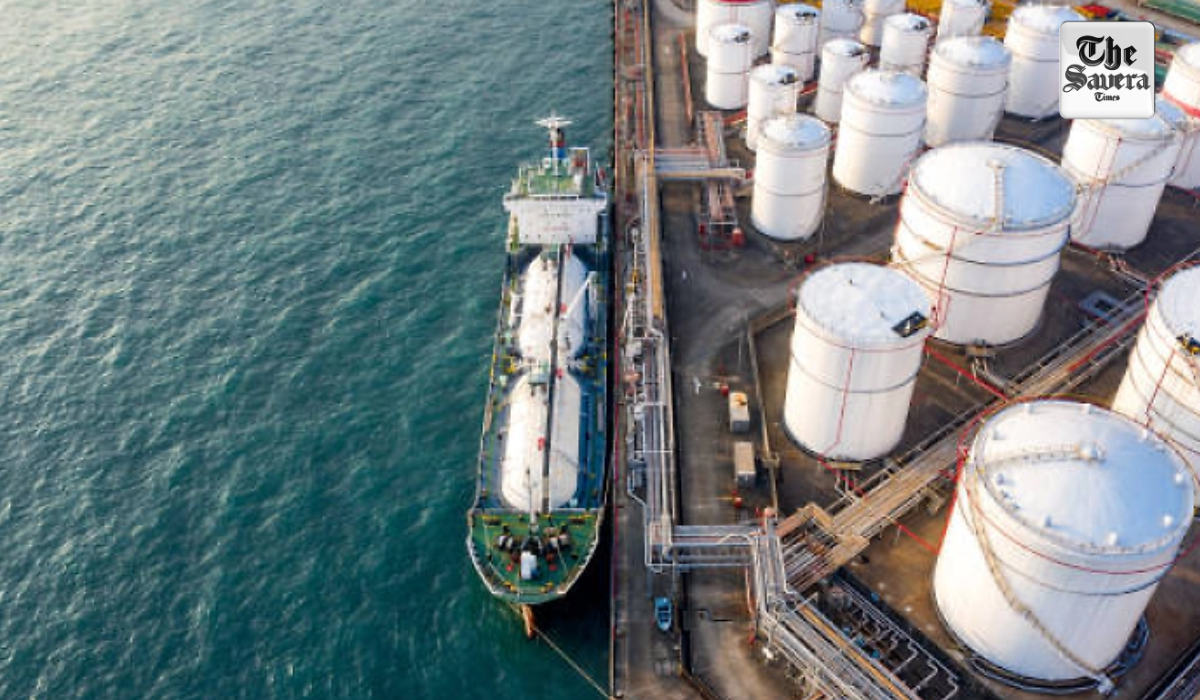
India currently has around 100 million barrels of crude oil stored in tanks, underground reserves, and ships at sea.
According to energy analytics firm Kpler, this stock can meet India’s needs for about 40 to 45 days if oil supplies through the Strait of Hormuz are stopped.
Why the Strait of Hormuz Is Important
India imports about 88% of its crude oil from other countries.
-
More than half of this oil comes from the Middle East.
-
Around 2.5 million barrels per day pass through the Strait of Hormuz.
-
India’s total oil imports are just over 5 million barrels per day.
The Strait of Hormuz is a narrow but very important sea route. Nearly:
-
One-third of the world’s seaborne crude oil
-
20% of global LNG (liquefied natural gas)
passes through it.
What Happens If Supplies Stop?
Sumit Ritolia from Kpler said that if Middle Eastern oil supply suddenly stops:
-
There will be logistical and price problems at first
-
But there will not be an immediate shortage
This is because:
-
Oil companies already keep some stock.
-
Ships that are already carrying oil will still arrive.
However, if the disruption continues for a long time:
-
Oil will become more expensive.
-
Shipping costs will rise.
-
India will have to buy oil from farther countries, increasing transport time and cost.
Where India Stores Its Oil
India has special emergency oil reserves called Strategic Petroleum Reserves (SPR). These are located at:
-
Mangalore
-
Padur
-
Visakhapatnam
Apart from these, oil companies also keep commercial stocks.
These reserves are meant to handle temporary problems, not long-term supply cuts.
India also has stocks of refined fuels like petrol and diesel, which can slightly extend supply coverage beyond 45 days.
Oil Prices Are Already Rising
The conflict has already pushed oil prices higher.
-
Brent crude price has crossed $80 per barrel.
-
Prices have risen about 10% since tensions with Iran increased.
Higher oil prices directly increase India’s import bill.
-
India spent $137 billion on crude oil imports in FY25.
-
It already spent $100.4 billion between April 2025 and January 2026.
What Caused the Tension?
Recently, the United States and Israel carried out military strikes in Iran.
Iran responded by attacking Israel and countries that host US forces.
Media reports say that shipping through the Strait of Hormuz has been affected because of this conflict.
What About Gas Supplies?
India also imports liquefied natural gas (LNG) from Qatar, and these shipments also pass through the Strait of Hormuz. So gas supplies may also face risk if the conflict continues.
What Can India Do?
If the Strait remains closed for a long time, India can:
-
Buy more oil from West Africa
-
Import from Latin America
-
Increase purchases from the United States
-
Take more oil from Russia
Some Russian oil cargoes already near Asia can be quickly redirected to India if needed.
The government may also:
-
Reduce exports of petrol and diesel
-
Keep more fuel for domestic use
India exported 23.7 million tonnes of petroleum products in 2024–25.
The Real Concern Right Now
Experts say a long-term closure of the Strait of Hormuz is unlikely but would have a big impact if it happens.
For now:
-
The main problem is rising oil prices
-
India’s import bill may increase
-
But there is no immediate shortage of oil in the country