Last Updated: October 11, 2026
Last Updated: October 11, 2026






India’s passenger vehicle (PV) and tractor sectors have witnessed robust growth during the financial year 2025-26 (FY26), driven by strong demand, improved rural sentiment, and supportive government policies. Industry data indicates that both segments benefited from favourable economic conditions, including GST rate cuts, better financing availability, and rising consumer confidence.
Passenger vehicle sales reached record levels, supported by increasing demand for SUVs, new model launches, and improved affordability. The sector showed resilience despite global uncertainties, reflecting strong domestic consumption patterns.
Several factors contributed to the strong performance of the auto sector in FY26. One of the major drivers was the reduction in GST rates, which made vehicles more affordable and boosted consumer demand. Additionally, favourable rural conditions, including good monsoon and higher farm incomes, played a crucial role in supporting tractor sales.
The tractor segment, in particular, saw significant growth due to increased mechanisation in agriculture and improved cash flow among farmers. Reports suggest that tractor sales surged sharply, supported by strong rural demand and easy financing options.
Moreover, replacement demand and a shift towards personal mobility after recent economic disruptions also contributed to higher sales across segments.
The tractor industry emerged as one of the key growth drivers in FY26. Strong agricultural output, favourable monsoon conditions, and government support measures helped boost rural incomes, leading to increased demand for farm equipment.
Industry estimates indicate that tractor sales recorded double-digit growth during the fiscal year, with domestic volumes reaching record levels. The trend of rural entrepreneurship and increased mechanisation further strengthened demand in this segment.
While FY26 witnessed strong expansion, industry experts expect growth to moderate in FY27 due to a high base effect and normalisation of demand. Reports suggest that passenger vehicle growth may slow down to around 4–6 per cent in FY27, compared to the higher growth seen in FY26.
Similarly, tractor sales are also expected to witness slower growth as the market stabilises after a strong performance. Factors such as potential weather uncertainties, global economic challenges, and stabilising demand are likely to influence growth trends.
Despite a positive outlook, the sector faces several challenges going forward. Global geopolitical tensions, rising input costs, and fuel price volatility could impact demand and production costs. Additionally, inventory levels and saturation in certain segments may lead to slower growth.
Experts also point out that the rapid growth seen in FY26 was partly driven by pent-up demand and policy support, which may not sustain at the same pace in the coming year.
Despite the expected moderation in FY27, the long-term outlook for India’s automobile sector remains positive. Structural factors such as rising income levels, increasing urbanisation, and growing preference for personal mobility are expected to support demand.
The shift towards electric vehicles, hybrid technologies, and premium segments is also likely to drive future growth.
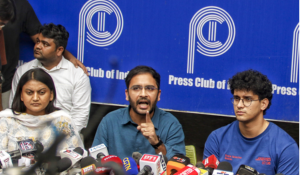
New Delhi: Hours after being released by a Delhi court, Cockroach Janta Party (CJP) founder Abhijeet Dipke on...

New Delhi: The Cockroach Janta Party (CJP) on Sunday alleged that the government was “scared” and therefore turning...
Mumbai: Celebrity Chef Ranveer Brar, who is receiving a lot of good response to his quiz show ‘Yess...

Indian Railways has announced 3,548 graduate-level vacancies for jobs under the Non-Technical Popular Categories (NTPC–Graduate), which provide opportunities...
Prime Minister Narendra Modi on Sunday inaugurated the Poonamallee-Vadapalani stretch of Phase II of the Chennai Metro Rail...

Mumbai Police have filed an FIR against actor Imran Khan and others in connection with the August Kranti...