Last Updated: October 13, 2026
Last Updated: October 13, 2026





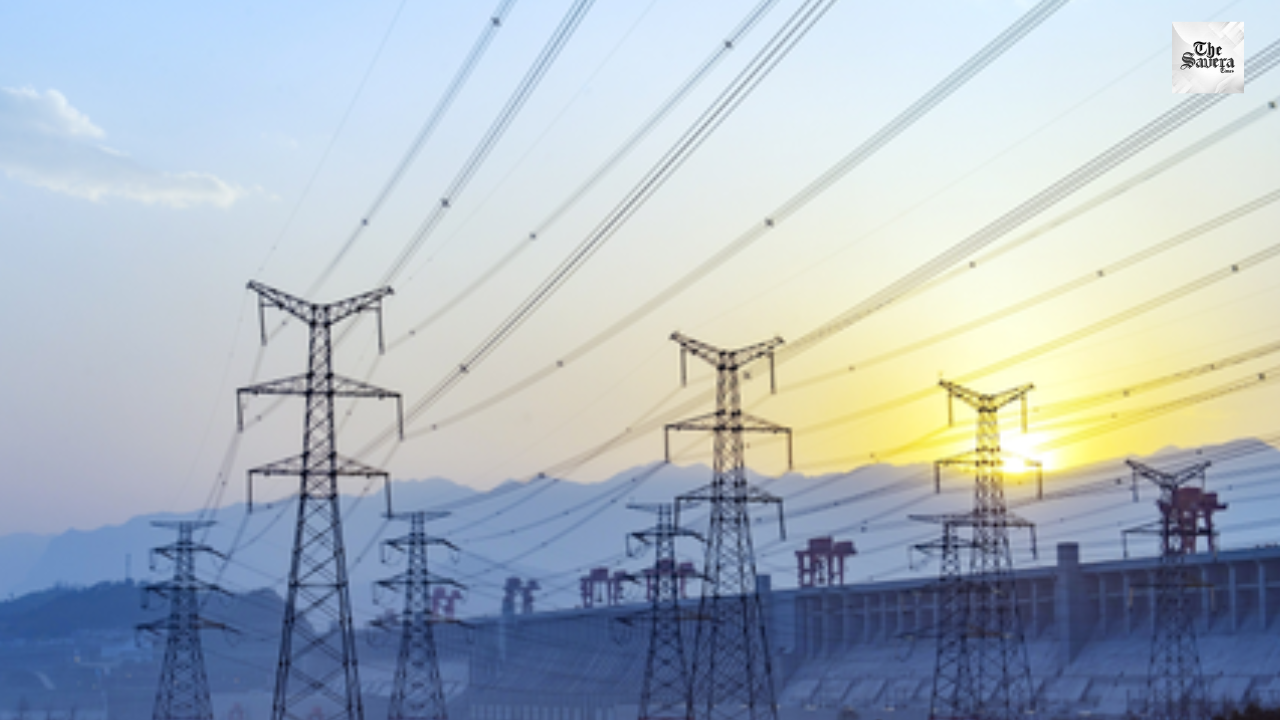
India has achieved a major milestone in its energy sector, with the country’s total installed power generation capacity reaching around 524 gigawatts (GW), making it effectively power-sufficient, according to government sources.
The government highlighted that India’s installed power capacity has witnessed rapid expansion in recent years, crossing the 520 GW mark by early 2026 and now touching approximately 524 GW. This growth has been driven by a mix of conventional and renewable energy sources.
Officials said that the country added a record over 52 GW of capacity during the current financial year alone, marking the highest-ever annual increase in India’s power sector.
This expansion has significantly strengthened the country’s ability to meet rising electricity demand across states.
With this increase in capacity, the government stated that India has effectively achieved power sufficiency, with the gap between demand and supply narrowing to negligible levels.
Recent data shows that the energy shortage has dropped to as low as 0.03% of total requirement, indicating that the country is now largely able to meet its electricity needs.
Officials emphasised that improved planning, better grid management, and consistent capacity additions have played a crucial role in achieving this milestone.
A significant portion of the new capacity has come from renewable energy sources such as solar and wind.
Out of the total installed capacity, more than half now comes from non-fossil fuel sources, reflecting India’s strong push towards clean energy.
Renewable energy alone accounts for over 260 GW, with solar power emerging as the largest contributor, followed by wind energy.
This shift is in line with India’s commitment to achieving 500 GW of non-fossil fuel capacity by 2030 and progressing towards net-zero emissions by 2070.
India’s electricity demand has been rising steadily due to economic growth, urbanisation, and increasing use of electrical appliances.
The government expects peak power demand to reach around 270 GW during the summer months, but officials remain confident that the current capacity is sufficient to meet these requirements.
Coal-based power plants, along with renewable sources and improved storage solutions, are expected to ensure uninterrupted supply even during peak demand periods.
Apart from capacity addition, the government has also focused on improving transmission infrastructure, reducing losses, and enhancing efficiency through schemes like smart metering and distribution reforms.
These measures have helped ensure that the increased generation capacity translates into reliable power supply for consumers.
Looking ahead, India aims to further strengthen its power sector by expanding renewable energy capacity, investing in battery storage, and modernising the grid.
The government believes that sustained growth in clean energy, combined with stable conventional power sources, will not only maintain power sufficiency but also support long-term economic development.
Good Evening Viewers! Stay updated with The Savera Times Evening Bulletin for the latest news from Punjab, India...

eader of the Opposition in the Lok Sabha, Rahul Gandhi and 10 other INDIA bloc leaders have moved...

Amidst protests in central Delhi, the Delhi Metro Rail Corporation (DMRC) announced the reopening of entry and exit...

The Delhi Police has registered an FIR regarding the alleged disturbance at the Bangla Sahib Gurdwara in...

The Delhi Police on Monday removed Jantar Mantar from the list of officially designated protest sites. The police...

The Supreme Court on Monday clarified that it has not passed any judgment on the Election Commission's (ECI)...

Aries: The day will be auspicious...