Last Updated: October 21, 2026
Last Updated: October 21, 2026





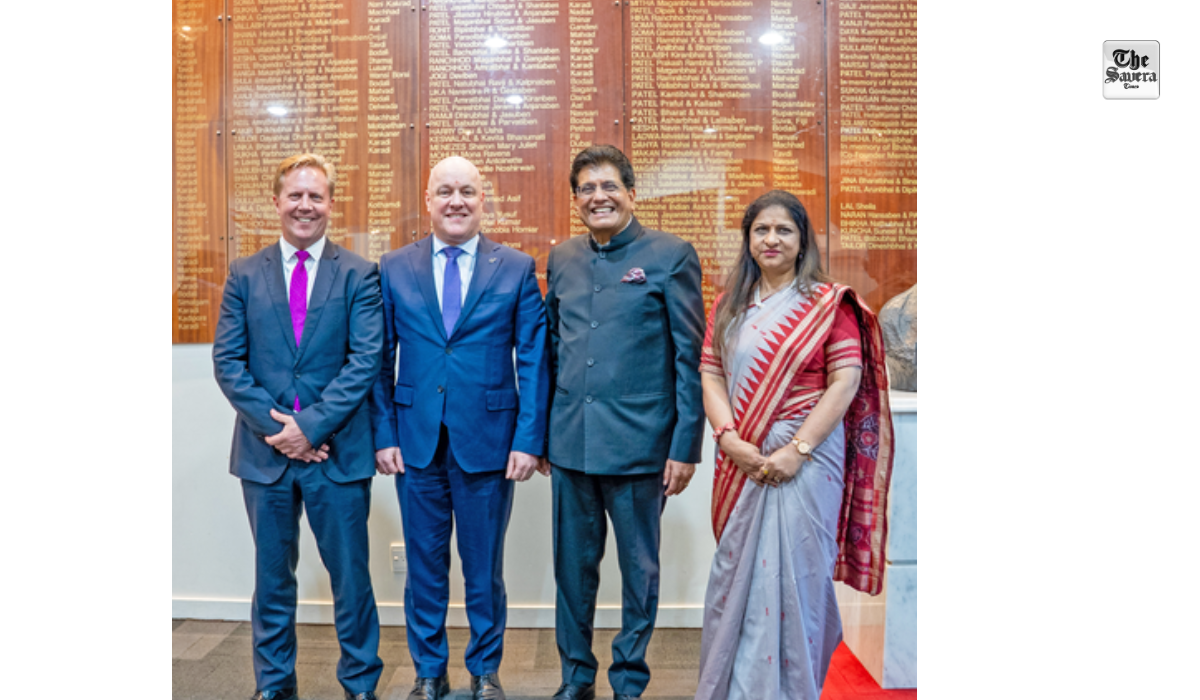
New Delhi: The India–New Zealand Free Trade Agreement (FTA) has sent a clear message that pragmatism has prevailed, with both sides agreeing on a framework for a bilateral economic partnership aimed at the mid-21st century, according to a new report.
FTA Marks Strategic Pivot in India–New Zealand Relations
The report, published on www.prfworld.org, said the deal represents a pivot for New Zealand toward deeper engagement with the world’s most populous nation and fastest-growing major economy. For India, the pact builds on its “Act East” and “Indo-Pacific” trade policy pillars, aiming to secure a trusted, long-term economic partnership in a region shaped by competing spheres of influence.
Investment, Talent Mobility Key Pillars of the Agreement
India and New Zealand concluded the long-awaited FTA last month, with negotiations formally launched on March 16, 2025. While there is some scepticism about the feasibility of the $20 billion New Zealand investment commitment over 15 years, the report noted that this would be driven by private equity and businesses tapping into India’s consumer base, infrastructure, green energy and digital ambitions under Vision 2047.
The FTA also allows mobility in special skills categories, addressing New Zealand’s projected shortfall of nearly 250,000 workers by 2045. The report described this as a “talent security” move, highlighting that the true economic value of the pact extends beyond traditional sectors to a knowledge-based economy.
Indo-Pacific ‘Southern Anchor’ With Long-Term Implications
The report added that the FTA is a vital component of the broader Indo-Pacific maritime and economic security architecture, complementing India’s existing agreements with Australia and the UAE to form a “Southern Anchor” of democratic trade.
As the agreement is expected to be signed and implemented by late 2026, the report emphasised the need for businesses on both sides to leverage built-in consultation mechanisms to enhance value over time, noting that in an era of geopolitical uncertainty, the anchor will only provide stability if both economies are prepared to fully harness its potential.
Good Evening Viewers! Catch up on the day's biggest stories with The Savera Times Evening Bulletin. Get the...

Congress leaders continued their protest outside the Jaipur Police Commissionerate on Tuesday, demanding the registration of a zero...
On the auspicious occasion of Vijayadashami, Prime Minister Narendra Modi on Tuesday called on the countrymen to unite...
A historic milestone was achieved on Tuesday in the expansion of Chhattisgarh's rail networkA historic milestone was achieved...

Model Shraddha Dubey, one of the main accused in the death of Lucknow businessman Shiv Sharma, has been...

Rashtriya Swayamsevak Sangh (RSS) chief Mohan Bhagwat on Tuesday called for strengthening national unity, social harmony, indigenous practices...
Aries: The day will be auspicious...