Last Updated: October 12, 2026
Last Updated: October 12, 2026





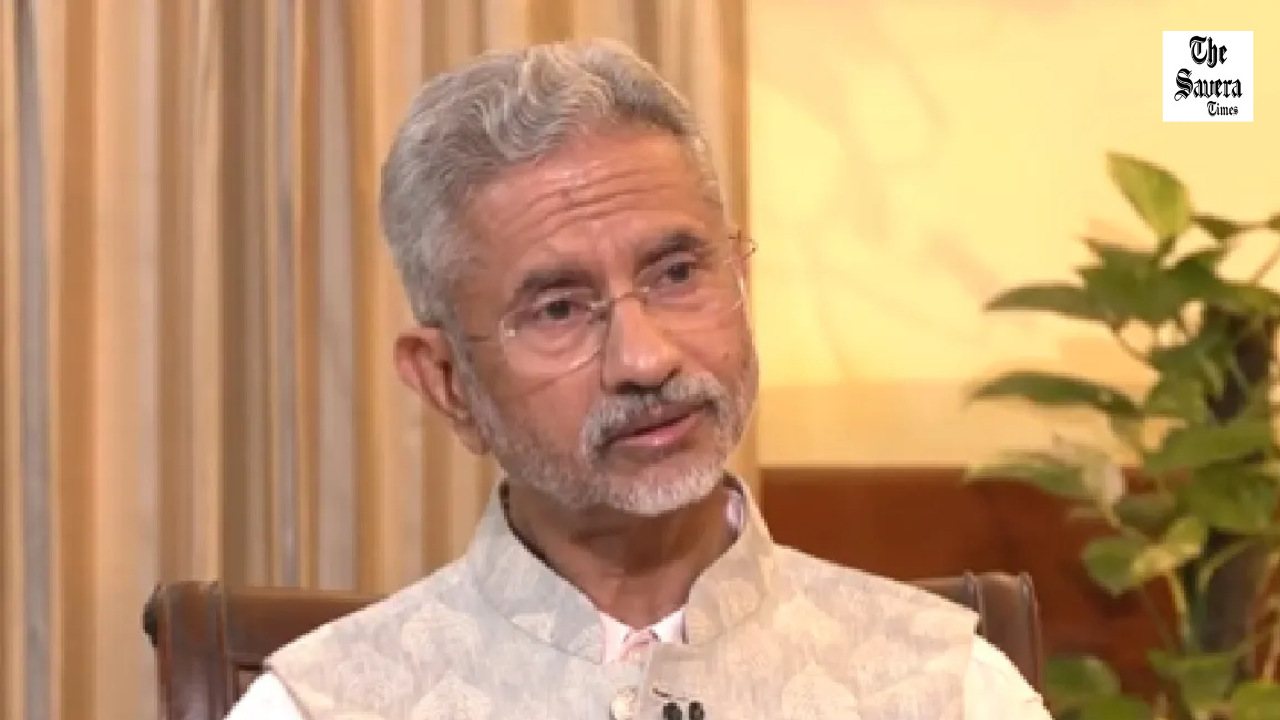
India’s External Affairs Minister Subrahmanyam Jaishankar defended the country’s decision to provide shelter to the Iranian naval vessel IRIS Lavan after it was caught in crossfire during escalating tensions in the Gulf region.
Speaking on the issue, Jaishankar described India’s action as a “humane act”, saying the government did the right thing by offering assistance to sailors who were caught in a dangerous situation at sea. According to him, humanitarian considerations guided India’s response rather than geopolitical calculations.
The development came after the United States reportedly sank an Iranian warship during a tense naval confrontation in the Gulf, creating chaos among vessels participating in a fleet review. The Iranian vessel IRIS Lavan later sought safe harbour, prompting India to allow the ship temporary refuge.
The incident occurred amid rising tensions between the United States and Iran during ongoing military confrontations in the region. Reports indicate that a US naval strike sank an Iranian warship during a volatile encounter in Gulf waters.
The confrontation led to confusion among several naval vessels present in the area, including those participating in a maritime fleet review event. Amid the chaos, the Iranian ship IRIS Lavan reportedly moved away from the conflict zone and sought shelter at a nearby safe port.
India allowed the vessel to dock temporarily, enabling crew members to receive necessary assistance and ensuring their safety after the unexpected escalation. Officials said the decision was made in accordance with international maritime norms that priorities human life and safety at sea.
Responding to criticism and questions over the move, Jaishankar emphasized that India’s action was based on humanitarian principles and maritime obligations.
He said that when sailors or ships face danger in international waters, it is customary for nearby countries to offer assistance regardless of political differences. According to the minister, helping the vessel and its crew was consistent with India’s long-standing commitment to humanitarian values.
Jaishankar also noted that the decision should not be viewed through a strategic or political lens. Instead, it was an emergency response aimed at protecting lives during a volatile maritime incident.
The incident comes amid a broader conflict involving Iran, the United States and Israel that has intensified in recent days. Military confrontations in the region have included missile strikes, drone attacks and naval operations across key waterways in the Middle East.
The sinking of the Iranian warship has further heightened tensions, raising concerns about the possibility of wider naval clashes in the Gulf. Experts warn that the situation remains fragile and that any further incidents at sea could escalate the conflict even further.
The Gulf region is one of the world’s most strategically important maritime corridors, with a significant portion of global oil shipments passing through nearby waters such as the Strait of Hormuz.
India has traditionally maintained diplomatic relations with both the United States and Iran, making situations like this particularly sensitive. Analysts say New Delhi often takes a balanced approach in regional conflicts, focusing on diplomacy and humanitarian considerations while avoiding direct involvement in military disputes.
By allowing the Iranian vessel safe harbour, India demonstrated its commitment to maritime safety while also attempting to avoid taking sides in the escalating geopolitical tensions.
Officials stressed that the decision was purely humanitarian and did not represent a shift in India’s foreign policy stance regarding the ongoing conflict.
According to reports, the immediate priority after the vessel docked was ensuring the safety and well-being of its crew members. Medical assistance and logistical support were reportedly made available to the sailors as required.
Authorities are also coordinating with relevant international and diplomatic channels to ensure the situation is resolved smoothly without further complications.
The Gulf confrontation and the sinking of the Iranian warship highlight the fragile security situation in the region. With multiple military powers operating in close proximity, the risk of accidental or unintended escalation remains high.
Observers say India’s response reflects an effort to maintain stability and uphold humanitarian principles even as geopolitical tensions intensify.
For now, diplomatic discussions and crisis management efforts continue as countries work to prevent further escalation in one of the world’s most sensitive maritime regions.
The Delhi Police on Monday removed Jantar Mantar from the list of officially designated protest sites. The police...
The Supreme Court on Monday clarified that it has not passed any judgment on the Election Commission's (ECI)...
The Kerala Assembly passed a resolution demanding the removal of Chief Election Commissioner (CEC) Gyanesh Kumar from his...
Amidst heavy security and barricades by the Delhi Police, INDIA Bloc leaders began a protest march towards the...

The Reserve Bank of India (RBI)'s new measures to curb speculation in the rupee and maintain stability in...

Gold exchange-traded funds (ETFs) witnessed a sharp rise in investor interest in September, with net inflows surging 71.4...