Last Updated: October 16, 2026
Last Updated: October 16, 2026





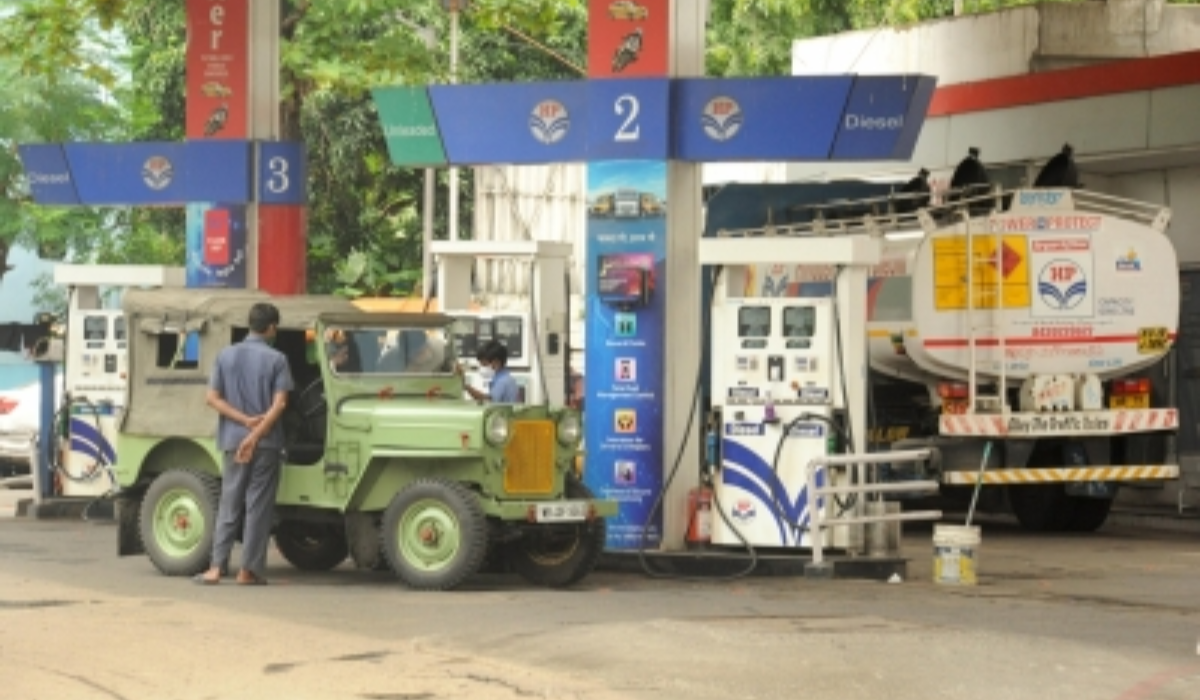
New Delhi: Amid the Iran crisis, India is currently in a strong position in terms of crude oil, LPG, and LNG. According to government sources, the country has approximately 25 days of crude oil reserves and 25 days of petroleum products. This includes the quantity arriving at Indian ports via ships.
Import Dependence, But Diversification of Sources
India imports more than 85 percent of its total crude oil needs. About 50 percent of this supply comes from the Middle East, primarily through the Strait of Hormuz.
Although this route has been disrupted due to the Iran war, India has diversified its sources by increasing imports from Africa, Russia, and the United States.
Oil companies have several weeks of stock
According to government officials, the country’s major oil marketing companies—Indian Oil Corporation, Bharat Petroleum, and Hindustan Petroleum—have sufficient stock for several weeks.
The government has directed these companies to temporarily halt the export of petroleum products to further strengthen domestic buffer stocks.
Strategic storage capacity
India also has strategic storage facilities. Pudur has a capacity of 2.25 million metric tons (MMT), Visakhapatnam 1.33 MMT, and Mangaluru 1.5 MMT. Additionally, another strategic storage facility is being developed in Chandikhol.
These reserves can be used in times of emergency or a sharp rise in international prices.
Price impact expected
Although the supply situation is currently satisfactory, crude oil prices in the global market are being impacted. Brent crude prices have surpassed $80 per barrel, a rise of nearly 10 percent since the Iran crisis.
Rising oil prices increase India’s import bill and put pressure on inflation, potentially impacting economic growth.
Import Bill Figures
India spent $137 billion on crude oil imports in the fiscal year ending March 31, 2025. In the first 10 months of the current fiscal year (April 2025 to January 2026), $100.4 billion was spent on imports of 206.3 million tons of crude oil.
Read The Savera Times Evening Bulletin for the top India and world news, latest breaking headlines, major developments...

New Delhi: India and Vietnam on Friday reviewed their cooperation across key areas, including economic security, maritime engagements,...
New Delhi: The Union Ministry of Home Affairs (MHA) has sought detailed reports from the Punjab government on...

New Delhi: All India Students’ Association (AISA) National President Neha Bora was detained by the Delhi Police on...

New Delhi: The Directorate of Enforcement (ED) has provisionally attached assets and proceeds of crime worth Rs 136.44...
Mumbai: Jindal Saw on Friday reported a steep decline in its earnings for the second quarter of FY27,...
Aries: The day will be auspicious...