


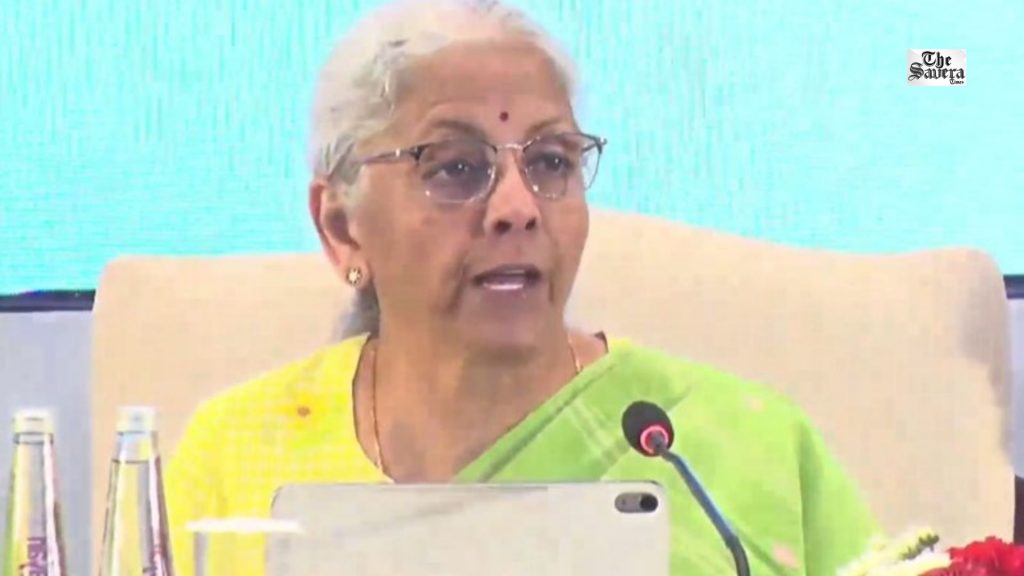
New Delhi: Finance Minister Nirmala Sitharaman has called for an early conclusion of the proposed India-US Bilateral Trade Agreement (BTA), saying its finalisation would benefit both countries and strengthen their economic ties.
Speaking to the Atlantic Council on the sidelines of the IMF-World Bank Annual Meetings in Bangkok, Sitharaman said negotiations appeared to be nearing completion. She noted that Commerce and Industry Minister Piyush Goyal had also expressed expectations that the agreement would be signed soon.
Her remarks came a day after Goyal said the first tranche of the trade pact had been finalised and was undergoing legal drafting. He added that the agreement would be operationalised once India secured a competitive advantage over its peer economies.
US Ambassador to India Sergio Gor also said on Thursday that the broad framework of the proposed agreement had been finalised and expressed confidence that the two countries were close to reaching a conclusion.
What Is the India-US Trade Deal About?
The proposed Bilateral Trade Agreement aims to expand trade between India and the United States by reducing tariffs, improving market access and addressing barriers that make it difficult for businesses to sell goods in each other’s markets.
A framework for an interim agreement announced by the two countries in February 2026 outlined plans for India to reduce or eliminate tariffs on a range of American industrial goods and selected food and agricultural products. In return, the United States agreed under the framework to apply an 18 per cent reciprocal tariff rate to specified Indian-origin goods, with further tariff relief for certain products subject to the agreement’s successful conclusion.
The framework also covers cooperation on digital trade, technology, supply chains and investment. However, the final legal terms and implementation arrangements remain important, and the agreement should not be treated as fully operational until the relevant steps are completed.
How Could the Deal Benefit India?
One of the key potential benefits for India is improved access to the US market, which could help Indian exporters compete with businesses from countries such as Vietnam, Bangladesh and Indonesia.
Sectors including textiles and apparel, leather and footwear, chemicals, plastics, engineering goods and certain machinery are among those identified in the interim framework for tariff treatment. Better market access and greater clarity on tariffs could help Indian businesses plan exports, attract investment and explore opportunities to expand production.
The agreement could also support cooperation in technology, digital trade and supply chains. Stronger commercial ties may create opportunities for Indian manufacturers and service providers, although the actual gains will depend on the final terms, implementation and competitiveness of Indian businesses.
For India, the level of tariff relief and the treatment received compared with competing economies are particularly important. Goyal has made it clear that the government wants a comparable or competitive advantage over peer countries before operationalising the deal.
Sitharaman Highlights India’s Growth and Fiscal Discipline
Alongside the trade negotiations, Sitharaman spoke about India’s economic performance amid global uncertainty. She said the country had maintained strong growth and had been among the world’s fastest-growing major economies over the past four or five years since the Covid-19 pandemic.
She attributed the performance to inclusive growth policies, investment in skill development and fiscal discipline.
“We are conscious that we have a responsibility with public money and therefore have a very clear understanding that we can’t be splurging money, even as we have to take care of those who are vulnerable in the economy,” the Finance Minister said.
She also highlighted the role of public capital expenditure in building infrastructure and supporting broader economic activity.
“Public spending on capital expenditure has helped us build infrastructure in the country and that has a greater multiplier effect,” she said.
With officials from both countries signalling progress, the next key steps are the completion of legal drafting, agreement on the remaining details and confirmation of the conditions under which the first tranche will take effect.