Last Updated: October 21, 2026
Last Updated: October 21, 2026





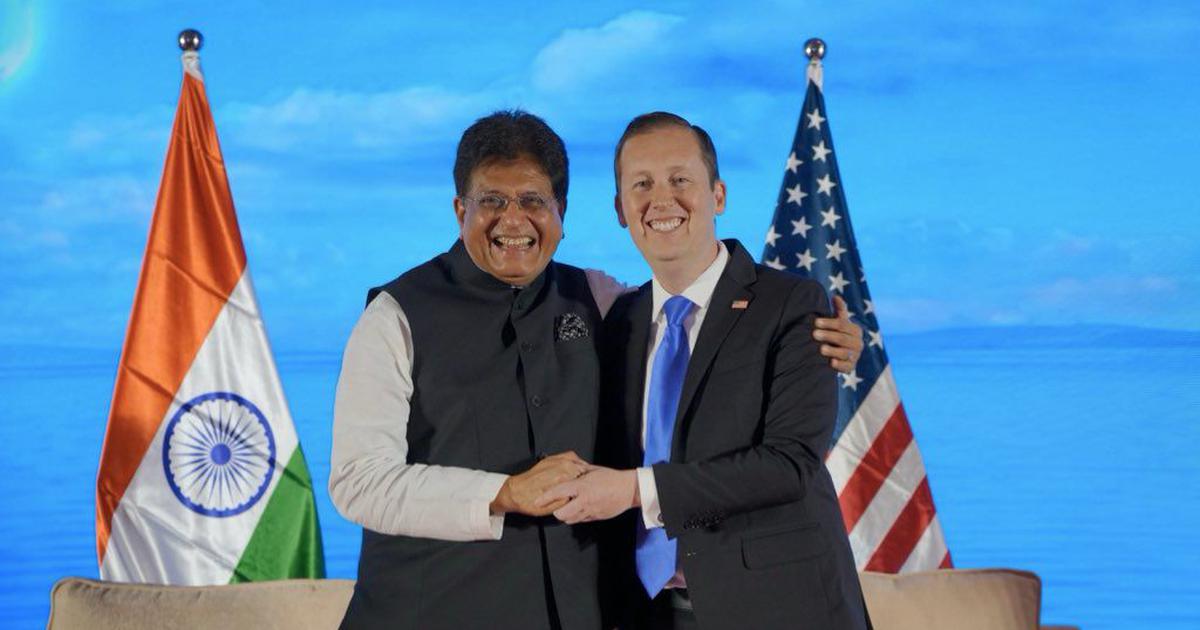
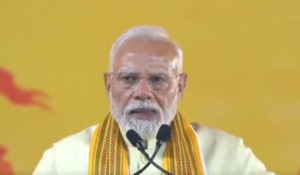
Since US President Donald Trump’s second term, talks on a free trade agreement between the US and India have begun. Trump calls Prime Minister Narendra Modi his good friend. Trump has always considered tariffs a powerful weapon, believing that they can be used to control any country. Following the Pahalgam massacre in April 2015, India launched Operation Sindoor against Pakistan. When a ceasefire was reached, Trump claimed to have stopped the war by threatening to raise tariffs on India and Pakistan by up to 500 percent, a claim India has consistently denied. However, the US has issued dozens of tariff-raising threats. The US imposed both tariffs and fines on India as a penalty for purchasing crude oil from Russia. It also threatened to impose tariffs of up to 200 percent against China. Meanwhile, negotiations for a free trade agreement between India and the US continued, but no agreement was reached. Farmers’ organizations in some states also launched protests against the claim that India was harming the country’s farmers by allowing the US to impose tariffs on the agricultural sector. On behalf of the Indian government, Union Minister Piyush Goyal stated unequivocally that these claims are baseless, will never happen, and that the Modi government is the protector of farmers’ interests. In the last week of June 2026, talks on a trade agreement between India and the US were held, but they failed to reach any conclusion. Now, Union Minister Piyush Goyal has announced that he will visit the US in late September to try to finalize this trade deal. It should be noted that India is not relying solely on a bilateral trade agreement with the US; by this time, India has signed nine free trade agreements with various countries. The GDP involved in all these agreements is $60 trillion, representing two-thirds of world trade. India will not only enter into an agreement with the United States, but efforts are also underway to reach agreements with other countries. In the near future, India will sign bilateral trade agreements with Canada, Mexico, Chile, Brazil, South Africa, the Gulf States, and Israel. Now, let’s analyze the terms Piyush Goyal is considering for the trade agreement with the United States. India, the world’s most populous country, has a huge demand market, so the first condition is that the United States should offer us better tariff rates, meaning that tariff rates should be lower than those of our competitors, not higher. For example, Vietnam and Bangladesh export labor-intensive items like textiles, apparel, leather, and footwear to the United States. India does too. These countries’ tariff rates should not be lower than ours. India is citing the European Union and Mexico, claiming that Mexico has zero or very low tariffs. We also have a large demand market and should also benefit from this. Thus, India is firmly committed to its terms for a trade agreement. If the India-US free trade agreement is reached in September, it will benefit Indian trade. If it is not reached, the US will at least become aware that India has its own expectations for fair tariff rates, and this cannot be taken lightly.
We are very proud that at present India is the number one country in the world by surpassing...
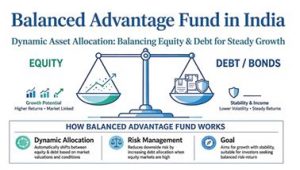
Every investor wants the wealth-creating power of equity and the reassuring stability of debt. Balanced Advantage Funds attempt...
Tourism is a major source of government revenue in our country. There are different types of tourism. Scenic...

Good Evening Viewers! Catch up on the day's biggest stories with The Savera Times Evening Bulletin. Get the...

Congress leaders continued their protest outside the Jaipur Police Commissionerate on Tuesday, demanding the registration of a zero...
On the auspicious occasion of Vijayadashami, Prime Minister Narendra Modi on Tuesday called on the countrymen to unite...
Aries: The day will be auspicious...