Last Updated: October 22, 2026
Last Updated: October 22, 2026





India’s wealth landscape is undergoing a remarkable transformation. The number of millionaire households has nearly doubled in the past four years, adding a dollar millionaire family every 30 minutes, according to the Mercedes-Benz Hurun India Wealth Report 2025. Families with assets worth at least Rs 8.5 crore have grown from 4.58 lakh in 2021 to 8.71 lakh this year, reflecting a sharp surge in affluence.
The report highlights that millionaire households now represent 0.31 per cent of all families in the country. Maharashtra leads the tally with 1,78,600 such households, propelled largely by Mumbai’s 1,42,000. Delhi follows with 68,200 and Bengaluru with 31,600. Other cities such as Ahmedabad, Kolkata, Chennai, Pune, and Hyderabad also feature prominently in the distribution.
Anas Rahman Junaid, founder and chief researcher of Hurun India, described the change as unprecedented. “In less than a decade, the number of Indian households worth over \$1 million has skyrocketed by 445 per cent,” he noted. “This democratisation of prosperity speaks to the resilience of our economy, with opportunity spreading to millions of new wealth creators.”
Santosh Iyer, managing director and CEO of Mercedes-Benz India, added that the findings reflect both the pulse of India’s affluent class and its evolving luxury consumption patterns.
Drivers of Rising Wealth
Experts attribute India’s growing millionaire count to strong equity markets, soaring gold prices, and robust demand for luxury goods. Between 2021 and 2025, the Nifty index rose nearly 70 per cent, while gold prices surged past Rs 1 lakh per 10 grammes. Simultaneously, India’s luxury goods market, valued at \$17.67 billion in 2024, is expected to grow at a compound annual rate of 3.17 per cent until 2029. Bain & Company predicts the sector could cross \$85 billion by 2030, supported by expanding discretionary spending and sustained economic growth.
The Hurun report also sheds light on spending habits. High-networth individuals continue to invest in real estate, particularly in Mumbai, Delhi, and Bengaluru. Second homes in Goa and the Himalayas are also gaining popularity. Stocks and gold remain preferred avenues for wealth preservation. Over half of India’s millionaires own more than one car, often upgrading every three to six years. Yet, about 60 per cent of these households spend less than Rs 1 crore annually, with major outlays on tourism, education, and entertainment.
Comparing India and China
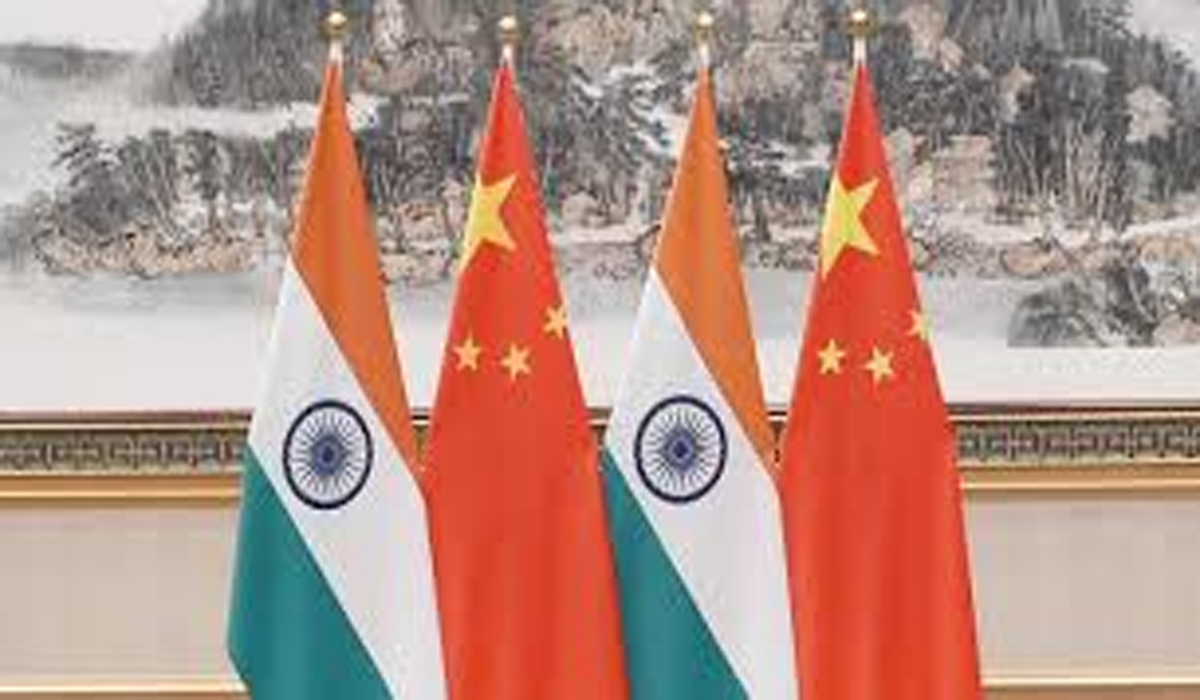
While India’s rise is striking, the comparison with China shows a significant gap remains. China, with the world’s second-largest economy, has about 5.1 million households with wealth above \$0.84 million, according to the Hurun China Wealth Report 2024. In contrast, India counts 872,000 households above \$1 million. In the bracket of \$1.2 million to \$1.4 million, India has 589,600 households, while China has more than 2 million.
Among ultra-highnet-worth families, China leads with 130,500 households above \$14 million compared to India’s 66,800 households above \$12 million. Analysts, however, see the disparity as a marker of opportunity. Junaid observed that India’s wealth base is still modest but fast expanding. “I don’t view this gap as a disadvantage; I see it as our runway. It underscores the immense growth potential of India’s wealth story,” he said.
The Road Ahead
Projections suggest that India’s millionaire households could nearly double again within the decade. The Economic Times reported that affluent households with wealth above \$1 million could increase from 872,000 to as many as 2 million. High-net-worth households in the \$1.2–1.4 million category may grow from about 590,000 to over 1.2 million, while ultra-high-networth households could rise to around 130,000, nearly matching China’s present levels. Meanwhile, China is showing signs of strain. The Hurun Research Institute noted that many of China’s wealthiest are seeing their fortunes erode amid stock market troubles and broader economic slowdown. This contrast sharpens India’s trajectory as a potential challenger in the regional and global wealth map. As India’s economy expands and prosperity spreads, the question remains whether the elephant can eventually rival the dragon in wealth creation. For now, the momentum is firmly in India’s favour, signalling a decade where the wealth gap may steadily narrow.
In Indian geopolitical panorama, China must occupy top space considering power and security dynamics of region.

The relations between Canada and India continue to improve at a rapid pace.

Japan's ruling Liberal Democratic Party (LDP) and its coalition partner, the Japan Innovation Party (JIP), plan to begin...

When President Donald Trump assumed office for the second time in the United States, Prime Minister Narendra Modi...

Pakistan’s strained ties with neighbours — including India — have effectively left much of its land borders closed...
India’s customs authority Central Board of Indirect Taxes and Customs (CBIC) and New Zealand Customs Service (NZCS) signed...

Aries: The day will be auspicious...