Last Updated: October 13, 2026
Last Updated: October 13, 2026





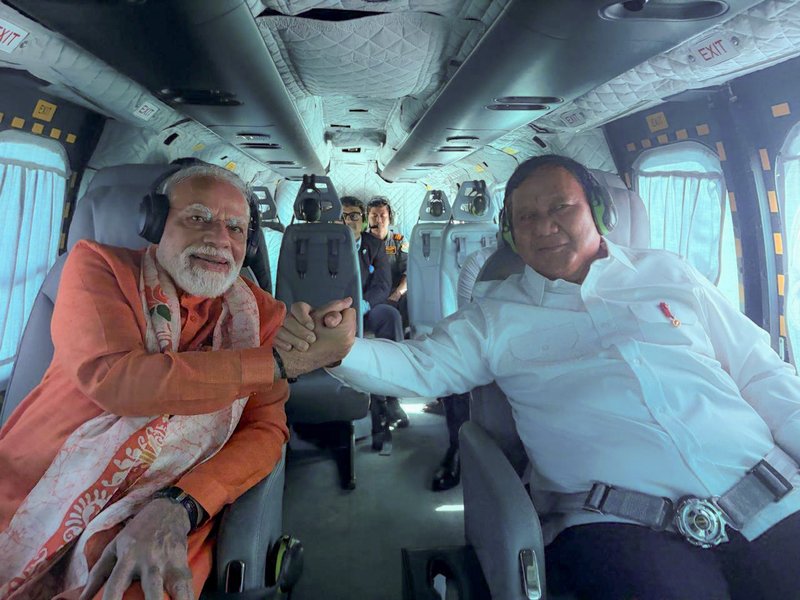
India and Indonesia have demonstrated that close cooperation between major regional powers is possible without being drawn into the rivalries of competing global blocs. Both countries have maintained strong ties with Russia and the United States while pursuing independent foreign policies, reflecting a carefully balanced diplomatic approach.
Prime Minister Narendra Modi’s visit to Indonesia from July 6 to 8 emerged as the most significant leg of his six-day tour covering Indonesia, New Zealand and Australia. The visit strengthened the India-Indonesia strategic partnership through a series of key agreements across defence and bilateral cooperation.
A major highlight of the visit was the announcement of two significant defence agreements expected to boost India’s defence exports to Indonesia.
The proposed deals include Indonesia’s procurement of the BrahMos supersonic cruise missile system and Indian-made air-to-air missiles, with the combined value estimated at around USD 630 million.
India has already exported the BrahMos missile system to the Philippines and Vietnam. Developed jointly by Indian engineers with support from Russian specialists, the BrahMos is a versatile missile platform that can be launched from land-based batteries, warships, submarines and combat aircraft. Capable of travelling at speeds of up to Mach 3, nearly three times the speed of sound, it is regarded as one of the world’s fastest operational supersonic cruise missiles.
The timing of the agreements also drew attention, as they came a day after China conducted a test launch of a long-range ballistic missile, adding strategic significance to the India-Indonesia defence partnership.
For Indonesia, the BrahMos system could strengthen coastal defence capabilities while enhancing security along critical maritime routes, including the South China Sea and the Strait of Malacca. Given ongoing regional tensions, the acquisition is seen as an important step towards strengthening Indonesia’s maritime deterrence.
The defence cooperation also supports Indonesia’s long-standing policy of maintaining strategic autonomy in the Indo-Pacific. Jakarta has consistently sought to avoid becoming overly dependent on any major power, including either China or the United States, while expanding partnerships with countries such as India.
Indonesia also underscored the importance it attaches to its relationship with India through two symbolic diplomatic gestures.
The first was the conferment of Indonesia’s highest civilian honour, the Bintang Adipurna, on Prime Minister Narendra Modi. Receiving the award from Indonesian President Prabowo Subianto, Modi dedicated the honour to the people of India, describing it as a reflection of the enduring friendship between the two nations.
The second significant gesture was Indonesia’s decision to invite Prime Minister Modi to address the People’s Consultative Assembly (MPR). While foreign leaders occasionally address national legislatures around the world, Indonesia extends this privilege only on rare occasions, making the invitation a notable recognition of the growing bilateral relationship.
The visit highlighted the expanding scope of India-Indonesia ties, with defence cooperation, strategic autonomy and regional security emerging as key pillars of the partnership. As both countries continue to strengthen collaboration in the Indo-Pacific, the relationship is increasingly being viewed as an important contributor to regional stability and a more balanced strategic order.
Bengaluru: The BJP on Tuesday questioned the Congress over the alleged pushing away of Karnataka Chief Minister D.K....
Mumbai: Singer Darshan Raval has opened up about his new track ‘Jaane Kis Mod Pe’ from the upcoming...

Giridih (Jharkhand): Five people were killed and two others were seriously injured in two separate road accidents in...

New Delhi: The Supreme Court on Tuesday granted interim relief to Leader of Opposition in the Lok Sabha...
The Supreme Court on Tuesday took a serious view of the alleged assault on female journalists by police...
New Delhi: A Supreme Court lawyer has approached Chief Justice of India (CJI) Surya Kant seeking consideration of...
Aries: The day will be auspicious...