Last Updated: September 22, 2026
Last Updated: September 22, 2026





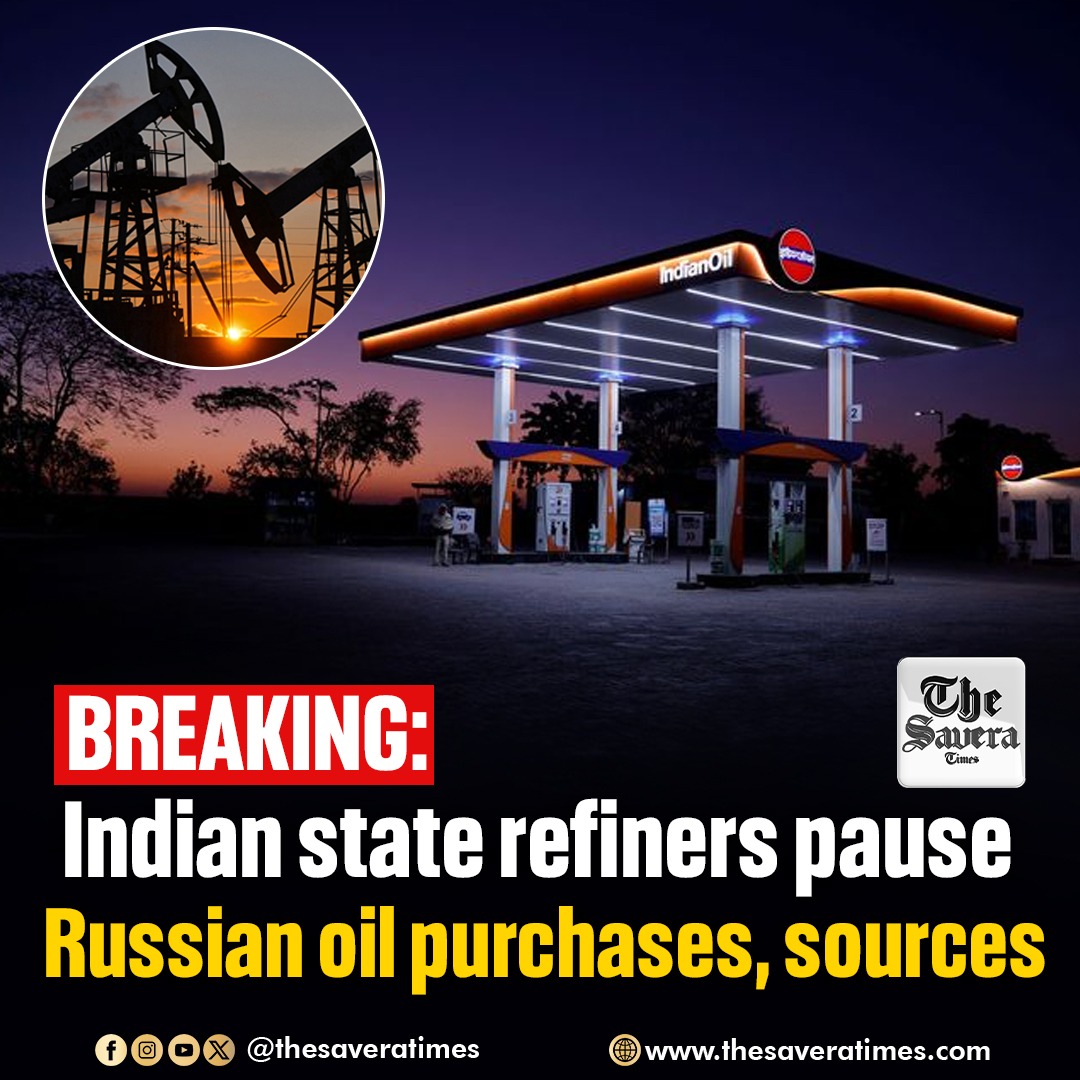
New Delhi: State-owned oil refiners in India have paused purchases of Russian crude oil after former U.S. President Donald Trump issued a stern warning of potential trade penalties. The decision marks a significant shift in India’s oil import strategy, which has relied heavily on discounted Russian crude since 2022.
Sources within the industry confirmed that major public sector undertakings including Indian Oil Corporation (IOC), Bharat Petroleum (BPCL), Hindustan Petroleum (HPCL), and Mangalore Refinery and Petrochemicals Ltd (MRPL) have not placed fresh orders for Russian crude over the past week. The refiners are now turning to alternative suppliers in the Middle East and West Africa, such as Abu Dhabi’s Murban crude, to meet demand.
The pause in procurement follows Trump’s statement earlier this month, where he warned of 100% tariffs on countries continuing to import oil from Russia unless Moscow agrees to a peace deal with Ukraine. On July 30, he announced a 25% tariff on Indian goods, along with additional penalties tied to India’s energy and arms purchases from Russia. These measures are scheduled to come into effect on August 1.
Industry analysts note that the decline in Russian crude price discounts has also made the imports less attractive. The discounts, once as high as $20 per barrel compared to Brent crude, have narrowed significantly in recent months.
While state refiners have responded quickly to the geopolitical pressure, private sector refiners such as Reliance Industries and Nayara Energy continue to import Russian oil under long-term contracts. The government has not yet issued any formal directive on halting Russian crude imports, but the recent developments suggest an alignment with broader foreign policy considerations.
India, the world’s third-largest oil importer, had emerged as the top buyer of seaborne Russian oil following Western sanctions on Moscow. The current shift, however, could impact global oil flows and pricing, especially in the diesel and fuel oil segments.
The Ministry of Petroleum and Natural Gas has not yet commented on the developments, but officials indicated that the situation is under review in light of evolving global trade dynamics and diplomatic considerations.
Police in Jamui, Bihar, have initiated action against social media accounts for publicly disclosing the identity of a...
Amidst the ongoing controversy surrounding IIT Bombay Professor Suryanarayan Dula, several faculty members from IIT Bombay, IIT Delhi,...

A fire broke out in the neonatal care unit of the Rajiv Gandhi Institute of Medical Sciences (RIMS)...

Jaipur: The political tussle over the Tijara Municipal Council Chairperson election, which began on Monday morning, continued late...

United Nations: External Affairs Minister (EAM) S. Jaishankar has urged countries sharing international objectives to act together against...
Stay updated with The Savera Times Morning Bulletin. Get the latest breaking news, top headlines, national, international, business,...

Aries: The day will be auspicious...