Last Updated: November 4, 2026
Last Updated: November 4, 2026





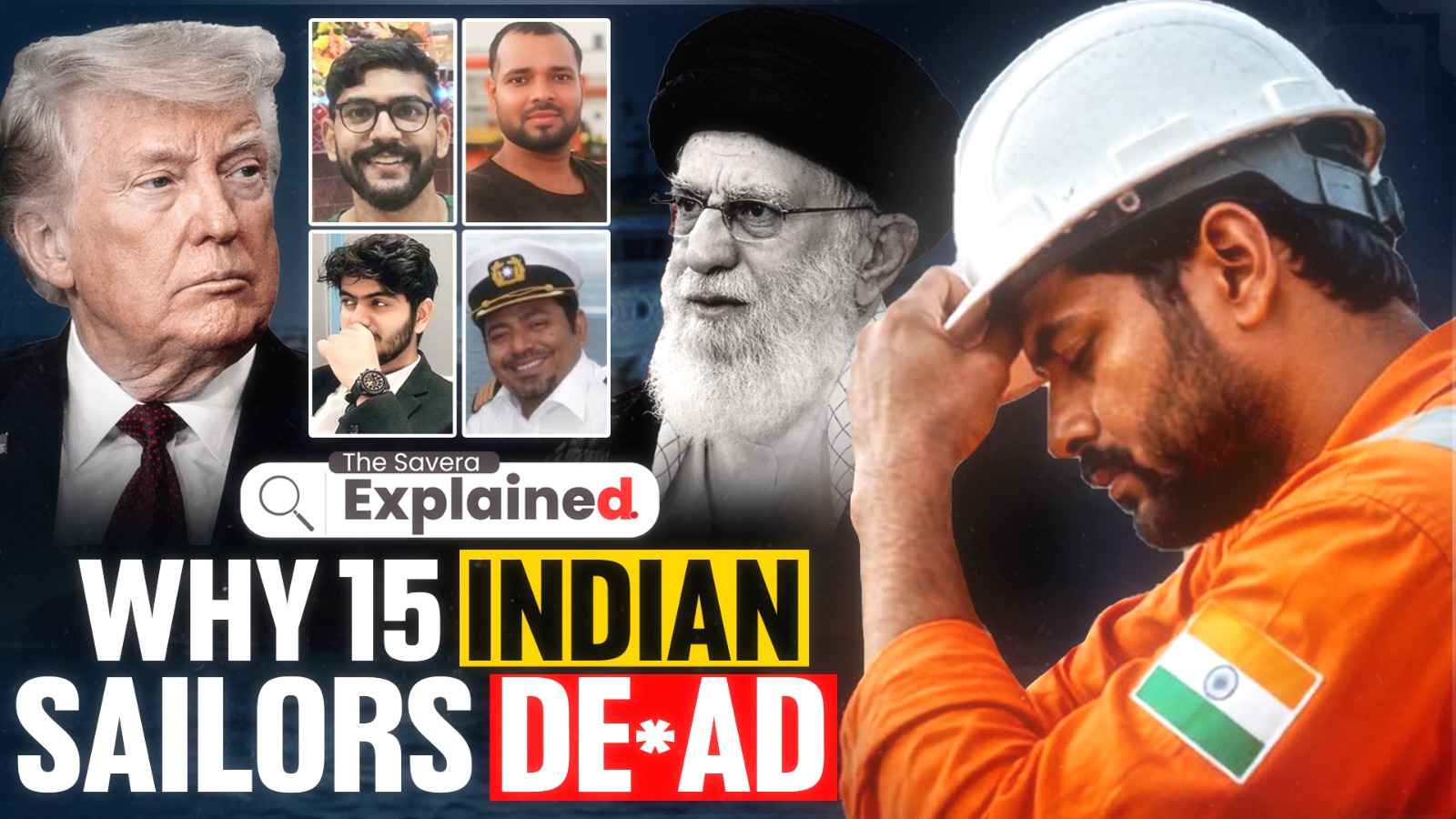
The US-Israel war against Iran is increasingly turning commercial shipping routes into dangerous zones. While military forces exchange attacks and diplomatic efforts continue, merchant ships carrying essential goods and fuel are facing growing security risks.
India is also paying a human cost. At least 15 Indian seafarers have died in the wider West Asia conflict, based on the government’s October 28 figure of 14 seafarer deaths and the additional death reported on November 3. The latest casualty is Gandhar Nahim Ajij from Gujarat, who died after an unidentified aerial object struck the Indian-flagged vessel MSV Al Jusufi near Oman.
From the attack on MKD Vyom in March to the latest incident, repeated attacks have raised serious questions about the safety of Indian sailors, global trade and India’s energy security.
How Did The Iran War Begin?
The latest conflict began on February 28, 2026, when the United States and Israel launched military strikes against Iran. Tehran retaliated with attacks targeting Israel and US military installations across the Gulf region.
The confrontation quickly expanded beyond military bases and airstrikes, bringing commercial shipping into the conflict.
Iran’s restrictions on shipping through the Strait of Hormuz and the subsequent US blockade of Iranian ports further increased tensions. The waterway became a major point of confrontation between the two sides.
Why Is The Strait Of Hormuz So Important?
The Strait of Hormuz connects the Persian Gulf with the Gulf of Oman and the Arabian Sea. It is one of the world’s most important energy routes, carrying around one-fifth of global oil consumption.
India depends heavily on imported crude oil, making the security of this route particularly important.
Any disruption affects oil supplies, shipping costs, insurance premiums and international trade. More importantly, attacks on commercial vessels put the lives of sailors at risk, even though they are not part of the military conflict.
Timeline: Major Attacks Involving Indian Seafarers
Why Are Indian Sailors At Greater Risk?
India is among the world’s largest suppliers of merchant navy professionals, with more than 3.2 lakh active seafarers in 2025.
Many Indian sailors work on foreign-flagged commercial vessels transporting oil, gas and other essential goods through international waters.
This means they can become victims of attacks even when the ships they work on do not belong to India. The risks have also increased because of restrictions on shipping routes and military operations around the Gulf.
What Is India Doing To Protect Its Sailors?
The Indian government has increased coordination between the Ministry of External Affairs, the Shipping Ministry, the Directorate General of Shipping and Indian missions in the Gulf.
In July, Shipping Minister Sarbananda Sonowal ordered vessel-by-vessel monitoring, dedicated liaison officers and round-the-clock coordination to track Indian seafarers in affected waters.
After the Al Jusufi attack, the MEA condemned the incident and called for immediate de-escalation, diplomatic negotiations and the restoration of safe navigation through international waterways. The Indian Embassy in Oman is coordinating the repatriation of the survivors and the deceased sailor’s mortal remains.
Is There Any Hope Of De-escalation?
Diplomatic efforts are continuing, although the situation remains uncertain. On November 2, Iranian officials held discussions with mediators in Qatar over a possible agreement with Washington. A draft proposal was reportedly being circulated on November 3.
However, the United States also carried out strikes on Iran’s Qeshm Island on November 2, highlighting the gap between diplomatic efforts and military developments.
For India, the challenge is not limited to rising oil prices or disrupted trade. It is also about protecting thousands of citizens working in dangerous maritime zones. Until tensions ease and commercial shipping becomes safe again, Indian sailors will remain among those facing the human cost of the West Asia conflict.
Iranian Parliament Speaker Mohammad Bagher Ghalibaf has reacted to the results of the November 3 midterm elections in...

Indian-American Congressman Suhas Subramanian has won his second consecutive term in the US midterm elections.

Indian-origin Pia Dandia has won a landslide victory in the US midterm elections. The daughter of an Indian-origin...

Tensions between Yemen's Houthi rebels and Saudi Arabia appear to be escalating once again. The Saudi-led coalition claims...
Blasphemy laws in Pakistan expose religious minorities to prosecution, where a religious accusation can rapidly move from allegations...
Halloween was celebrated in America. People were celebrating this festival by wearing different costumes. People celebrating in different...

Aries: The day will be auspicious...