Last Updated: September 30, 2026
Last Updated: September 30, 2026





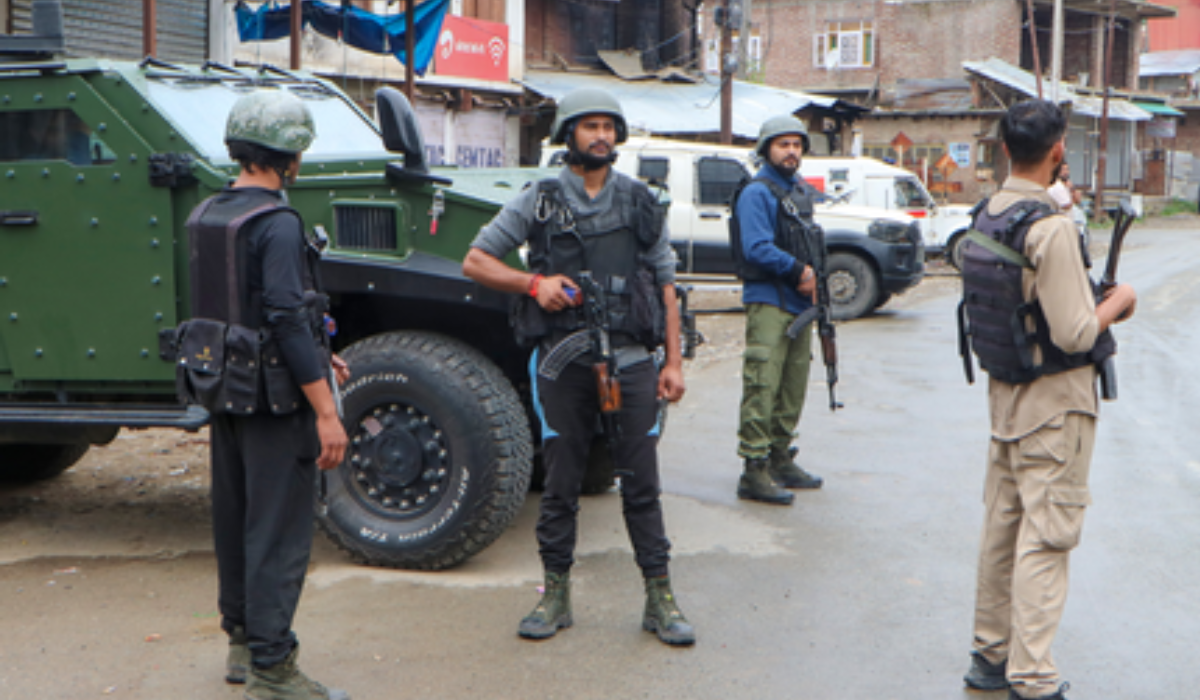
India’s approach to crossborder terrorism has changed significantly over the past decade. The shift is visible not only in the scale of military responses, but also in the way diplomatic and strategic measures have been combined with them. The change was brought into focus again by Prime Minister NarendraModi in the 138th episode of Mann Ki Baat on September 27, 2026, on the eve of the tenth anniversary of the 2016 surgical strikes. Referring to the September 28-29, 2016 operation, Modi described it as a decisive response to terrorism and said it marked a new example in India’s counter-terrorism policy. Over the last decade, the response to terrorism has increasingly moved beyond diplomacy and political messaging. Military action has become a more visible part of India’s response to cross-border attacks. The numbers cited by Union Home Minister Amit Shah in Parliament indicate a substantial decline in terrorist incidents during this period. According to the figures cited, incidents fell from 7,217 between 2004 and 2014 to 2,242 between 2014 and 2024. Total deaths declined by 70%, while civilian deaths fell by 81% and security personnel casualties by 50%. Jammu and Kashmir, which has remained at the centre of India’s counter-terrorism challenge, also recorded a decline in violence during the same period. Civilian deaths fell from 1,769 between 2004 and 2014 to 344 between 2014 and 2024. The number of incidents of violence also declined from 16,463 to 7,744. The change in policy is perhaps easier to understand by looking at the sequence of operations over the decade. The first major shift came after the Chandel ambush in June 2015, in which 18 Army personnel were killed. On June 9, Indian Special Forces crossed into Myanmar and targeted militant camps. The operation was publicly acknowledged by the government. The following year brought an even more significant development. After the Uri attack in September 2016, in which 19 soldiers were killed, Indian Special Forces carried out strikes on terror launch pads across the Line of Control on the night of September 28-29. The Director General of Military Operations subsequently briefed the country about the operation. The response became more extensive after the Pulwama attack in February 2019, when 40 CRPF personnel were killed. On February 26, the Indian Air Force carried out an air strike on a Jaish-e-Mohammed training camp at Balakot. Both the 2016 surgical strikes and the Balakot operation became political flashpoints, with opposition leaders questioning aspects of the evidence and outcome, while the government defended the operations as necessary responses to terrorism. Operation Sindoor in 2025 marked another stage in this evolution. It followed the Pahalgam attack on April 22, 2025, in which 26 civilians were killed. On May 7, India struck nine terror-infrastructure sites in Pakistan and Pakistan-occupied Kashmir. The initial action involved 24 missile strikes conducted within 25 minutes. Among the sites targeted were a Jaish-e-Mohammed facility at Bahawalpur and the Lashkar-eTaiba headquarters at Muridke. The government said Pakistani military facilities were not targeted in the initial strikes. The operation subsequently expanded after Pakistan’s military retaliation. India struck 11 Pakistani military bases, including Nur Khan, Rafiqui, Sargodha and Jacobabad. The government’s description of the operation was that it was measured and limited: terror infrastructure was targeted first, while military installations were struck after Pakistan’s military response. The response was not confined to military action. India also placed the Indus Waters Treaty in abeyance, adding a diplomatic and strategic component to the response. Taken together, the four operations-from Myanmar in 2015 and the Line of Control in 2016 to the Balakot air strike in 2019 and the wider Operation Sindoor in 2025-show the expanding geographical reach and range of India’s counter-terror response. In his address on May 12, 2025, Modi outlined three principles for the government’s approach: India would respond to terrorism at a time and in a manner of its own choosing; it would not accept nuclear blackmail; and it would make no distinction between terrorists and the states that sponsor them. The government has presented Operation Sindoor as part of a continuing policy rather than a oneoff military action. It described the operation as “paused” rather than over. Sustaining this approach, according to the stated policy, would require stronger indigenous air-defence capabilities, precisionstrike systems, closer coordination among the three armed services and diplomatic support from partner countries. The underlying idea is straightforward: a terror attack should carry a direct cost for those responsible. The emphasis has therefore shifted from simply absorbing attacks to responding to them and seeking to create deterrence. The diplomatic component has also become more visible. Following Operation Sindoor, India sent allparty delegations abroad to explain its position to other countries. The government presented this outreach as a broader national effort rather than an initiative limited to one political party. Over the past decade, the nature of India’s counter-terror response has consequently evolved in both scale and scope. The stated policy places greater emphasis on deciding when and how India responds to cross-border terrorism, rather than allowing the adversary to determine the terms of that response.
A top Lashkar-e-Taiba (LeT) terrorist was killed in an encounter with security forces in Jammu and Kashmir's Budgam...
Union Home Minister Amit Shah will visit Jalandhar in Punjab on Wednesday to address the concluding programme of...
Elections are the test of democracy and the solid foundation of elections is laid on voter lists which...
The economic relationship between India and Africa is entering a new reciprocal phase as investment and industrial partnerships...

In a world that has taught us to hear everything, have we forgotten how to listen to ourselves?...

Catch the top India and world news in The Savera Times Evening Wrap, featuring the latest headlines, breaking...

Aries: The day will be auspicious...