Last Updated: October 21, 2026
Last Updated: October 21, 2026





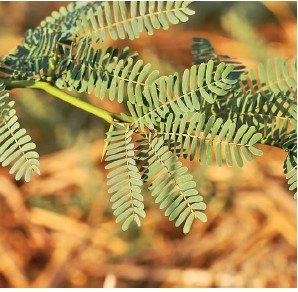
Invasive alien plant species are rapidly reshaping India’s natural landscapes, with their spread accelerating across ecologically sensitive regions such as the Western Ghats, the Himalayas and the north-east. A new study published in Nature Sustainability warns that these species have nearly doubled their range in several fragile ecosystems, posing escalating risks to biodiversity, rural livelihoods and national conservation efforts.
The study links the surge in invasions to the combined impact of climate change, land-use change and disruptions in ecological processes. Researchers describe the situation as a growing socio-ecological crisis, noting that millions of people who rely directly on natural resources are facing increasing hardship.
By 2022, nearly 144 million people, 2.79 million livestock and 200,000 square kilometres of smallholder farmland had been exposed to at least one new invasive plant. The authors analysed 16 years of systematic data covering 277,000 square kilometres between 2006 and 2022, tracking how invasive plants intersect with factors such as rising temperatures, shifting fire regimes, altered grazing patterns and rapid habitat transformation.
The findings show that about 15,500 square kilometres of natural areas are invaded by at least one new species every year. Nearly 11,200 square kilometres of herbivore habitat is exposed annually to fresh forage loss, and around 7 million people encounter new invasive species each year. By 2022, a total of 266,954 square kilometres of natural landscapes, 212,450 square kilometres of wild herbivore habitats and more than 105,000 square kilometres of tiger terrain had been affected.
Almost two-thirds of India’s natural ecosystems now contain at least 11 major invasive plant species. The most widespread include Lantana camara, Chromolaena odorata and Prosopis juliflora. The study compiled more than one million field records, identifying Chromolaena odorata as the fastest-expanding invader at nearly 2,000 square kilometres a year. In regions such as the Western Ghats and the north-east, its coverage has almost doubled within two decades. Prosopis juliflora, historically introduced to combat desertification, has spread across dry landscapes, displacing native vegetation essential for pastoral communities and wildlife.
The researchers warn that species previously thought to be restricted to drier zones are now moving into the Himalayas and wet evergreen forests. Open natural ecosystems such as peninsular grasslands, the Ganga and Brahmaputra floodplains, shola grasslands and savannas were identified as the most vulnerable. At current rates, entire ecosystems may transition from native to invasive dominance within a generation.
The study also categorised species based on how they respond to environmental pressures. Wet-habitat invaders such as Ageratina adenophora, Chromolaena odorata and Mikania micrantha were found to expand with increased fire frequency, reduced soil moisture and rising heat. Dry-habitat species like Prosopis juliflora and Xanthium strumarium thrived under lower fire frequency, higher soil moisture, increased grazing and rising rainfall.
Researchers identified 243 sub-districts and 167 protected areas as high-risk zones. Lantana camara emerged as the most widespread invader, while Chromolaena odorata was flagged as the fastest growing. High-risk clusters were concentrated in the Shivalik-Terai belt, the Duars of the north-east, the Aravalli ranges, the Dandakaranya forests and the Nilgiri landscape.
The impact on communities is already substantial. Invasive plants reduce fodder and fuelwood availability, degrade soil, and heighten respiratory ailments. These losses directly affect rural incomes and food security. India’s economic cost from invasive species between 1960 and 2020 is estimated at 127.3 billion dollars.
The study concludes that the invasion crisis is intertwined with wider environmental disruptions such as fragmentation, unplanned land use and climate variability. Researchers argue that invasive species must be viewed as part of a larger systemic challenge that undermines ecological stability and community resilience across the country.
State Bank of India has confirmed that 3,897 customer records containing personal information were found on the dark...

A fire in a hut in Nonapar village of Deoria district claimed three lives, including those of a...

Amit Shah paid tribute to police personnel who died in the line of duty at the National Police...

Reduced water levels at Har Ki Pauri and other Haridwar ghats have inconvenienced pilgrims during the Upper Ganga...

Six people returning from a Dussehra Mela were seriously injured when a car hit them on National Highway...

Two people were killed and ten injured after a passenger bus met with an accident at Gala Pachound...

Aries: The day will be auspicious...