Last Updated: October 22, 2026
Last Updated: October 22, 2026





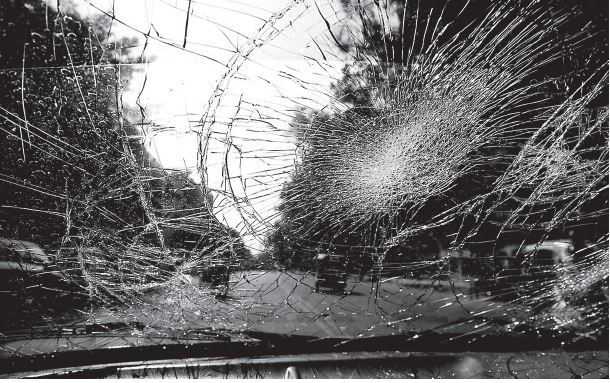
A deadly road accident in Harmada, Jaipur, on November 3, 2025, has once again drawn attention to India’s alarming road safety crisis. A speeding dumper truck, later confirmed to have been driven under the influence of alcohol, crashed into 17 vehicles on Loha Mandi road, killing 13 people and injuring at least 10 others. The scale and nature of the crash reflect a pattern seen across the country: reckless driving, weak enforcement, and unsafe road environments combining to produce tragic outcomes.
Data from the Union Ministry of Road Transport and Highways highlights the severity of the situation. In 2023, India recorded nearly 500,000 road accidents, resulting in over 150,000 deaths. This was the highest annual death toll from road accidents in nearly two decades. While the total number of accidents rose by around 10 per cent between 2005 and 2023, deaths increased by more than 80 per cent, suggesting that accidents are becoming far more lethal. A collision in India today is more likely to result in death than it was two decades ago, pointing to worsening survivability and inadequate safety measures.
Overspeeding is consistently identified as the single largest cause of fatal crashes. In 2022 alone, overspeeding led to more than 110,000 accidents on national highways, causing nearly 50,000 deaths. Ministry records show that in 2009, overspeeding contributed to 45 per cent of all road accidents, and the trend has remained largely unchanged. Other dangerous driving behaviours add to the toll. In 2023, crashes caused by drunken driving killed more than 3,000 people, while wrong-side driving resulted in almost 10,000 deaths. These numbers point to a persistent culture of rule violations, insufficient deterrence, and poor monitoring.
However, experts explain that India’s road safety crisis cannot be attributed to driver behaviour alone. The problem is rooted in how roads are designed, built, and managed. India has the world’s second-largest road network, but many highways and urban roads have not been designed with safety as a priority. High-speed corridors are often shared by heavy vehicles, buses, cars, two-wheelers, cyclists, and pedestrians, creating significant conflict points. Rapid expansion of expressways and national highways has not been matched by close attention to engineering and maintenance. Inadequate road markings, missing signage, inconsistent lane division, poor lighting, and damaged surfaces increase the risk of crashes.
A BBC report on road infrastructure noted that construction has surged in recent years as part of national connectivity and transport upgrade plans. Yet, safety features such as crash barriers, pedestrian crossings, and protected turns have not kept pace. Traffic signals often malfunction or are ignored. Enforcement remains inconsistent across states. Running red lights, using mobile phones while driving, and riding two-wheelers without helmets are common violations. These behaviours routinely occur without penalty, weakening the credibility of traffic regulations.
The public health significance of road accidents is substantial. The Sample Registration System reported that road accidents accounted for 2.9 per cent of all deaths in India between 2021 and 2023. This share exceeds deaths from tuberculosis, diarrhoeal diseases or malaria. In this sense, road safety is not simply a transport or policing issue, but a major health challenge.
Following the Jaipur crash, Prime Minister Narendra Modi expressed grief and conveyed condolences to the families of the victims. He also wished a speedy recovery to those injured. While such responses are standard after major tragedies, the event has renewed debates around the need for systemic and long-term interventions. Many analysts argue that improving road safety requires a combination of stricter enforcement, stronger penalties for violations, improved driver training, and redesigning roads to reduce conflict zones.
Cities and states that have introduced dedicated traffic surveillance, automated speed detection systems, and awareness campaigns have reported some improvements. Yet, the broader problem remains deeply structural. India’s expanding mobility demands and mixed road use patterns make safety a complex challenge. The Jaipur tragedy serves as another reminder that without coordinated action, road accidents will continue to claim thousands of lives every year.
Good Evening Viewers! Get the latest updates from India and around the world with The Savera Times Evening...

Bharatiya Janata Party (BJP) National General Secretary Smriti Zubin Irani launched a scathing attack on Congress MP and...
New Delhi: Cockroach Janata Party (CJP) leaders Saurav Das and Ashutosh Ranka will be released from judicial custody...
According to police, three suspicious young men are seen in CCTV footage. Efforts are underway to identify them....
A video has surfaced of an alleged attempted assault on Jan Suraj Party's Bihar president Manoj Bharti. The...
Two accused have been convicted and sentenced to 10 years of rigorous imprisonment in a 2017 drug trafficking...
Aries: The day will be auspicious...