Last Updated: October 24, 2026
Last Updated: October 24, 2026





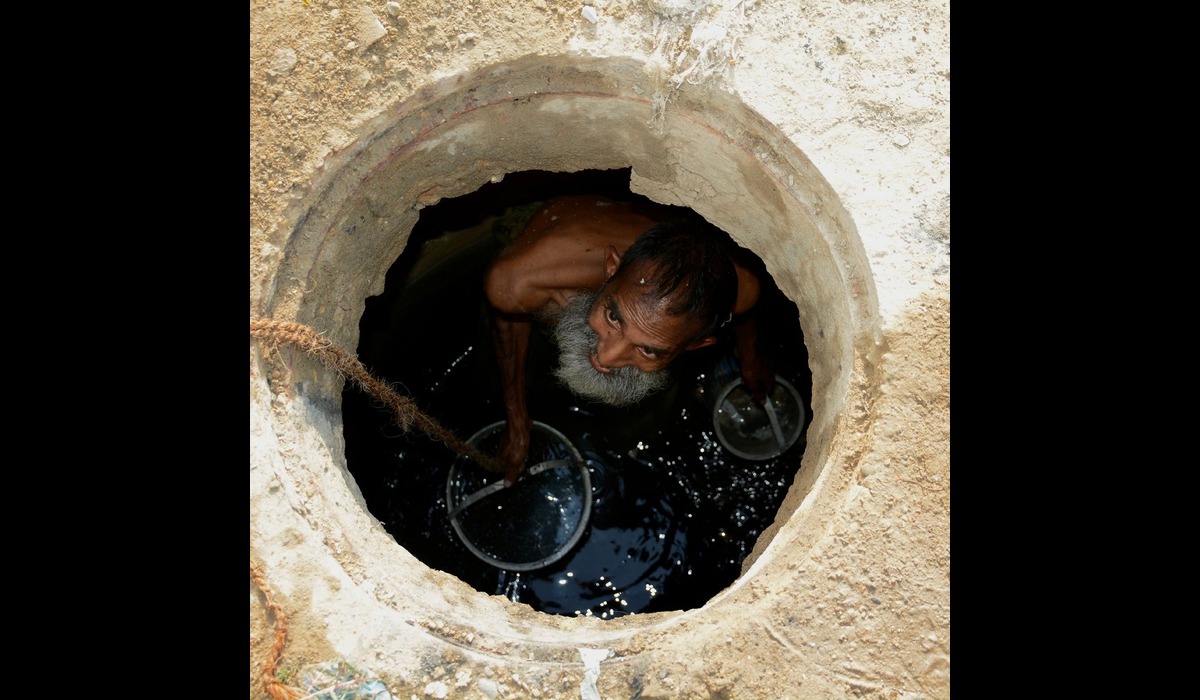
As India celebrated the 2024–25 Union Budget and its “Viksit Bharat” vision, another story unfolded far from the spotlight — in the country’s sewers and septic tanks. Between March and June 2024, 733 people died of heatstroke across 17 states, according to the Heat Watch 2024 report. Among the victims were sanitation workers, most from Dalit communities, whose deaths go uncounted in official data and unaddressed in climate policies.
Despite a legal ban on manual scavenging since 1993, and the 2013 Act prohibiting its employment, the practice persists. Between 2020 and 2024, 294 sanitation workers died cleaning sewers and tanks. In 2024 alone, 116 deaths were reported; by mid-2025, another 42 lives had been lost. Delhi remains the deadliest city, with six deaths this year alone. In one case, the Delhi Public Works Department posted images of workers submerged in sewage without safety gear, celebrating the violation as progress.
Rising heat has made this work deadlier. The 2024 heatwave was India’s longest in 14 years, with 44,000 cases of heatstroke and temperatures exceeding 40°C for weeks. Yet, sanitation workers continue to toil without protective gear or adjusted hours. India’s Occupational Safety Code excludes most outdoor labourers, leaving millions, including sewer workers, without legal protection.
The government’s NAMASTE scheme, launched in 2023 to mechanise sewer cleaning and provide safety gear, has reached barely half its intended beneficiaries. Of 84,902 identified workers, only 45,871 have received protective equipment. A parliamentary panel warned in August 2025 that slow progress could cost more lives, noting 377 deaths between 2019 and 2023 during hazardous cleaning operations.
The deeper crisis lies in denial. By claiming manual scavenging no longer exists, the state effectively erases sanitation workers from welfare and climate resilience programmes. About 40 per cent lack official identification, cutting them off from insurance, healthcare, or aid. When they die, their deaths are invisible in government records.
Climate disasters intensify this inequality. During the 2015 Tamil Nadu floods, 90 per cent of those injured were Dalits, and 95 per cent of damaged homes belonged to Dalit families. Relief camps were set up in dominant caste areas, leaving affected communities stranded.
The privatisation of sanitation work further deepens precarity. In Chennai, 2,000 sanitation workers have been protesting since August 2025 against wage cuts and the loss of job security under private contracts.
The crisis demands more than schemes or reports. It requires formalising all sanitation work as permanent government employment, enforcing safety laws, prosecuting negligent employers, and integrating caste-based data into climate adaptation plans.
As India confronts a warming planet, its most marginalised workers continue to face both environmental and social heat — unseen, unprotected, and often, unrecovered.
A powerful explosion erupted after firecrackers stored in a house in Alampur village, Siwan district, Bihar, on Friday
A Delhi court on Friday sent social media influencer Amir Shokeen to one-day judicial custody in connection with...
The Delhi High Court on Friday dismissed All India Students' Association (AISA) President Neha Bora's plea challenging the...

India's Ministry of External Affairs (MEA) on Friday clarified the government's position on the alleged ongoing face-off with...
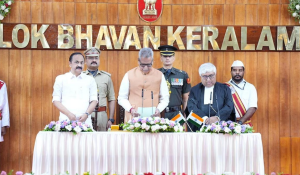
Om Prakash Mathur was sworn in as the 29th Governor of Kerala at Lok Bhavan in Thiruvananthapuram on...
Good Evening Viewers! Stay updated with The Savera Times Evening Bulletin for the latest news from Punjab, India...

Aries: The day will be auspicious...