Last Updated: October 21, 2026
Last Updated: October 21, 2026





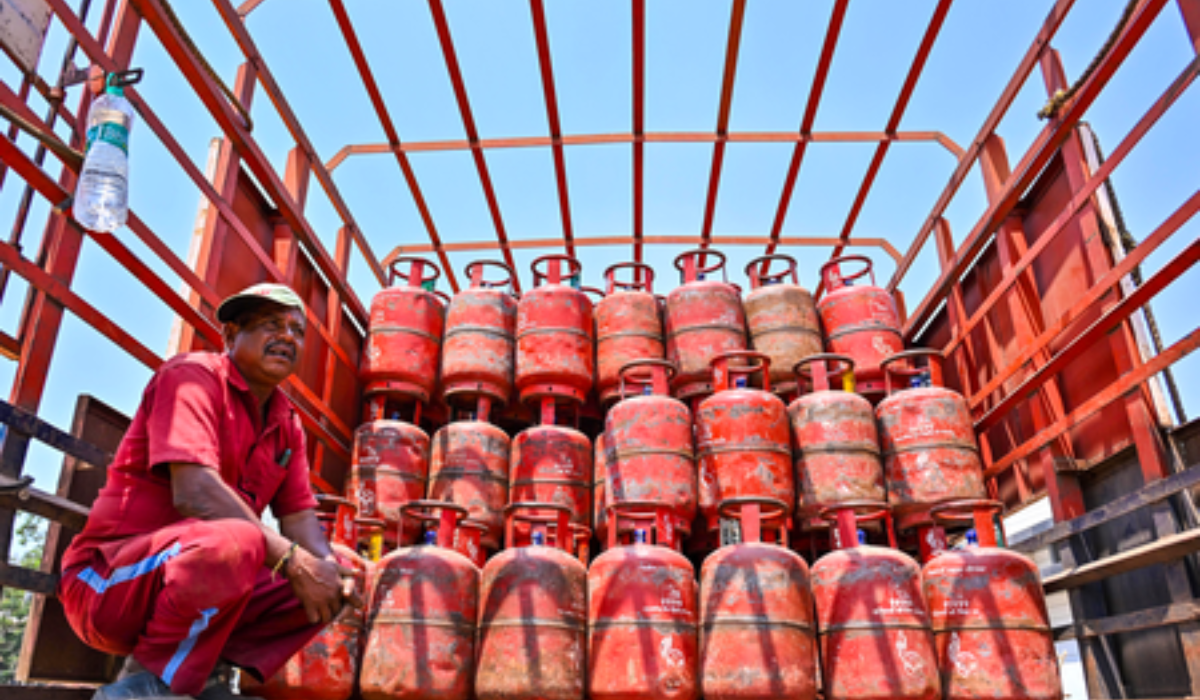
In March 2026, geopolitical tensions in West Asia have disrupted shipping through the Strait of Hormuz, a critical route for nearly 90% of India’s LPG imports. As the world’s second-largest importer of liquefied petroleum gas (LPG), India relies on imports for about 60% of its total consumption, with the rest met throughdomestic refining. Amid these global headwinds, concerns over potential shortages have surfaced.
Yet theIndian government has acted swiftly and decisively to protect household access to cooking gas. Through aseries of targeted measures under the Essential Commodities Act, the domestic LPG supply chain hasremained fully operational, with no reported dry-outs at distributorships and delivery timelines unchanged.Over 330 million households including 104 million under the Pradhan Mantri Ujjwala Yojana continue toreceive uninterrupted supply.
The government’s foremost priority has been clear: India’s kitchens must not face any shortage. As UnionMinister for Petroleum and Natural Gas Shri Hardeep Singh Puri stated in Parliament, “Domestic supply isfully protected and the delivery cycle is unchanged. The standard time from booking to delivery for domesticLPG cylinders remains 2.5 days, unchanged from pre-crisis norms.”Maximising Domestic Production Through Emergency DirectivesThe cornerstone of the stabilisation strategy has been a rapid ramp-up in local LPG output. On 8 March 2026,the Ministry of Petroleum and Natural Gas issued the LPG Control Order, directing all refineries andpetrochemical complexes to maximise LPG yields. Propane, butane, propylene, and butene streams previously used for petrochemicals or other purposes — were diverted exclusively to the three public-sectorOil Marketing Companies (Indian Oil, BPCL, and HPCL) for domestic cooking gas.
This single directive has delivered dramatic results. Domestic LPG production has surged by 25–28% withindays (with some reports indicating up to 31% increase), and every additional litre is being channelled directlyto household consumers. Refineries are operating at full capacity, and private players such as RelianceIndustries have aligned operations to support the national effort. The result: a significant reduction in importdependence during the crisis window.Prioritising Households and Essential ServicesStrict prioritisation has shielded domestic users. All enhanced refinery output goes exclusively to households.Hospitals and educational institutions enjoy uninterrupted priority supply. For commercial users (restaurants,hotels), a three-member committee of OMC executives has been formed to review allocations transparently.Starting immediately, 20% of average monthly commercial requirement is being released in coordination withstate governments to prevent hoarding or black-marketing.Non-domestic LPG remains available but regulated, while commercial cylinders are being distributed throughstate channels in 30 States and Union Territories.
Demand-Side Measures to Prevent Panic and Ensure EquityRecognising that panic booking, not actual scarcity, was creating pressure, the government introduced calibrated demand-management tools:
A minimum 25-day gap between subsidised refills in urban areas (extended to 45 days in rural and difficult terrains) to discourage hoarding.Expansion of the Delivery Authentication Code (DAC) system from 50% to 90% coverage. Consumers must nowconfirm receipt via a one-time mobile code, virtually eliminating undocumented diversion.Promotion of digital bookings (IVRS, SMS, WhatsApp, mobile apps) and Sunday openings at distributorships toease access without crowding.
Bookings have already begun normalising down from 88.8 lakh on 13 March to 77 lakh recently as publicconfidence grows.Encouraging Shift to Piped Natural Gas (PNG) and Alternative Fuels To ease long-term pressure on bottled LPG, the government issued an amendment to the LPG Control Order on14 March 2026: households with PNG connections must surrender their LPG cylinders, and new LPGconnections are barred for PNG users. Commercial consumers in cities are actively encouraged to switch viasimplified applications through CityGas Distribution companies.
Simultaneously, alternative fuels have been activated: Additional 48,000 KL of kerosene allocated through PDS and retail outlets.Temporary permission for biomass, RDF pellets, coal, and kerosene in hospitality and restaurant segments forone month.Fuel oil made available for industrial users.
These steps free up LPG for priority domestic use while maintaining overall energy continuity.
Import Diversification and Supply Chain Monitoring While domestic production has taken the lead, imports continue. Two fresh shipments carrying 80,000 tonnes of LPG are already en route, and procurement talks with alternative sources (United States,
Norway, Canada,Algeria, Russia) are progressing. Earlier long-term agreements, including 2.2 million tonnes per annum fromthe US, provide additional buffers.At the ground level, coordination is robust. The Union Home Secretary has engaged Chief Secretaries of allstates. District monitoring committees, surprise inspections by OMC officers, and anti-hoarding raids areunderway. Control rooms operate in 22 States/UTs, with more coming online. No dry-outs have been reportedanywhere.
A Reassuring Message to Citizens
The government has repeatedly urged citizens not to panic-book cylinders. “The rush-booking pressure insome localities reflects a demand distortion, not a production or supply failure,” Minister Puri emphasised.More than 50 lakh cylinders are delivered daily, exactly as before the crisis. Online booking share has risen to87%, and awareness campaigns through media and social platforms are actively countering rumours.
Conclusion: Domestic Supply Chain Remains Fully Functional
The steps taken by the Indian government from emergency production directives and prioritisation todemand management and multi-fuel alternatives have successfully insulated the domestic LPG supplychain. Despite external disruptions, refineries are producing more, deliveries are on schedule, and India’s 33+crore households continue to cook without interruption. This episode once again demonstrates the robustnessof India’s energy security framework and the government’s unwavering commitment to protecting thecommon citizen.As the global situation evolves, the Ministry continues round-the-clock monitoring. Citizens are advised tobook only when genuinely needed, prefer digital modes, and trust official channels. The domestic LPG supplychain is not only functioning it is being strengthened in real time to serve every Indian kitche
Good Evening Viewers! Catch up on the day's biggest stories with The Savera Times Evening Bulletin. Get the...

Congress leaders continued their protest outside the Jaipur Police Commissionerate on Tuesday, demanding the registration of a zero...
On the auspicious occasion of Vijayadashami, Prime Minister Narendra Modi on Tuesday called on the countrymen to unite...
A historic milestone was achieved on Tuesday in the expansion of Chhattisgarh's rail networkA historic milestone was achieved...

Model Shraddha Dubey, one of the main accused in the death of Lucknow businessman Shiv Sharma, has been...

Rashtriya Swayamsevak Sangh (RSS) chief Mohan Bhagwat on Tuesday called for strengthening national unity, social harmony, indigenous practices...
Aries: The day will be auspicious...