Last Updated: October 21, 2026
Last Updated: October 21, 2026





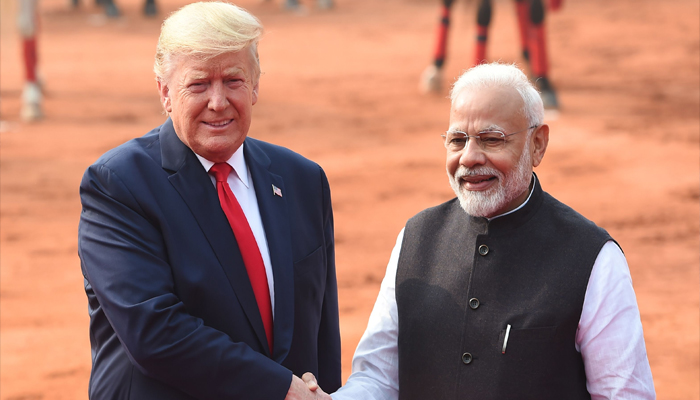
India and the United States are heading toward a trade deal, a development that now appears inevitable. While recent tensions with Washington are not what New Delhi sought, they may prove to be exactly what India needs. The dispute, seen by some as a setback, could instead become a catalyst for overdue economic reforms and a long-term reset of India’s trade strategy. The key to understanding this moment lies in looking beyond narrow issues such as alfalfa imports or certification standards for electronics. The real question is whether India uses these negotiations to unlock deeper reforms or continues to focus on shortterm defensive measures. As one Washington phrase has it, India must “go big or go home.”
A Tariff Clash with a Silver Lining
The tariff disputes and unusually blunt diplomatic exchanges with the United States have left many in India bristling. Yet these very tensions highlight an opportunity for India to rethink its outdated regulatory approach. Instead of clinging to protectionist barriers, New Delhi can frame their removal as a negotiating victory.This is not without irony. Take dairy imports as an example. India has long blocked foreign dairy products, citing small farmer protection and cultural sensitivities. Yet, in the United States, Amul itself operates facilities that supply milk products to American grocery stores and wholesale outlets. If Amul America tried to export that milk back to India, current Indian regulations would prevent it. The contradiction is glaring: India protects its farmers even against a cooperative owned by Indian farmers. Such inconsistencies weaken India’s credibility abroad. By giving ground on issues where little is at stake, India could gain much-needed trust, making it easier to press its case in areas of genuine concern.
Regulatory Barriers and the Need for Reform
The 2024 National Trade Estimate Report from the US Trade Representative catalogues India’s barriers in exhaustive detail: restrictions on distiller’s dried grains with solubles, redundant testing requirements for equipment already approved in top global markets, and mandatory foreign chemical plant inspections, among others. These rules, born of an older era, hurt both Indian and foreign businesses. If India treats the easing of such barriers as concessions to Washington, it could achieve what internal politics has delayed for decades: completing the promise of economic liberalisation begun in the 1990s. Framed as reforms under pressure, they become politically palatable.
The Regional Dimension
The trade dispute also throws into relief India’s place in the wider region. Neighbouring countries such as the United Arab Emirates, Bangladesh, and Sri Lanka secured lower tariff assessments from the United States, in some cases at 10 to 20 percent. India, facing higher rates, could view this as a setback. But it could also see it as an incentive to deepen economic ties with these partners. The UAE stands out. Indian businesses already see it as a gateway to global markets, with its world-class infrastructure and access to talent. For India, closer alignment with the UAE not only offers commercial a d v a n t a ge s b u t a l s o strengthens its role in Africa, where Chinese influence continues to expand. By using the UAE as a bridge, India could expand its sphere of economic influence while indirectly supporting US e�orts to counter Beijing.
Balancing Big Powers
To India’s credit, its response to American pressure has been measured. The g o v e r n m e n t a v o i d e d r e t a l i a t o r y r h e t o r i c , reflecting the confidence of a middle power that can engage assertively without escalating conflict. This balance matters. While India maintains ties with Russia and China, neither o�ers real alternatives to American markets. China maintains a large trade surplus with India but offers little in terms of reciprocal access. Russia’s economy, smaller than that of a single US state such as California or Texas, cannot replace the scale of American trade. Thus, while important diplomatically, these relationships cannot substitute for the depth of economic partnership available with the US.
Missteps and Lessons
India’s initial approach underestimated Washington’s resolve. The 25 percent tariff imposed on certain imports due to India’s purchases of Russian oil underscored that American trade policy would not bend to traditional arguments of strategic partnership. India’s reliance on goodwill proved misplaced. Yet, this misstep offers clarity. The lesson is not that India must capitulate, but that it must approach trade pragmatically, recognising where concessions cost little and reforms bring long-term gain.
The East Asian Example
There is precedent for such an approach. Japan and China, both facing trade disputes with the US in the past, managed to protect their core interests while opening markets selectively. They said “no” to certain demands but “yes” to structural reforms that ultimately strengthened their economies. India, too, can preserve its dignity while embracing reforms that expand its global competitiveness. Toward a Liberalised Future The broader challenge is completing India’s transformation into a liberalised, globally integrated economy. Domestic political resistance has long delayed reforms that would benefit consumers and businesses alike. Framed as part of a trade deal with Washington, these same reforms can be portrayed as victories in tough negotiations. If handled correctly, the current friction could accelerate India’s rise as a bridge between East and West, developed and developing economies. Rather than retreat into protectionism, India has the chance to position itself as a confident player in the global economy, capable of drawing investment, expanding exports, and shaping regional trade patterns. This is the true opportunity hidden within today’s disputes. What appears to be a crisis may instead mark the moment India sheds defensive h a b i t s a n d e m b race s pragmatic reform. If that happens, even a container of Amul milk produced in the United States and still barred from Indian ports will stand as a reminder of how far the country has come
Pakistan, battling insurgencies at home and tensions along multiple borders, is too overstretched to offer meaningful military support...
The World Bank Group has launched its first comprehensive digital strategy, placing artificial intelligence, affordable internet access and...
Fifty-four organisations and movements associated with France's October protests, along with their wider networks of supporters and international...

In the aftermath of the Indian agencies cracking down heavily on Indian influencers who were promoting pro-Pakistan content,...

Nearly 100 new cases of dengue have been reported in Pakistan's Khyber Pakhtunkhwa province in the last 24...
Following violent protests and looting in France, the government has decided to impose new curfews in different areas...

Aries: The day will be auspicious...