Last Updated: November 29, 2026
Last Updated: November 29, 2026





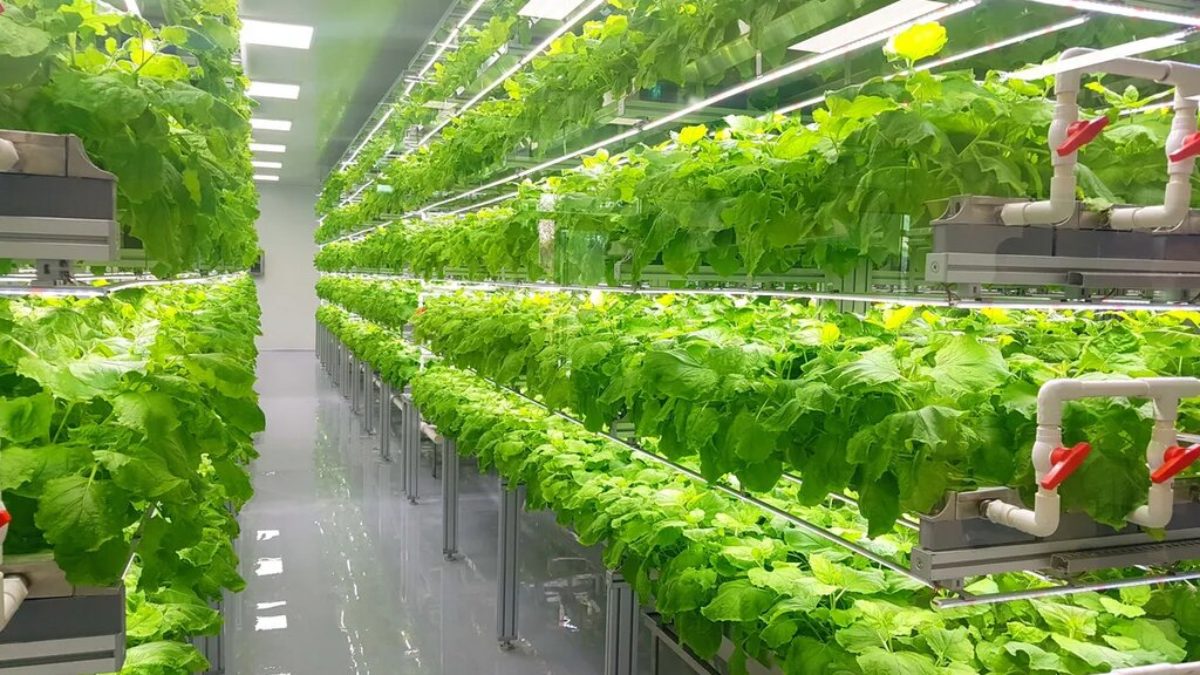
The agricultural sector is facing unprecedented challenges, driven by factors such as climate change and population growth. The need for sustainable, efficient alternatives has never been greater and innovators like Vivek Raj are helping reshape how we grow food in place of traditional farming methods. Raj is using hydroponics and aeroponics techniques to grow high-value crops like medicinal plants, herbs, spices and saffron in indoor environments in India and the United States. Hydroponics is a technique for cultivating plants using a nutrient-enriched water solution while aeroponics involves growing plants without soil by keeping their roots suspended in the air and misting them with a nutrientrich solution. His journey into hydroponics began in 2014 when he recognised the potential of growing crops indoors without soil. He realised that controlled-environment agriculture could mitigate challenges like unpredictable weather, pests and diseases, while ensuring optimal conditions for plant growth. By carefully adjusting variables like temperature and nutrient delivery, Raj has successfully cultivated saffron — typically grown in regions like Kashmir and Iran — within controlled environments in the US. With the spice’s high demand and limited supply, Raj saw controlled-environment agriculture as an opportunity to improve yield and quality. By using an AI-powered nutrient delivery system, his team at Panama Corporation Ltd optimised saffron cultivation, highlighting the potential for indoor farming of highvalue crops. Trial runs with saffron, spices and medicinal plants have demonstrated promising results, including a 300 percent profit margin. Raj claims that his approach, which reduces water use and eliminates pesticides, consistently delivers high-quality crops compared to traditional farming. By 2026, his team plans to establish one of the largest saffron and spice farms, potentially reshaping how these crops are grown. In 2021, Raj filed a patent for a smart LED system that uses AI and machine learning to adjust environmental conditions like light and humidity in real time, aiming to scale indoor farming efficiently. He emphasised the importance of sustainable practices, focusing on producing crops without harmful chemicals, pesticides or genetically modified organisms. M Raghuram talks to Raj about his farming techniques and the future of agriculture. Excerpts: MR: What conditions did you simulate to undertake saffron hydroponic cultivation? VR: To successfully cultivate saffron hydroponically, we had to replicate the conditions found in its native environment, such as in Kashmir. Temperature was a crucial factor, as saffron thrives in cooler climates with distinct daynight temperature variations. We created an environment where daytime temperatures range from 15 degrees Celsius to 18°C and drop to around 4°C to 5°C at night, closely mirroring Kashmir’s conditions. Humidity control was also essential and we maintained relative humidity between 40 and 50 per cent to ensure optimal moisture levels. We used full-spectrum LED lights to simulate the specific sunlight saffron needs, particularly the autumnal light conditions. Additionally, we employed artificial intelligence (AI)-driven systems for precise nutrient delivery, ensuring each plant received the right mix of nutrients without wastage.
New Delhi: Four people were killed, and two others sustained burn injuries after a fire broke out at...

Water storage across India’s 178 major reservoirs has fallen to 60.19% of capacity, with southern reservoirs holding just...

The Supreme Court has directed the Centre and FSSAI to strengthen front-of-pack warning labels, requiring separate red hexagonal...

A SON AND HIS HUNGRY MOTHER Maudgalyayana (known as Maha Moggallana, or Mulian in Chinese tradition) was one...

Stay updated with the latest news from Punjab, India and around the world with The Savera Times Evening...

Ahmedabad: Five members of an inter-state gang allegedly involved in stealing Apple products and other electronic goods worth...
Aries: The day will be auspicious...