Last Updated: October 20, 2026
Last Updated: October 20, 2026





Abhishek Vij
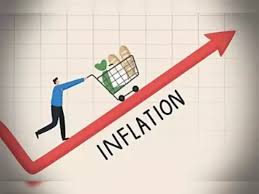
The Reserve Bank of India has consistently announced that owing to previous stringent monetary policies, the country has successfully brought inflation under control. Consequently, it was deemed appropriate to liberalize monetary policy to foster increased investment in India.
Efforts in this direction were indeed undertaken by lowering the repo rate in the bi-monthly monetary policy reviews. Alongside the declaration of inflation control, it was also noted that the Wholesale Price Index (WPI) growth rate had dipped below zero. It was anticipated that credit policy would now be progressively liberalized for investors; however, at this very juncture, a fierce conflict erupted in West Asia involving the United States, Israel, and Iran. The closure of the Strait of Hormuz—a vital maritime route in the Persian Gulf—has halted the supply of oil and gas shipments.
Iran’s newly appointed Supreme Leader, Mojtaba Khamenei, has explicitly declared that the Strait of Hormuz will not be reopened for the time being. Nevertheless, by evening, Iran’s Ambassador to India, Mohammad Fathali, issued a statement affirming that Iran is prepared to provide a safe passage for India. He emphasized that India is a friend of Iran. Meanwhile, Qatar—a major supplier of LPG—has also halved its gas production amidst the unfolding conflict. India’s energy security relies heavily on the import of oil and gas, accounting for 85% of its requirements. This critical lifeline has now come under severe threat. In January 2026, the retail inflation rate was reported at 2.74 percent. This figure appeared remarkably low primarily because the base year for the index calculation had been revised to 2024. However, now that supply chains from Middle Eastern nations have been disrupted, retail inflation has once again begun to spiral out of control. Driven solely by the apprehension of war, the rate has already climbed to 3.21 percent.
Furthermore, as the conflict—now in its second week—continues, missile attacks launched by Iran against oil and gas-producing nations have resulted in a significant decline in their production output. Consequently, the shortage of oil and gas has created a windfall for hoarders and those who exploit the situation to fuel a psychology of scarcity. Those who stockpile goods to sell them at inflated prices are reaping huge profits. In just the last 15 days, inflation has skyrocketed.
Previously, it was primarily the surge in the prices of precious metals—such as gold and silver—that had taken the world by surprise; however, in countries like India, the crisis stemming from a shortage of cooking gas has now emerged as an even more pressing concern. Despite assurances from the government, there remains a looming threat that if the war drags on, it could trigger a shortage of oil as well. While the government has so far managed to keep oil prices under control, the prices of both domestic and commercial LPG have already witnessed an upward revision. Hoarders and rumor-mongers have further exacerbated the crisis.
Despite the rising cost of gas, immediate availability remains elusive. An atmosphere of chaos and pandemonium prevails outside the warehouses of gas distribution companies. In New Delhi, opposition parties have staged protests against this crisis by lighting traditional wood-fired stoves. The government maintains that there is no actual shortage of oil or gas, noting that arrangements for alternative supply routes have already been put in place. Furthermore, Iran has granted permission for oil tankers bound for India to pass through the Strait of Hormuz. The country has rarely, if ever, witnessed such a severe scarcity of gas. Due to the unavailability of commercial-grade gas, several food items have been dropped from the menus of hotels, restaurants, and similar establishments.
Some restaurant owners have resorted to using alternative fuels; however, in many locations, commercial gas cylinders are now being sold on the black market. It is now incumbent upon both the Central and State governments to rein in this rampant black marketing. Amidst this wartime climate, the black marketing of LPG—an essential commodity for daily consumption—has created a distinct and additional layer of problems.Although India is not directly involved in the conflict, the disruption of global supply chains has had a ripple effect, impacting economies ranging from India all the way to the European nations. In the coming days, the inflation rate is expected to spiral even further out of control, leaving the common man with no choice but to throw up their hands in despair.
Good Evening Viewers! Catch up on the day's biggest stories with The Savera Times Evening Bulletin. Get the...

Congress leaders continued their protest outside the Jaipur Police Commissionerate on Tuesday, demanding the registration of a zero...
On the auspicious occasion of Vijayadashami, Prime Minister Narendra Modi on Tuesday called on the countrymen to unite...
A historic milestone was achieved on Tuesday in the expansion of Chhattisgarh's rail networkA historic milestone was achieved...

Model Shraddha Dubey, one of the main accused in the death of Lucknow businessman Shiv Sharma, has been...

Rashtriya Swayamsevak Sangh (RSS) chief Mohan Bhagwat on Tuesday called for strengthening national unity, social harmony, indigenous practices...
Aries: The day will be auspicious...