Last Updated: October 6, 2026
Last Updated: October 6, 2026





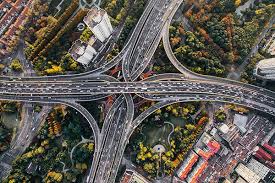
India is experiencing a blitzkrieg upgrade in its infrastructure, driven by increased government investment and development initiatives. There are significant advancements in India’s transportation networks, including roads, railways, aviation, and waterways, and their impact on the country’s economic growth. These infrastructure developments aim to enhance connectivity, reduce logistics costs, and position India as a global economic powerhouse. Fuelled by the ambitious PM Gatishakti National Masterplan for multi-modal infrastructure development, the new roads and railways will help India fulfil its ambition to turn into a $5 trillion econom. India boasts of the world’s secondlargest road network, with over 6.37 million kilometres. In recent years, there has been a substantial increase in the pace of construction of national highways, from an average of 12 kilometres per day in 2014-15 to around 29 kilometres per day in 202122. The total length of highways has expanded from 97,830 kilometres in 2014 to 145,155 kilometres till 2023. Moreover, in the last 11 years, more than 3.5 lakh kilometres of rural roads have been constructed under the Pradhan Mantri Gram Sadak Yojana giving all-weather roads connectivity to villages of India. The government’s budget support for road infrastructure has rapidly increased, reaching approximately Rs 1.4 lakh crore in FY22-23. Completion of strategic projects like the Atal Tunnel, the Dhola-Sadiya Bridge, and the Chenab River Bridge, some of which had been pending for years, on a war footing is a testament to the government’s inclusive governance and its commitment to connectivity even in the remotest and difficult terrains of the country. India’s railways have undergone substantial modernization and expansion. Capital expenditure on railway infrastructure has steadily increased over the past four years, with a budget of Rs 2.5 lakh crore allocated in FY22-23, representing a 29% rise compared to the previous year. Electrification of railway tracks has witnessed significant progress, reaching 37,011 route kilometres in the last nine years. Further, in 2022, the successful trial of KAVACH, a state-of-the-art electronic system designed to help the Indian Railways achieve Zero Accidents was conducted. The introduction of the indigenously designed Vande Bharat Express, which are already functional in 25 routes, and its subsequent expansion showcases India’s commitment to high-speed rail travel. The ongoing construction of a high-speed line between Mumbai and Ahmedabad, with Japanese collaboration, and the development of new freight corridors will further boost connectivity, reduce travel time, and facilitate the efficient movement of goods and passengers. India’s aviation sector has experienced substantial growth, positioning the country as the world’s thirdlargest market. To promote regional connectivity and revive unserved or underserved airports, the government has allocated a hefty fund under the Ude Desh ka Aam Nagarik (UDAN) scheme. The number of airports with civilian flights has doubled in the last nine years, from 74 in 2014 to 148 in 2023. Additionally, the government has also accorded ‘in-principle’ approval for setting up 21 greenfield airports across the country. Further, greenfield Noida International Airport is now the country’s largest centre for aircraft maintenance, repair and operation (MRO), bolstering the aviation sector and generating employment opportunities. India recognizes the immense potential of its waterways in establishing a sustainable logistics sector. The government’s focus on inland water transport has led to the declaration of 111 National Waterways. The cargo movement on these waterways reached a record high of 108.8 million tons in FY22, reflecting a growth of 30.1% compared to the previous year. The Inland Vessels Bill 2021 further facilitates the growth of inland water transport, creating a robust multi-modal transport ecosystem and fostering ease of doing business. Additionally, the Sagarmala Project aims to develop ports, streamline compliances, and reduce vessel turnaround time. Transport infrastructure development reduces transport costs, increases gains from trade, and drives up wages, thus boosting economic activity. The development of infrastructure has helped move workers from agriculture to more productive jobs. Making this transition possible and feasible, also inspired improvements in educational attainment in villages
New Delhi: Union Parliamentary Affairs Minister Kiren Rijiju on Tuesday lashed out at the Lok Sabha Leader of...

Bilaspur: President Droupadi Murmu on Tuesday highlighted the role of Ayushman Bharat Pradhan Mantri Jan Arogya Yojana in...

New Delhi: India on Tuesday condemned the attack on a Panama-flagged commercial vessel MT On Peace off the...
Mumbai: Domestic equity benchmarks ended sharply higher on Tuesday as investors accumulated pharma, private banking and oil &...

Srinagar: The Jammu and Kashmir government has enhanced the retirement age of judicial officers from 60 to 62...
New Delhi: Chief Justice of India (CJI) Surya Kant on Tuesday administered the oath of office to three...

Aries: The day will be auspicious...