Last Updated: October 17, 2026
Last Updated: October 17, 2026





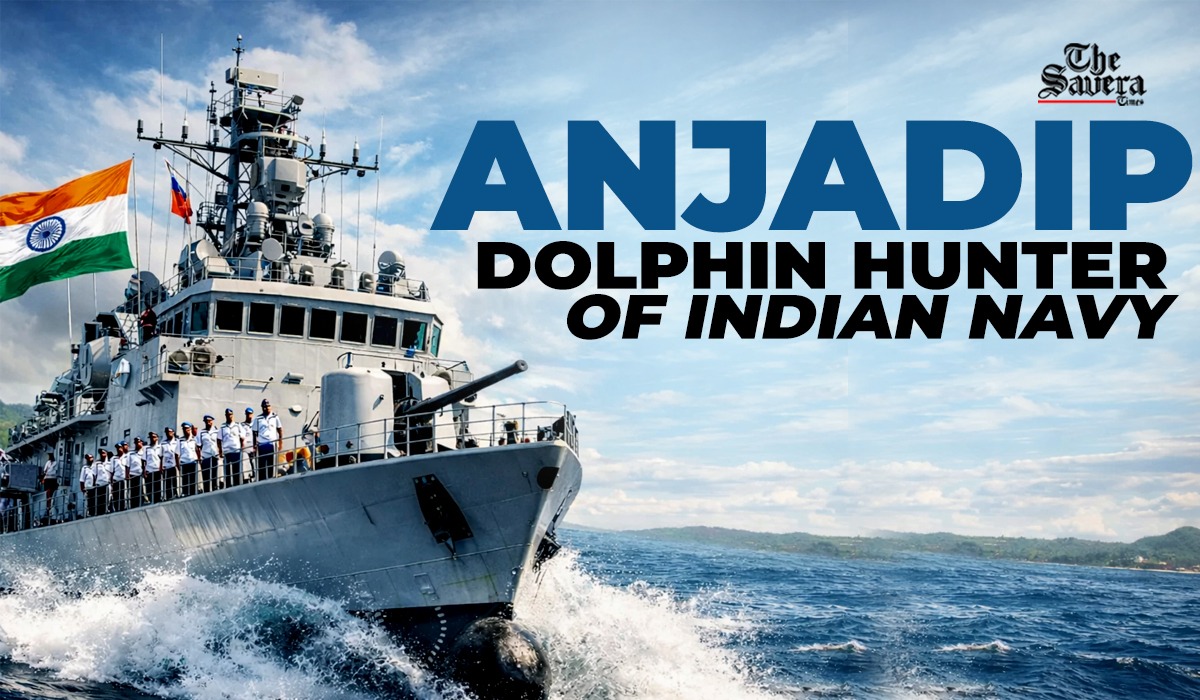
The Indian Navy has enhanced its Anti-Submarine Warfare (ASW) capabilities with the commissioning of Anjadip, the third vessel of the eight-ship Anti-Submarine Warfare Shallow Water Craft (ASW-SWC) project.
The warship was formally commissioned into the Eastern Naval Command at Chennai Port today. The ceremony was presided over by Admiral Dinesh K Tripathi, Chief of the Naval Staff.
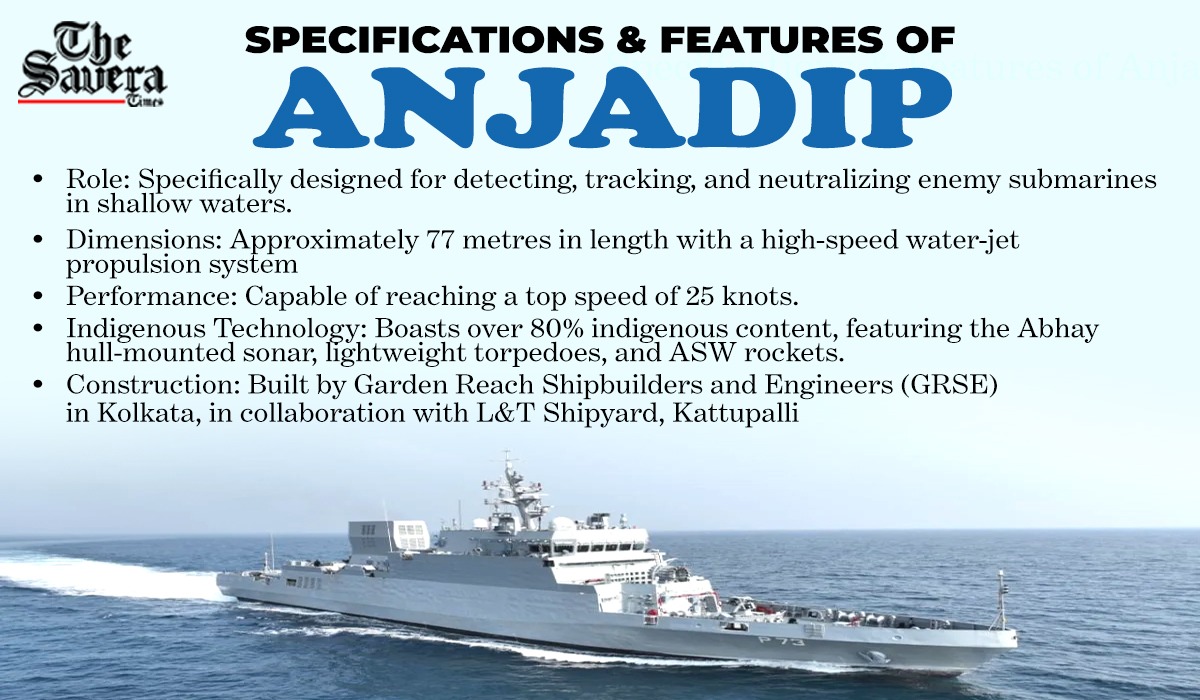
Built by Garden Reach Shipbuilders & Engineers (GRSE), Kolkata, Anjadip is a state-of-the-art vessel specifically designed to address the challenges of the littoral combat environment–the coastal and shallow waters vital for the nation’s security.
The vessel is engineered to act as a ‘Dolphin Hunter’, focused on the detection, tracking, and neutralisation of enemy submarines in coastal areas. The ship is packed with an indigenous, cutting-edge Anti-Submarine Warfare weapons and sensor package, including the Hull Mounted Sonar Abhay, and armed with Lightweight Torpedoes and ASW Rockets.
The induction of Anjadip, named after the historically significant island off the coast of Karwar, significantly bolsters the Navy’s capacity to safeguard India’s vast maritime interests and coastal approaches, including Tamil Nadu and Puducherry Area, marking another key step in transforming the Indian Navy into a formidable ‘Builder’s Navy’.
It also revives the legacy of the former Petya-class corvette INS Anjadip, which served the Navy until 2003.
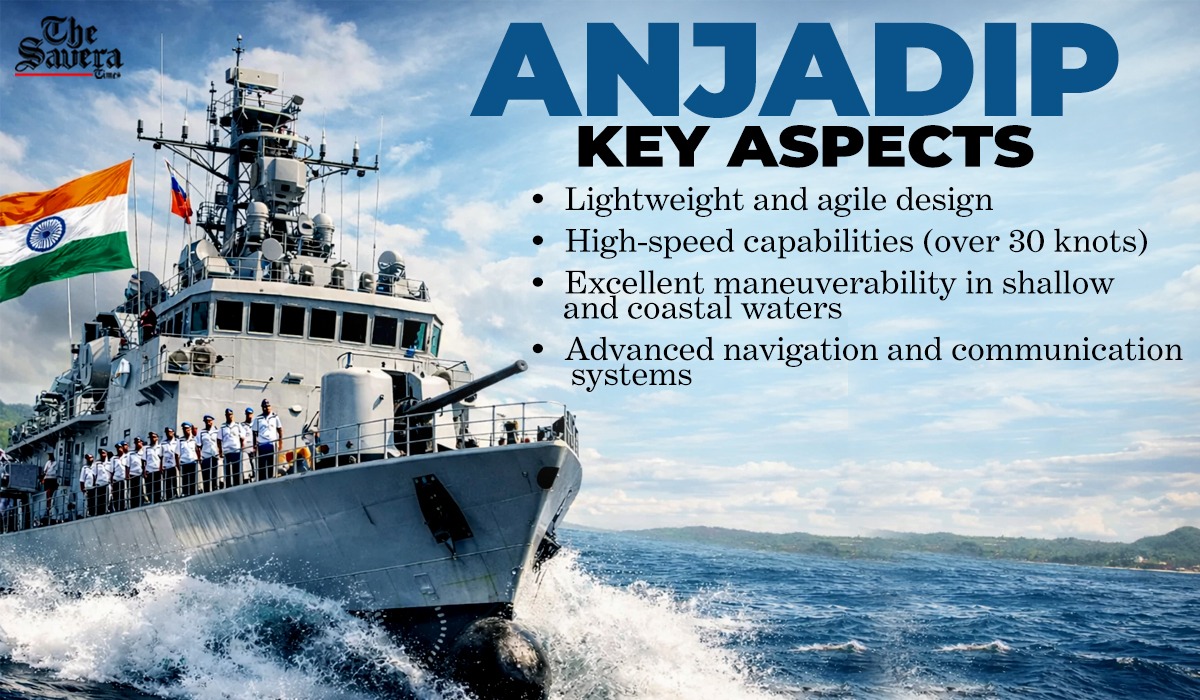
Operational Significance of INS Anjadip
INS Anjadip plays a crucial role in safeguarding India’s maritime interests. Its key functions include:
The vessel continuously patrols India’s coastline to monitor suspicious or unauthorized maritime activity. It helps maintain constant vigilance in sensitive sea zones.
With high speed and agility, INS Anjadip can quickly intercept unidentified or suspicious boats, preventing illegal entry, infiltration, or smuggling.
The craft supports operations aimed at curbing illegal trafficking of arms, narcotics, and other contraband, and assists in deterring piracy threats in coastal waters.
It safeguards vital offshore infrastructure such as oil rigs, ports, and coastal installations that are critical to India’s economy and security.
INS Anjadip participates in rescue missions, assisting fishermen and vessels in distress during bad weather, accidents, or emergencies at sea.
In case of heightened security situations, the vessel can be deployed quickly to strengthen maritime defence and coordinate with other naval and coast guard units
Following the increased focus on maritime security after the 2008 Mumbai attacks, vessels like INS Anjadip became an important part of India’s layered coastal defence mechanism.
These fast attack crafts ensure constant vigilance along the western seaboard and enhance coordination between the Navy, Coast Guard, and coastal authorities.
INS Anjadip continues to serve as a key asset in India’s efforts to maintain maritime dominance, secure sea lanes, and respond swiftly to emerging threats in territorial waters.
Mumbai: Bollywood actor Imran Khan has filed a writ petition in the Bombay High Court seeking a stay...

What if a decision taken in Washington could influence India’s oil bills, export earnings and trade relations with...

Apia: Minister of State (MoS) for External Affairs, Pabitra Margherita, on Saturday interacted with members of the Indian...
At least five workers were killed and six injured after a 15-kilolitre reactor exploded during a hydrogenation process...

New Delhi: Union Minister of State Jitendra Singh has said that India’s space economy — currently valued at...

New Delhi: The Supreme Court-constituted High Powered Enquiry Committee (HPEC) has started inviting complaints and representations from people...

Aries: The day will be auspicious...