Last Updated: October 15, 2026
Last Updated: October 15, 2026





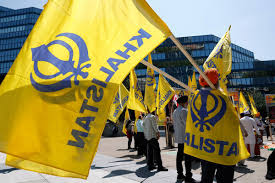
A new controversy in Canada has reopened an old and uncomfortable question: when does activism around identity and rights cease to be community advocacy and begin to resemble ideological capture? In recent weeks, a public dispute within sections of the Sikh diaspora in Ontario has brought serious allegations into the open.
Open letters and social media threads have accused influential community-linked circles of intimidation, misuse of religious platforms, pressure on dissenters, and an effort to silence scrutiny inside major gurdwara-centered spaces. At the same time, prominent advocacy groups in Canada have continued to foreground claims of Indian “interference” and Sikh “self-determination,” presenting themselves as defenders of Sikh rights and freedoms. The immediate controversy is local. Its significance is not. It points to a broader pattern in which radical Khalistani politics seeks moral legitimacy through faith institutions while resisting accountability within the community itself.
This distinction matters because the Khalistan question is often deliberately blurred. Criticism of Khalistani radicalism is routinely portrayed as criticism of Sikhs. That is false, and dangerously so. The overwhelming majority of Sikhs, in India and abroad, are not separatists. They are citizens, professionals, farmers, soldiers, entrepreneurs, and community builders with no stake in reviving a failed and violent political project. The problem is not Sikh identity. It is the instrumental use of Sikh identity by a narrower ideological ecosystem that converts grievance into political capital, faith into organizational leverage, and religious legitimacy into cover for factional or separatist mobilization. What makes the Canadian controversy important is precisely that it appears to show this ecosystem turning inward: not merely denouncing India from afar, but battling for influence inside institutions meant to serve the sangat, not political cliques.
India’s concern about this ecosystem has never been abstract. Punjab’s history provides the starkest rebuttal to romantic accounts of Khalistani politics. According to the South Asia Terrorism Portal, Punjab recorded 21,630 terrorism-related fatalities between 1981 and 2000. Of these, 11,782 were civilians and 1,753 were security personnel. The worst phase came in the early 1990s, when annual fatalities crossed 4,000 in 1990, peaked at 5,265 in 1991, and remained at 3,883 in 1992. Those figures represent far more than the rise and fall of an insurgency. They mark a period in which ordinary Punjabis paid the price for extremist politics through assassinations, extortion, bombings, intimidation, and the steady destruction of civic normalcy. Any attempt to sanitize separatist rhetoric today must first reckon with the fact that the largest victims of Khalistani violence were Punjabis themselves.
The international record is just as devastating. Public Safety Canada continues to describe the bombing of Air India Flight 182 as the worst terrorist attack in Canadian history. The attack killed 329 people, including 280 Canadians, and was planned and executed from Canadian soil. That fact should have settled, long ago, the argument that Khalistani extremism is merely symbolic diaspora theatre. It has produced mass-casualty terrorism. It has spilled beyond slogans into catastrophic violence. Yet over time, parts of the political and media discourse in the West have treated the issue as if it were simply an awkward diplomatic disagreement between Ottawa and New Delhi. It is not. It is also a question of whether democratic societies are willing to confront extremism when it wraps itself in the language of minority rights and transnational grievance.
India’s legal response reflects that assessment. Sikhs for Justice was declared an unlawful association under the Unlawful Activities Prevention Act, and that declaration was extended for another five years from July 2024; the tribunal order confirming the extension was published in January 2025. The state’s case has been consistent: the objection is not to religious advocacy, but to activities considered prejudicial to India’s sovereignty, integrity, and internal security. One may debate the breadth of legal language in such matters, but the underlying point remains important. India is responding not to harmless speech in the abstract, but to a separatist ecosystem it argues has repeatedly crossed into subversion, incitement, and support for violence.
Recent security developments make it difficult to dismiss these concerns as relics of the 1980s and 1990s. In May 2025, the National Investigation Agency searched 15 locations in Punjab linked to the banned Babbar Khalsa International in connection with a grenade attack on a police station in Gurdaspur. The agency said its operation targeted nodes linked to foreign-based operatives.
More recently, Punjab Police said it had busted an ISI-sponsored terror and arms smuggling module in Amritsar Rural, alleging that the network was using social media to spread anti-India and anti-police narratives while moving weapons sent by foreign handlers through Pakistan. Separate reporting has also highlighted a sharp rise in drone-linked smuggling along the Punjab border, with 272 drones reportedly recovered in 2025, up from just 3 in 2021. This is the contemporary architecture of the threat: propaganda, foreign handlers, organized crime, smuggling, and radical messaging feeding one another across borders.
That is why the Canadian controversy deserves attention beyond its immediate personalities. If allegations now emerging from within the diaspora speak of intimidation, misuse of institutions, pressure on workers, and reprisals against dissent, then the issue is larger than one dispute or one set of individuals. It suggests the possibility of institutional capture. Extremist politics survives not only by confronting the state it opposes, but by colonizing the community it claims to represent. It converts accountability into betrayal, scrutiny into hostility, and factional control into a substitute for democratic legitimacy. In gurdwara-centered community life, that is especially corrosive, because religious institutions carry moral authority that should never be reduced to the service of ideological intimidation.
A serious response requires two equal commitments. The first is to reject all lazy suspicion toward Sikhs as a community. Such suspicion is not only unjust, it serves extremists by helping them claim victimhood on behalf of everyone. The second is to reject the indulgent fiction that Khalistani radicalism is too marginal, too rhetorical, or too politically sensitive to confront directly. Punjab’s history, Air India 182, the continuing role of banned outfits and foreign handlers, and now the troubling signs of internal pressure within diaspora institutions all point in the same direction.
The real issue is not whether a fringe can generate noise online. It is whether democratic societies will allow a politics with a proven record of violence to borrow the prestige of faith and the language of rights without facing scrutiny. India’s warning, stripped of rhetoric, is a simple one: when separatism acquires moral cover in religious institutions and operational support through transnational networks, silence is not neutrality. It is permission.
Singapore: Two Singapore-registered container vessels were reportedly struck by unknown projectiles while transiting the Strait of Hormuz on...

Shimla: The Himachal Pradesh government has constituted a four-member commission to examine the reorganisation of administrative units in...

New Delhi: The Supreme Court on Wednesday listed for November 17 the appeal filed by self-styled godman Asaram...

Ranchi: Doctors in Jharkhand launched a protest on Wednesday over a slew of demands concerning their safety and...

Greater Noida: Police and Anti-Narcotics Team in Uttar Pradesh’s Greater Noida have seized ‘ganja’ worth Rs 1 crore...

New Delhi: The Enforcement Directorate (ED) has attached assets worth Rs 2,032.81 crore belonging to Reliance Power Ltd...
