Last Updated: October 2, 2026
Last Updated: October 2, 2026





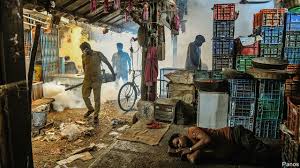
Every day, thousands of objects are lost in Indian cities—phones, documents, bags, keys, ID cards. What happens next is rarely random. Beneath official lost-and-found counters exists an informal, parallel economy that tracks, trades, returns, and sometimes resells lost belongings with surprising efficiency.
Railway stations, bus terminals, hospitals, and markets host unofficial intermediaries who specialize in locating lost items. Some operate out of small stalls, others through word-of-mouth networks. They know security guards, cleaners, porters, and shopkeepers—people who encounter lost objects first. Information travels faster through these networks than through police stations or official helplines.
Documents are the most valuable items. Aadhaar cards, PAN cards, and educational certificates are difficult to replace and easy to misuse. Informal finders often contact owners directly using information on the document, sometimes demanding a “service fee” for return. This practice exists in a legal gray zone—neither fully theft nor altruism.
Mobile phones occupy a strange space. Many are returned intact, while others are stripped for parts within hours. Some informal brokers maintain SIM access tools to identify owners before devices are locked. Others resell phones across district borders to avoid tracking. This economy thrives on speed, anonymity, and gaps in digital literacy.
Women and migrant workers rely heavily on informal recovery networks. Migrants losing documents risk job loss, detention, or eviction. NGOs often coordinate quietly with informal finders to recover IDs. In effect, these networks substitute for inaccessible or intimidating state systems.
Official systems exist but are inefficient. Police stations are overburdened, paperwork-heavy, and mistrusted. Digital portals are poorly publicized. As a result, informal networks fill the vacuum—not because they are ideal, but because they function.
Ethically, the system is ambiguous. Some intermediaries act out of goodwill. Others exploit desperation. Yet eliminating informal networks without strengthening official recovery mechanisms would leave people worse off.
The lost-and-found economy exposes how trust operates in Indian cities—not through institutions, but through human networks built on reputation, familiarity, and negotiation.
Bengaluru: The Special Investigation Team (SIT) constituted to re-investigate the alleged 2012 Dharmasthala gang rape and murder of...

Mumbai: Fashion designer Manish Malhotra gave a glimpse into the behind-the-scenes moments from his Mijwan show. He shared...

Mumbai: In a sharp critique of the ruling establishment on the occasion of Mahatma Gandhi’s birth anniversary, Maharashtra...
Hyderabad: An alleged attempt by a passenger to open the emergency door of an aircraft while it was...

At least seven people were killed and 19 others injured after a truck rammed into a Bolero pickup...

New Delhi: AAP leader and Delhi unit president Saurabh Bharadwaj, along with several party workers, was detained on...