Last Updated: October 21, 2026
Last Updated: October 21, 2026





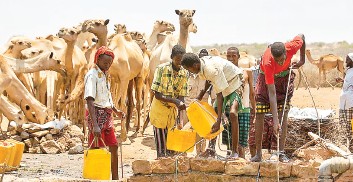
Somalia’s prolonged struggle with drought has left millions without reliable access to food, water and healthcare, exposing deep gaps in the country’s social protection system. A new report by Amnesty International finds that the absence of a functional safety net for marginalised communities has intensified poverty, forced large-scale displacement and pushed many families to seek refuge both within Somalia and across the border in Kenya’s Dadaab Refugee Complex.
The report, titled No rain, no food, no animals: The human rights impact of drought and displacement in Somalia, examines the humanitarian fallout of the four-year drought that gripped southern and central Somalia between 2020 and 2023. Researchers conducted interviews from September 2024 to March 2025 with people displaced internally and across borders, aid workers operating in Dadaab, and government officials in both Somalia and Kenya. Climate experts and government documents were also reviewed to understand the wider impact of climate-driven displacement.
Somalia is considered one of the most climate-vulnerable countries in the world. The nation has experienced more than 30 extreme climate events since 1990, ranging from droughts to intense flooding. The recent drought was among the most punishing. Over four consecutive failed rainy seasons depleted food reserves, killed livestock and dried up vital water sources such as rivers, wells, dams and boreholes. In many regions, the nearest reliable water source could be nearly 100 kilometres away. Families unable to access clean water increasingly depended on contaminated supplies, leading to a rise in waterborne diseases such as diarrhoea and cholera.
By 2023, an estimated 8.2 million people, nearly half of Somalia’s population, required humanitarian assistance. Many were in urgent need of food, drinking water and medical care. The collapse of agricultural livelihoods pushed entire villages into crisis. Farmers lost crops, herders lost animals and small businesses in rural areas were forced to shut down. Unemployment surged, leaving families without income or support.
As conditions worsened, many households relied on a long-standing credit practice known as the deni system. Under this arrangement, families could obtain food and essential items from local shops with a promise to repay after harvest. When crops failed, repayment was often attempted through grain or livestock. But repeated crop losses left families unable to clear their debts, prompting them to leave their homes in search of relief. For some, the weight of debt became an additional driver of displacement.
With farming and herding no longer viable, many drought-affected families turned to selling firewood or producing charcoal as a last resort. This shift added pressure on Somalia’s fragile environment, contributing to deforestation and soil degradation. Traditional forms of social protection, including community support networks and extended family assistance, weakened under the strain. In many cases, the need to survive led to family separation, particularly when some members migrated to seek work or humanitarian aid.
The Amnesty International report emphasises that Somalia’s national Social Protection Policy remains largely unimplemented. Without a coordinated safety net, people facing climate-related shocks have few options other than displacement. The report concludes that the state’s failure to safeguard livelihoods and ensure access to basic services has left millions exposed to hunger, disease and insecurity.
Amnesty International is urging the Somali government and its international partners to take immediate steps to address these structural gaps. The organisation is calling for expanded access to healthcare, food assistance and clean water, along with a comprehensive plan to strengthen long-term climate resilience. The report warns that without decisive action, drought will continue to drive displacement and deepen humanitarian suffering in one of the most vulnerable regions of the world.
The Ayushman Bharat Pradhan Mantri Jan Arogya Yojana (PMJAY) is proving to be a significant relief for poor...
Rescue teams recovered the bodies of four youths from the Kotri canal in Kota on Wednesday morning, after...

A balloon containing a suspected flammable chemical burst during a stage play in Siwan, injuring around 10 spectators....

State Bank of India has confirmed that 3,897 customer records containing personal information were found on the dark...

A fire in a hut in Nonapar village of Deoria district claimed three lives, including those of a...

Amit Shah paid tribute to police personnel who died in the line of duty at the National Police...

Aries: The day will be auspicious...