Last Updated: October 21, 2026
Last Updated: October 21, 2026





International Women’s Day (IWD) is celebrated globally every year on March 8 to honour the achievements of women and to promote gender equality. The day highlights women’s contributions in social, economic, cultural, and political spheres while also drawing attention to ongoing challenges such as gender discrimination, unequal pay, and limited representation in leadership roles.
Today, International Women’s Day has evolved into a global movement that encourages governments, organizations, and communities to promote women’s empowerment and ensure equal opportunities. While the day is often celebrated with events, campaigns, and recognition programmes, its origins are rooted in activism and the struggle for basic rights.
The roots of International Women’s Day go back to the early 20th century, when women in Europe and North America began demanding better working conditions, equal pay, and voting rights. At the time, many women worked long hours in factories under unsafe conditions with little legal protection.
One of the earliest milestones came in 1909, when the Socialist Party of America organized the first National Women’s Day in the United States on February 28. The event aimed to raise awareness about women workers’ rights and social equality.
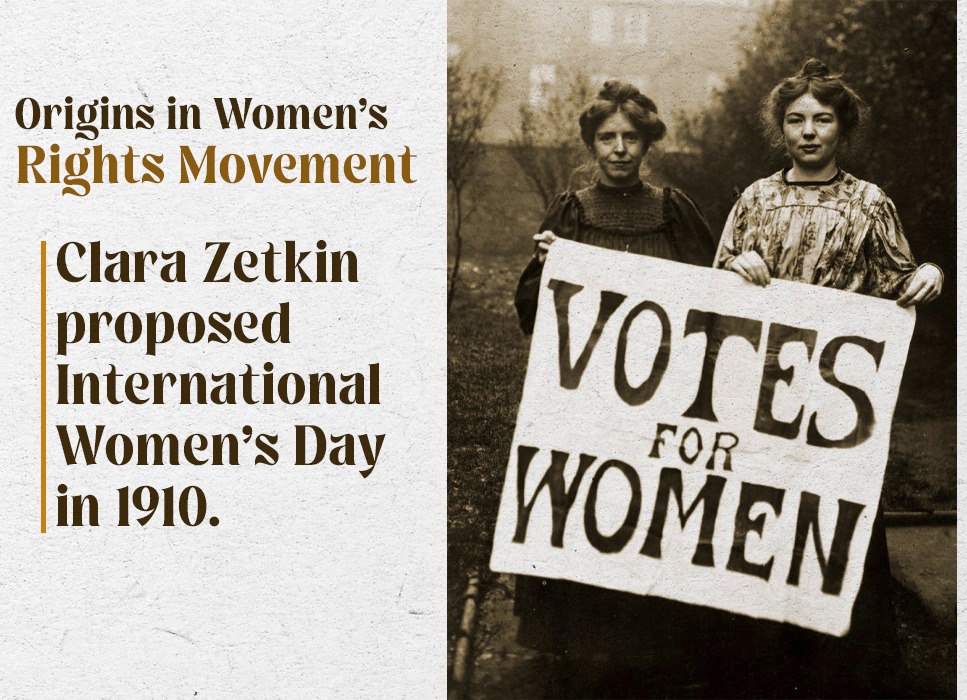
In 1910, German activist Clara Zetkin proposed the idea of an annual international day dedicated to women’s rights at the International Socialist Women’s Conference in Copenhagen. Delegates from several countries supported the idea, laying the foundation for what later became International Women’s Day.
The first official International Women’s Day celebrations took place in 1911 in countries such as Austria, Denmark, Germany, and Switzerland, where more than one million people participated in rallies advocating women’s rights and equality.
The date March 8 became significant after a major protest by women workers in Russia in 1917. Women in Petrograd (now St. Petersburg) organized a strike demanding “bread and peace,” protesting against food shortages and World War I. The protest helped trigger the Russian Revolution and eventually led to women gaining the right to vote in Russia.
In 1921, March 8 was officially adopted as the permanent date for International Women’s Day, and the observance gradually spread to more countries around the world.
International Women’s Day gained global recognition when the United Nations began celebrating it in 1975, which was declared International Women’s Year. Two years later, in 1977, the UN officially recognized March 8 as a day for women’s rights and world peace.
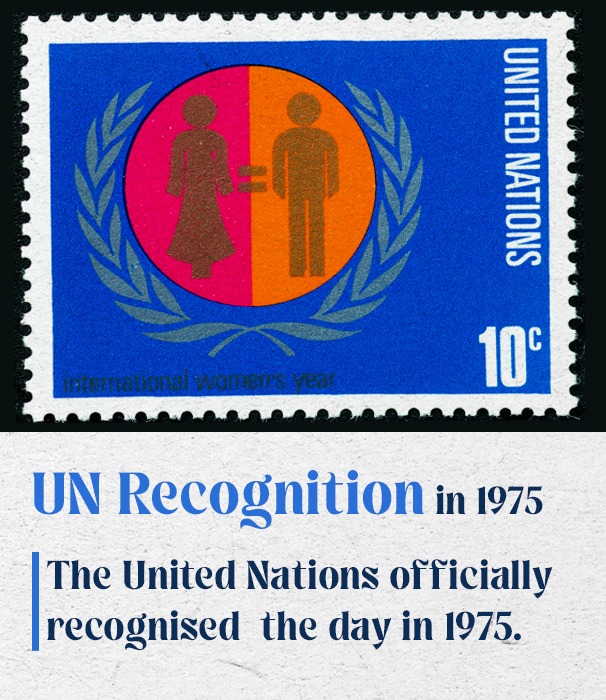
Since then, the UN and various organizations have used the day to promote awareness campaigns, gender equality initiatives, and policy discussions aimed at empowering women worldwide.
International Women’s Day is more than a celebration it is also a call to action. The day recognizes the achievements of women while encouraging societies to address issues that continue to affect women globally.
Key areas highlighted on this day include:
Gender Equality: Promoting equal rights and opportunities for women in education, employment, and leadership.
Economic Empowerment: Addressing the gender pay gap and improving access to jobs and entrepreneurship opportunities.
Education and Skills Development: Encouraging education for girls and women worldwide.
Safety and Legal Rights: Raising awareness about violence against women and advocating stronger legal protections.
Political Representation: Promoting greater participation of women in governance and decision-making roles.
Through conferences, rallies, campaigns, and social media initiatives, International Women’s Day encourages individuals and organizations to reflect on progress made and identify areas where more work is needed.
International Women’s Day is celebrated in more than 100 countries and is even recognized as a public holiday in several nations. The celebrations vary across cultures but generally include:
Awareness campaigns and conferences on women’s rights
Recognition programmes honouring women achievers
Educational events and workshops
Social media movements promoting gender equality
Community gatherings, cultural performances, and charity events
In some countries, it is also customary for people to honour women in their lives with gifts, flowers, or appreciation messages.
Despite significant progress in women’s rights over the past century, gender inequality still exists in many parts of the world. Women continue to face challenges such as unequal wages, limited access to leadership roles, and gender-based violence.
International Women’s Day therefore remains an important reminder that the fight for equality is ongoing. The day encourages societies to celebrate achievements while also committing to building a future where women and men have equal opportunities.
Ultimately, International Women’s Day is not only about recognizing women’s contributions but also about inspiring change. By promoting equality, inclusion, and empowerment, the observance aims to create a world where every woman and girl can reach her full potential.
Reduced water levels at Har Ki Pauri and other Haridwar ghats have inconvenienced pilgrims during the Upper Ganga...

Six people returning from a Dussehra Mela were seriously injured when a car hit them on National Highway...

A bus travelling from Pachiound to Ramnagar fell into a gorge at Gulli Gula in Udhampur district. Nine...

Start your day with The Savera Morning Brief, bringing you the latest news from India and around the...

Union Home Minister Amit Shah will pay tribute to police martyrs at the National Police Memorial in New...

Four more people, including two women, have been arrested in the Tiger Shroff firing case. Delhi Police are...
Aries: The day will be auspicious...