Last Updated: October 8, 2026
Last Updated: October 8, 2026





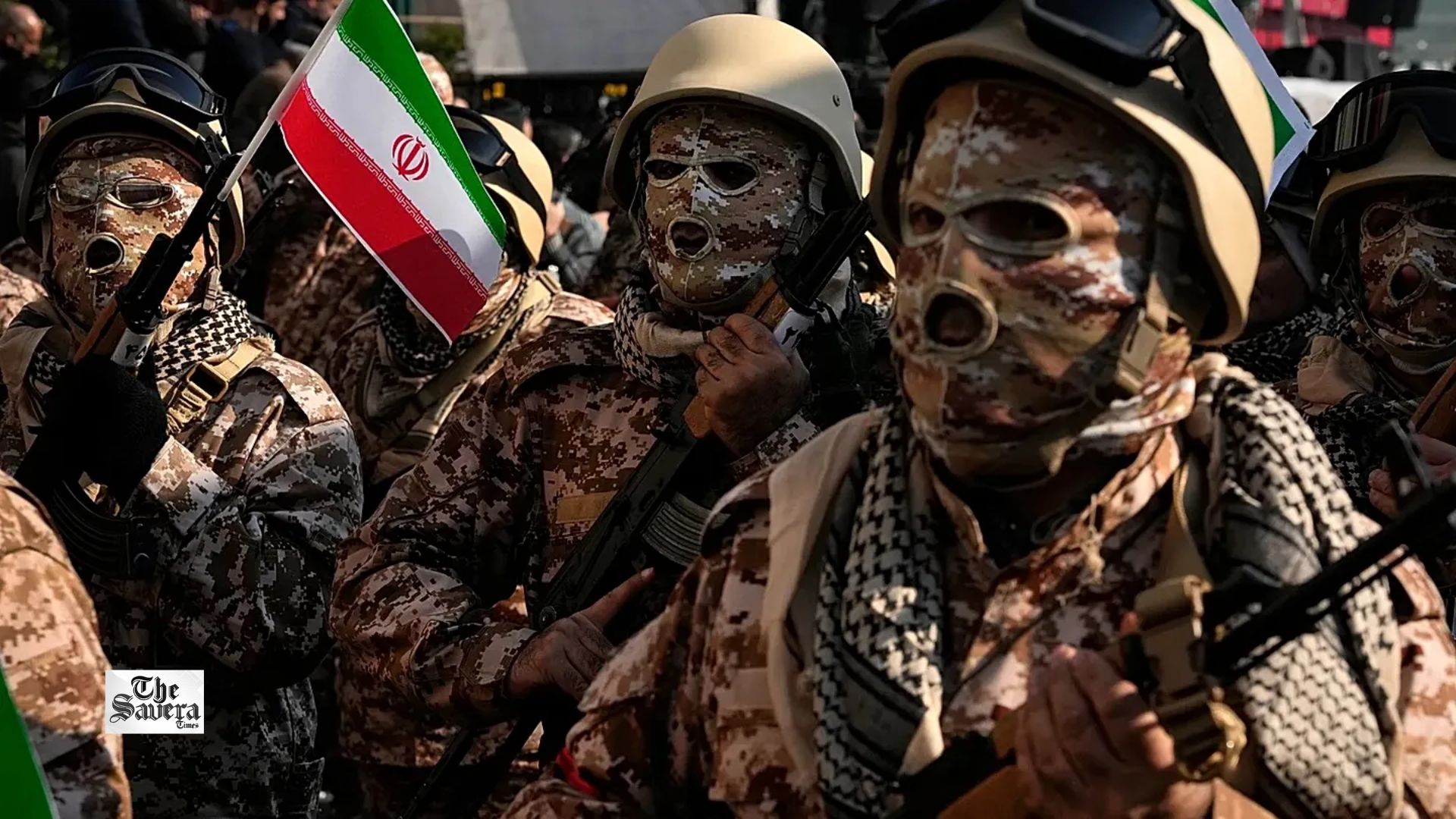
Tehran: Iran will carry out preemptive military operations if necessary to prevent what it describes as aggression by the “enemy”, Iranian Army spokesman Mohammad Akraminia has said, warning that the country’s military doctrine has shifted from a defensive approach to an offensive one.
Akraminia made the remarks in an interview with semi-official Fars news agency published on Wednesday, saying Iranian armed forces had previously carried out operations intended to prevent attacks.
He said Iran had adopted the new military doctrine during its war with the United States and Israel and would continue to follow it.
Iran says preemptive strikes are part of new doctrine
According to Akraminia, Iranian armed forces have carried out several operations under the new approach, including a missile strike against a US base in Jordan in late July and missile and drone attacks in recent months against bases of groups Iran describes as “counter-revolutionary and separatist” in Iraq’s semi-autonomous Kurdistan region.
He described the strike against the US base as preemptive and said it had allowed Iran to take the initiative and prevent further action by its adversaries.
Akraminia said preemptive military operations could be considered legitimate when they complied with principles including necessity, urgency and proportionality.
Commenting on the possibility of a US ground invasion of Iran, he said he believed the United States would not launch such an operation.
“My assessment is that the Americans will not dare launch a ground invasion,” Akraminia said.
Iran plans to increase missile range
The Iranian Army spokesman also said Iran had decided to increase the range of its missiles following its conflict with the United States and Israel.
“In this war, we came to the conclusion that we must definitely increase the range of our missiles, and we have now embarked on that path,” he said.
Akraminia said the move was linked to the deployment of opposing forces farther from Iran’s coastline, at distances of up to 1,000 kilometres.
“We will continue to upgrade these missiles,” he said.
He added that Iran had also made significant improvements in the speed and accuracy of its missiles, claiming that future generations would be even faster and more precise.
Iran-Israel-US conflict and ceasefire
On February 28, Israel and the United States launched joint attacks on Tehran and other Iranian cities, following which Iran responded with waves of missile and drone attacks targeting Israel as well as US bases and assets in the region. Iran also tightened its control over the Strait of Hormuz.
A ceasefire between the warring parties was reached on April 8.
On June 18, Iran and the United States signed a memorandum of understanding (MoU) aimed at ending the conflict in the region on all fronts. Under the agreement, the two sides were scheduled to hold negotiations within 60 days, with the deadline set for August 17, to reach a final agreement.
However, the two countries failed to make sufficient progress towards a final deal as tensions continued to escalate.
US President Donald Trump says the Iran conflict will end soon and predicts a sharp fall in oil...

US President Donald Trump has renewed his push for the Nobel Peace Prize, claiming he settled eight wars...

The White House has called India one of the United States' strongest allies and praised the relationship between...

Pakistan continues to use policy of creating instability in the neighbourhood through proxy groups as it is cheap,...

Kabul: Two civilians were injured in a blast in the northern Afghan province of Badakhshan on Wednesday, provincial...

As concerns grew around the world over a plague outbreak, the World Health Organisation (WHO) said on Tuesday...

Aries: The day will be auspicious...