Iran strongly condemned the recent attack on a school in its territory during a session of the United Nations Human Rights Council (UNHRC), calling it a “crime against humanity”.
Iran’s Foreign Minister Abbas Araghchi addressed the council during an urgent debate, highlighting the devastating impact of the strike on civilians, especially children.
The session was convened specifically to discuss the February 28 airstrike on a girls’ school in Minab, which has triggered global concern and calls for accountability.
Deadly attack on school shocks global community
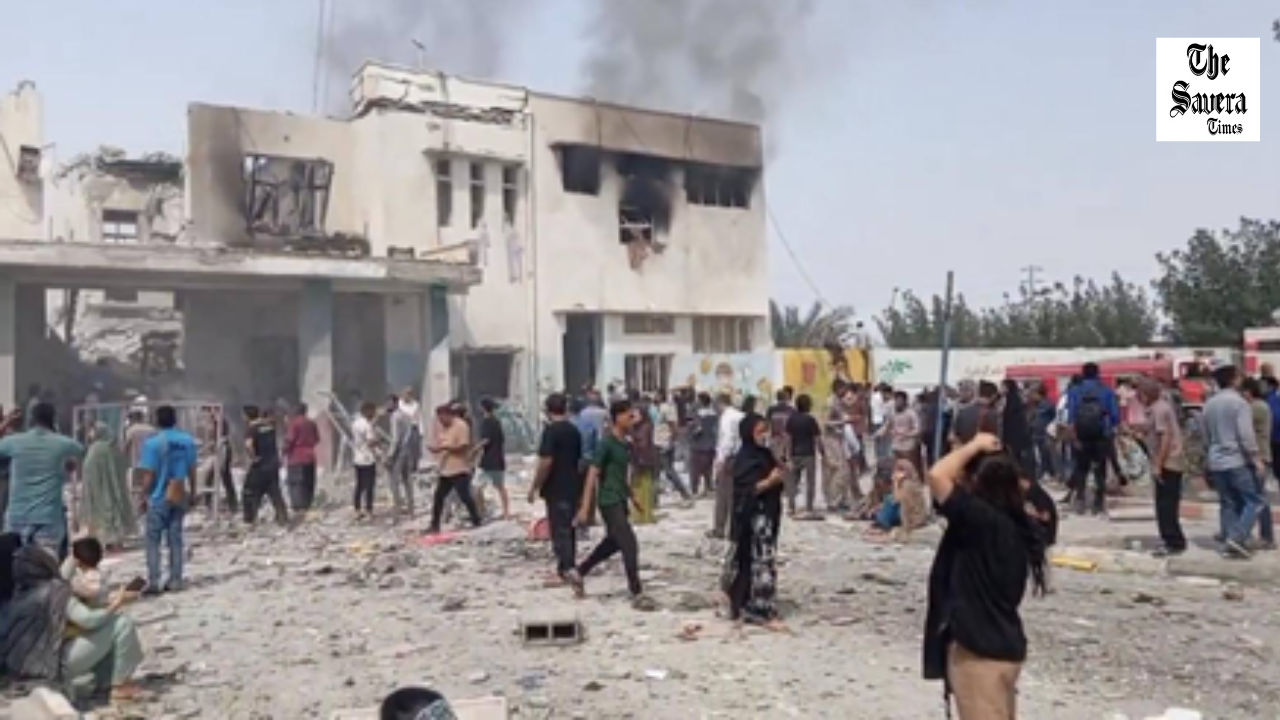
The incident involved a missile strike on the Shajareh Tayyebeh school in Minab, southern Iran, which resulted in massive civilian casualties.
According to reports, over 170 people, mostly students and teachers, were killed, making it one of the deadliest incidents of the ongoing conflict.
Visuals of destroyed classrooms and grieving families have drawn widespread condemnation, with UN officials describing the attack as deeply disturbing and unacceptable.
Iran terms attack a ‘deliberate act’
Addressing the UNHRC, Iran’s foreign minister alleged that the attack was “calculated and targeted,” accusing those responsible of deliberately striking a civilian institution.
He stressed that targeting schools and children violates international humanitarian law and cannot be justified under any circumstances.
Iran has blamed the US-Israel coalition for the strike, although investigations into responsibility are still ongoing.
UN calls for investigation and accountability
The United Nations and several human rights organisations have called for a transparent and impartial investigation into the attack.
UN human rights officials emphasised that those responsible must be held accountable, stating that attacks on schools and civilians may amount to war crimes.
The UN rights chief also highlighted that children are the most vulnerable victims in conflicts and urged all parties to adhere strictly to international laws protecting civilians.
Debate focuses on protection of children
The UNHRC debate centred on the protection of children and educational institutions during armed conflicts, a key principle under international law.
Experts warned that attacks on schools not only cause immediate loss of life but also have long-term consequences on education, mental health, and societal stability.
The discussion also underscored the need for stronger global mechanisms to prevent such incidents in the future.
Growing international outrage
The school strike has sparked widespread outrage among global organisations, activists, and governments.
Human rights groups, including Amnesty International, have suggested that the attack may constitute a serious violation of the laws of war, urging independent probes.
The incident has further intensified tensions in the region and raised concerns about the humanitarian impact of the ongoing conflict.
A call for justice and restraint
Iran concluded its address by urging the international community to take strong action against those responsible and ensure justice for the victims.
The country also called for immediate steps to prevent further civilian casualties and protect critical infrastructure such as schools and hospitals.
The UNHRC session highlighted the urgent need for accountability, restraint, and adherence to international humanitarian law, as the conflict continues to impact innocent lives.