Last Updated: October 1, 2026
Last Updated: October 1, 2026





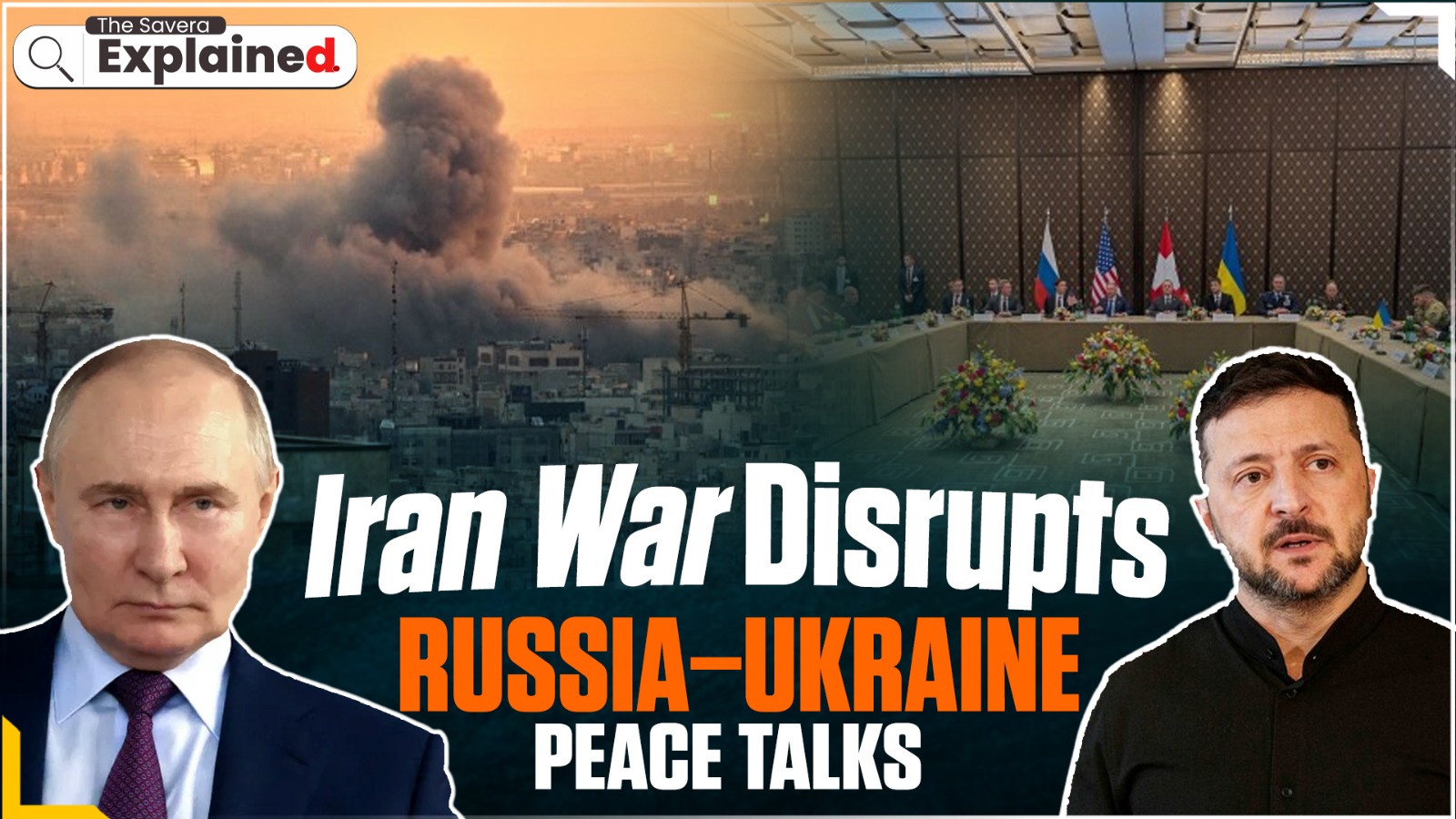
The rapidly escalating conflict in West Asia following the killing of Iran’s Supreme Leader Ayatollah Ali Khamenei in a US–Israeli strike is sending shockwaves far beyond the Middle East.
While Iran has launched retaliatory attacks on Israel and targets across the Gulf, the geopolitical fallout is now affecting diplomacy surrounding another major global conflict — the Russia–Ukraine war.
What initially appeared to be a regional crisis is now threatening to derail already fragile efforts to negotiate peace in Europe’s bloodiest war since World War II.
Peace Talks Face Immediate Disruption
The most immediate impact of the Iran conflict is the disruption of diplomatic efforts aimed at ending Russia’s invasion of Ukraine.
The United States has been attempting to mediate negotiations between Moscow and Kyiv, with President Donald Trump pushing for a diplomatic breakthrough.
Ukrainian President Volodymyr Zelensky recently revealed that a third round of trilateral negotiations involving Ukrainian, American, and Russian officials had tentatively been scheduled for Thursday and Friday in Abu Dhabi. However, the situation changed quickly after Iran launched retaliatory strikes across the Gulf region.
The United Arab Emirates — the proposed venue for the talks — is among the countries targeted by Iranian attacks. As a result, security concerns and shifting geopolitical priorities have cast uncertainty over the meeting. A source close to the Ukrainian negotiating team told AFP that there is currently no confirmed date for the next round of talks.
Zelensky has suggested alternative venues such as Turkey or Switzerland, both of which have hosted previous diplomatic engagements related to the war.
Diplomatic Focus Shifts to the Middle East
Another major challenge for the Ukraine negotiations is the diversion of diplomatic attention toward the Iran crisis. Several American diplomats involved in facilitating Russia–Ukraine talks were also leading negotiations with Iran before those discussions collapsed last month.
Now, with tensions escalating in West Asia and Iranian proxy group Hezbollah joining the conflict in Lebanon, Washington’s diplomatic bandwidth is likely to be stretched. Analysts warn that managing the Iran crisis will become the top priority for the United States in the short term.
Ukrainian political analyst Volodymyr Fesenko noted that while negotiations on Ukraine may continue eventually, the Iran war will dominate Washington’s strategic focus for now. Still, he argued that the scale of the Ukraine war is too significant for global powers to ignore indefinitely.
Military Supply Concerns for Ukraine
Beyond diplomacy, the Iran conflict may also affect Ukraine’s military support from Western allies. Zelensky has already acknowledged concerns that prolonged fighting in the Middle East could delay or reduce US deliveries of ammunition for air defence systems used to protect Ukraine’s critical infrastructure, particularly energy facilities.
Ukraine relies heavily on Western-supplied air defence systems to counter Russian missile and drone attacks. At the same time, Russia has increasingly deployed Iranian-designed Shahed drones throughout its invasion.
In response, Kyiv has developed drone interceptors capable of destroying incoming attack drones mid-air. Zelensky has proposed a potential swap with Western allies in West Asia: Ukraine would provide its interceptor drones in exchange for advanced air defence missiles such as PAC-3 systems.
Rising Oil Prices Strengthen Russia’s War Finances
Perhaps the most significant indirect consequence of the Iran war is its impact on global energy markets. The conflict — including Iranian strikes targeting Gulf energy infrastructure — has already pushed oil prices higher.
This development could benefit Russia financially. Ukraine has been targeting Russian oil and gas infrastructure in an attempt to weaken Moscow’s war funding, while Western sanctions have also aimed to restrict Russia’s energy exports.
However, higher global oil prices could offset these pressures by boosting Russian revenues. Analysts warn that prolonged instability in the Persian Gulf could strengthen Moscow’s ability to finance its war effort.
A Conflict With Global Consequences
While the Iran war may seem geographically distant from Ukraine’s battlefields, its ripple effects highlight how interconnected modern geopolitical crises have become. From disrupted peace negotiations to shifting diplomatic priorities and rising oil revenues for Russia, the Middle East conflict is adding another layer of complexity to an already difficult path toward ending the war in Ukraine.
Israel PM Benjamin Netanyahu has claimed that a flydubai pilot wanted to crash the aircraft and praised passengers...
Donald Trump jokingly called Google CEO Sundar Pichai a “monster” during a White House interaction, with Pichai responding...

A spelling error on a White House document linked to Donald Trump’s Super Intelligence initiative has gone viral...

An Indian captain reportedly fought back after an alleged cockpit attack on a flydubai flight, helping avert a...

Imagine the world’s biggest diesel exporter turning off its export taps. That is the concern after US President...
Washington/Baghdad: The United States and its allies have officially ended ‘Operation Inherent Resolve’ against the Islamic State (IS)...
Aries: The day will be auspicious...