Last Updated: October 20, 2026
Last Updated: October 20, 2026





Abhishek Vij
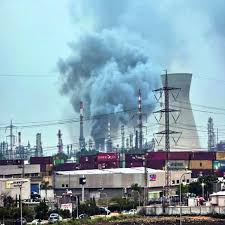
The ongoing conflict between the United States, Israel, and Iran has created a landscape of devastation for the entire world. When Israel attacked Iran’s South Pars gas field on Thursday, Iran retaliated by raining bombs upon the oil wells and gas refineries of neighboring nations situated in the Gulf region. Qatar—a major global hub for natural gas exports—was specifically targeted.
Meanwhile, Iran has begun levying an entry tax on vessels passing through the Strait of Hormuz. Despite assurances from the U.S. and Europe, the passage through the Strait of Hormuz remains closed. Condemning the bombardment of oil and gas infrastructure carried out by Iran over the past 48 hours—and characterizing it as a grave threat—Prime Minister Narendra Modi has held discussions with the President of France, the Prime Minister of Malaysia, the Sultan of Oman, and the King of Jordan. PM Modi stated that India hopes for coordinated efforts toward peace; the nation has reiterated its commitment to de-escalating tensions and restoring peace and stability through dialogue and diplomacy. The attacks launched by Iran against the oil and gas sectors have had a profound impact on India.
The country’s stock market reeled, witnessing an unprecedented plunge of 2,500 points. This marks a record decline since June 2024. Once again, investors have lost trillions of rupees. Due to the attacks on refineries and oil wells, crude oil prices have doubledsoaring to $150 per barrel up from a previous level of $70 per barrel. Analysts predict that this figure could climb as high as $180. Three weeks have elapsed since the outbreak of hostilities; yet, rather than moving toward a resolution, the conflict continues to intensify. President Trump appears visibly flustered. He stated that Israel attacked an Iranian gas field without informing us. Israel, too, acknowledged that it did not drag the United States into this attack. Given these circumstances, an “inflation bomb” is poised to explode in India. It is true that, thus far, the Indian government has prevented petrol and diesel prices from rising—even as these prices have surged by 25% to 40% across a vast region stretching from Europe to Pakistan.
Experts question how much longer this control can be sustained. Once the price for India crosses the $130-per-barrel mark, we may witness a rise in domestic fuel prices as early as April. For the moment, the price of premium petrol in India has already risen by Rs2.35 per liter. Food delivery companies have also hiked their rates. The looming days are already casting their shadow ahead of time; driven by fears of a severe gas shortage, people have begun queuing up outside gas distribution centers. Crowds are now expected to swell at petrol pumps as well, causing distress to the general public. Should the petroleum crisis intensify, it will trigger a shortage of urea fertilizer, which, in turn, will lead to a decline in agricultural productivity.
Grain yields will drop, and prices will soar. Consequently, the common man will be confronted with a multitude of crises. Driven by their respective egos, the warring nations ought to realize that they are, in effect, shooting themselves in the foot. If retaliatory strikes against the energy infrastructure of Gulf nations result in widespread devastation, that infrastructure will remain crippled for a prolonged period—even after the war concludes—leaving the supply chain in a state of indefinite paralysis.
Good Evening Viewers! Catch up on the day's biggest stories with The Savera Times Evening Bulletin. Get the...

Congress leaders continued their protest outside the Jaipur Police Commissionerate on Tuesday, demanding the registration of a zero...
On the auspicious occasion of Vijayadashami, Prime Minister Narendra Modi on Tuesday called on the countrymen to unite...
A historic milestone was achieved on Tuesday in the expansion of Chhattisgarh's rail networkA historic milestone was achieved...

Model Shraddha Dubey, one of the main accused in the death of Lucknow businessman Shiv Sharma, has been...

Rashtriya Swayamsevak Sangh (RSS) chief Mohan Bhagwat on Tuesday called for strengthening national unity, social harmony, indigenous practices...
Aries: The day will be auspicious...