Last Updated: November 5, 2026
Last Updated: November 5, 2026





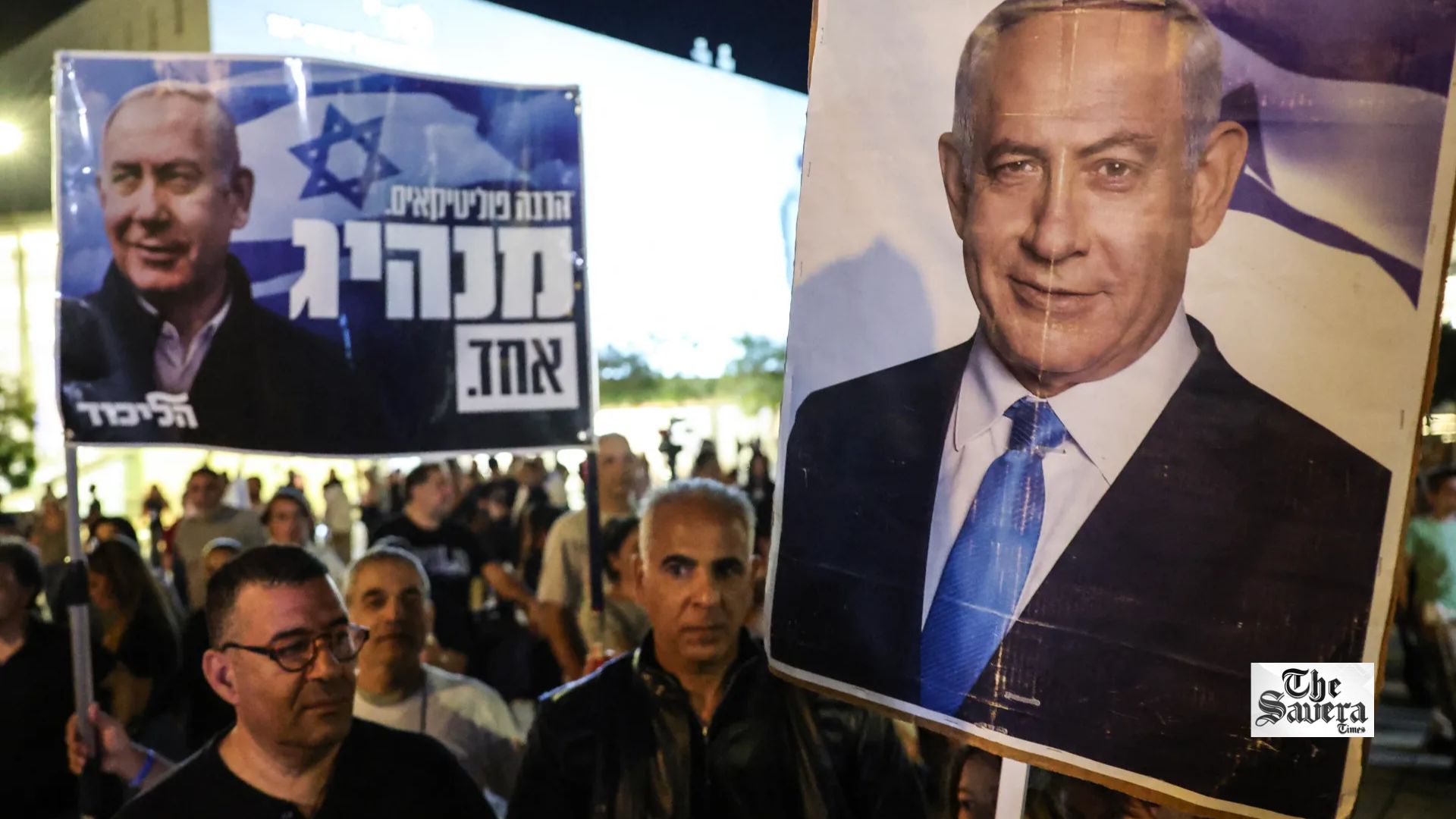
Jerusalem: Israeli Prime Minister Benjamin Netanyahu faces a growing crisis after his long-standing ally United Torah Judaism (UTJ), an ultra-Orthodox party, refused to recommend him to become prime minister during talks with President Isaac Herzog on forming a new government.
The UTJ move comes as Herzog holds talks with political parties into a second day as neither Netanyahu’s bloc nor the opposition won enough seats to win a majority in the 120-seat Knesset after the October 27 parliamentary elections.
The UTJ move has hurt Netanyahu’s situation.
United Torah Judaism Does Not Recommend Anyone To Become Prime Minister
United Torah Judaism, which currently has seven seats in the Knesset, decided at the talks with Herzog on Thursday they would not recommend anyone to become prime minister.
The party consists of two wings Degel HaTorah, which has four seats, and Agudat Yisrael, which has three seats both of which were told by their spiritual leaders not to recommend Netanyahu or his main opponent, Gadi Eisenkot.
The move represents a major turning point for the party which has long been allied with Netanyahu. The decision was made after Netanyahu’s outgoing government failed to pass laws protecting the draft exemptions for ultra-Orthodox Jewish men studying in religious seminaries.
UTJ spokespeople also said they would not recommend someone to form a government unless there was legislation protecting the exemptions.
Herzog Holds Talks Into Who Will Be Next Prime Minister
President Isaac Herzog held talks with party representatives from the 26th Knesset on Wednesday. They continued on Thursday with each party being asked to recommend someone to become prime minister.
Herzog will now meet the two separately to determine who will be given the chance to form a government.
As mandated by Israeli law, the President must appoint the MP he believes has the best chance of forming a coalition. This MP will then be given 28 days to form a government, which can be extended by up to 14 days.
Herzog has until November 11 to decide, and has called for political parties to try and come to an agreement to avoid another election.
Netanyahu’s Bloc Fails To Win Majority
The October 27 election has left the country with a split parliament.
While Netanyahu’s Likud party won the most seats with 27, his nationalist-religion bloc only won 53 seats — falling short of the 61 needed to run the country.
The four-party bloc led by opposition leader Gadi Eisenkot won 48 seats, while the two Arab led parties won 19 seats.
Eisenkot also received a boost after the Ra’am party, an Arab led party, announced their eight MPs would recommend him to become prime minister. Reports during the talks on Thursday said Eisenkot had the backing of 56 MPs, compared to 46 for Netanyahu.
Controversy Over Alleged Election Interference
The formation of government has also been plagued by controversy.
Netanyahu and his Likud party have cast doubt on the election results, claiming Arab-led parties gained from voter fraud and potential foreign interference. But Israel’s Central Election Committee said their investigation found no evidence of irregularities which would have impacted the election results.
The President has also warned political leaders not to damage public trust in the election process.
Netanyahu will act as a caretaker PM until a new government is formed. If no candidate can form a coalition, the country could face another parliamentary election.
India has stepped up engagement with African diamond-producing countries, focusing on responsible sourcing, supply chains and sustainable practices...

Several European flights were diverted or subjected to security checks on November 5 following fresh bomb threats. The...

New Delhi: The Supreme Court on Thursday issued notice on a Public Interest Litigation (PIL) seeking directions to...

At least one person was killed after a shop roof collapsed during construction work in Karachi. Rescue teams...

The US dollar index and Treasury yields fell sharply as investors increasingly priced in a Democratic sweep in...
The Baloch Liberation Army has claimed responsibility for 25 operations across Balochistan, alleging that 40 Pakistani security personnel...

Aries: The day will be auspicious...