Last Updated: October 16, 2026
Last Updated: October 16, 2026





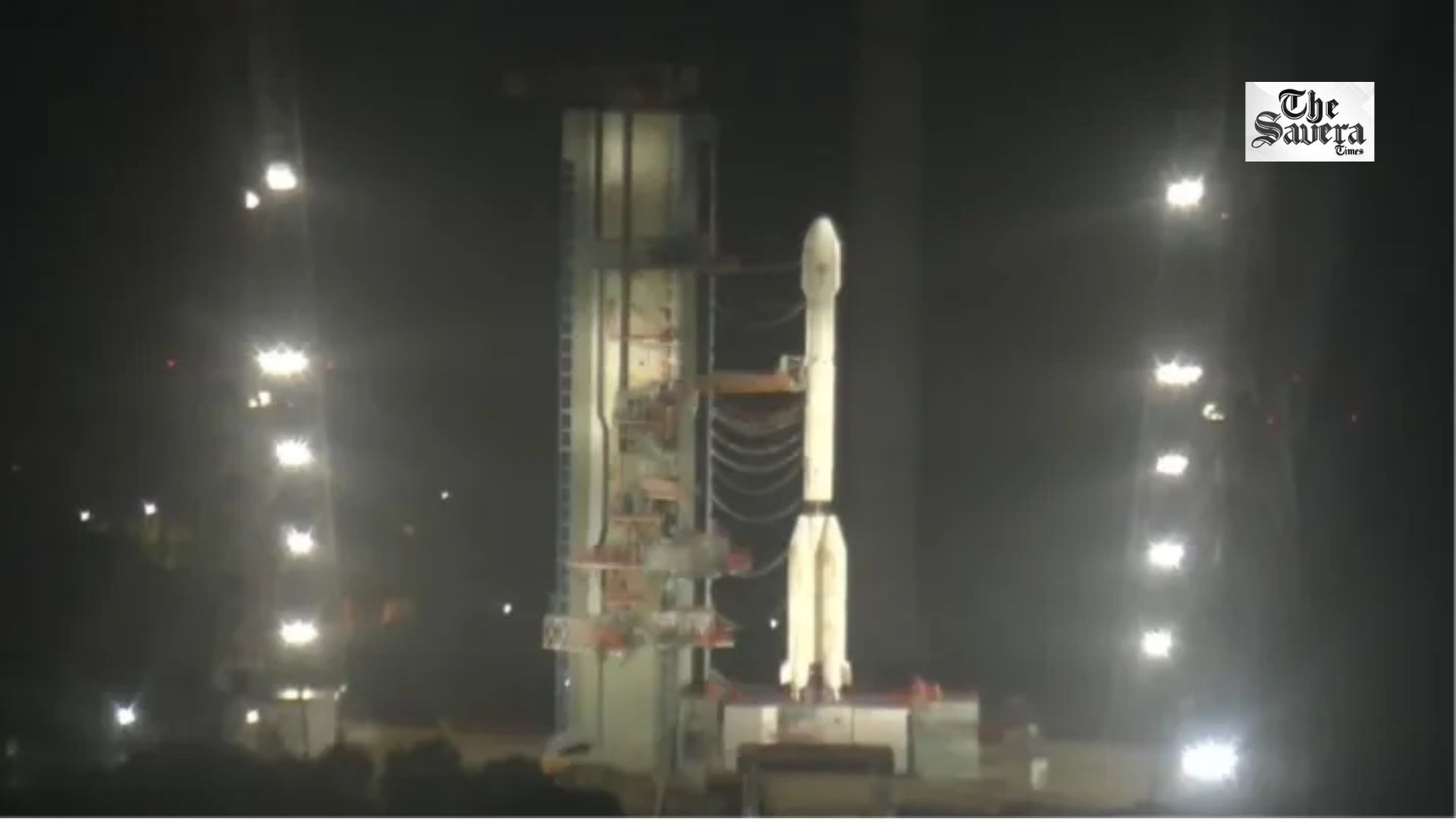
The Indian Space Research Organisation (ISRO) successfully launched the GSLV-F17 rocket carrying the EOS-05 Earth observation satellite from the Satish Dhawan Space Centre in Sriharikota early Friday, marking another significant achievement for India’s space programme.
The 51.7-metre-tall GSLV-F17 lifted off from the second launch pad at 2:55 am on September 4, carrying the approximately 2,367-kg EOS-05 satellite. The mission was the 19th flight of India’s Geosynchronous Satellite Launch Vehicle (GSLV).
Successful launch from Sriharikota
The launch took place amid rain at the Sriharikota spaceport. After a flight of about 19 minutes, the rocket successfully placed EOS-05 into its intended sub-geosynchronous transfer orbit, completing the primary mission objective.
The successful mission marks an important step in India’s efforts to strengthen its indigenous satellite-launch and Earth-observation capabilities.
What is EOS-05?
EOS-05 is an advanced Earth-observation spacecraft designed to become India’s first imaging satellite to operate from geosynchronous orbit. From an altitude of nearly 36,000 km, such an orbit allows the satellite to repeatedly observe a large, fixed region rather than passing over an area only at intervals like conventional low-Earth-orbit satellites.
The satellite is expected to provide valuable Earth-observation data for applications including agriculture, water resources, environmental monitoring, forestry, ocean resources and disaster management.
Why the mission matters
The EOS-05 mission can strengthen India’s ability to monitor large regions and respond to rapidly developing situations. More frequent observations could support the monitoring of floods, cyclones, landslides, forest fires and other natural disasters.
The satellite’s Earth-observation capabilities can also contribute to agricultural planning, water-resource management and environmental assessment.
GSLV-F17: India’s heavy-lift capability
GSLV-F17 is a three-stage launch vehicle combining solid, liquid and cryogenic propulsion. Its indigenous cryogenic upper stage enables ISRO to place heavier spacecraft into high-altitude orbits.
The successful launch demonstrates India’s growing capability to develop, launch and operate sophisticated spacecraft using its own space infrastructure.
With EOS-05 successfully deployed, ISRO has added another important capability to India’s growing Earth-observation and space technology programme.
Varanasi: A massive explosion triggered the collapse of a two-storey building in Uttar Pradesh’s Varanasi on Thursday, leaving...

Sofia: A vessel sailing under the flag of San Marino caught fire in the Black Sea near Romania...

New Delhi: Accusing the Congress of double-speak on women dignity, the Bharatiya Janata Party (BJP) Mahila Morcha on...

New Delhi: NITI Aayog’s Frontier Tech Hub released a Data Centre Evaluation Framework to help states plan for...

New Delhi: The Supreme Court on Thursday referred the cheque dishonour cases against actor and comedian Rajpal Yadav...

Mirzapur: Uttar Pradesh Chief Minister Yogi Adityanath on Thursday accused the Samajwadi Party (SP) and the Congress of...
Aries: The day will be auspicious...