Last Updated: October 14, 2026
Last Updated: October 14, 2026





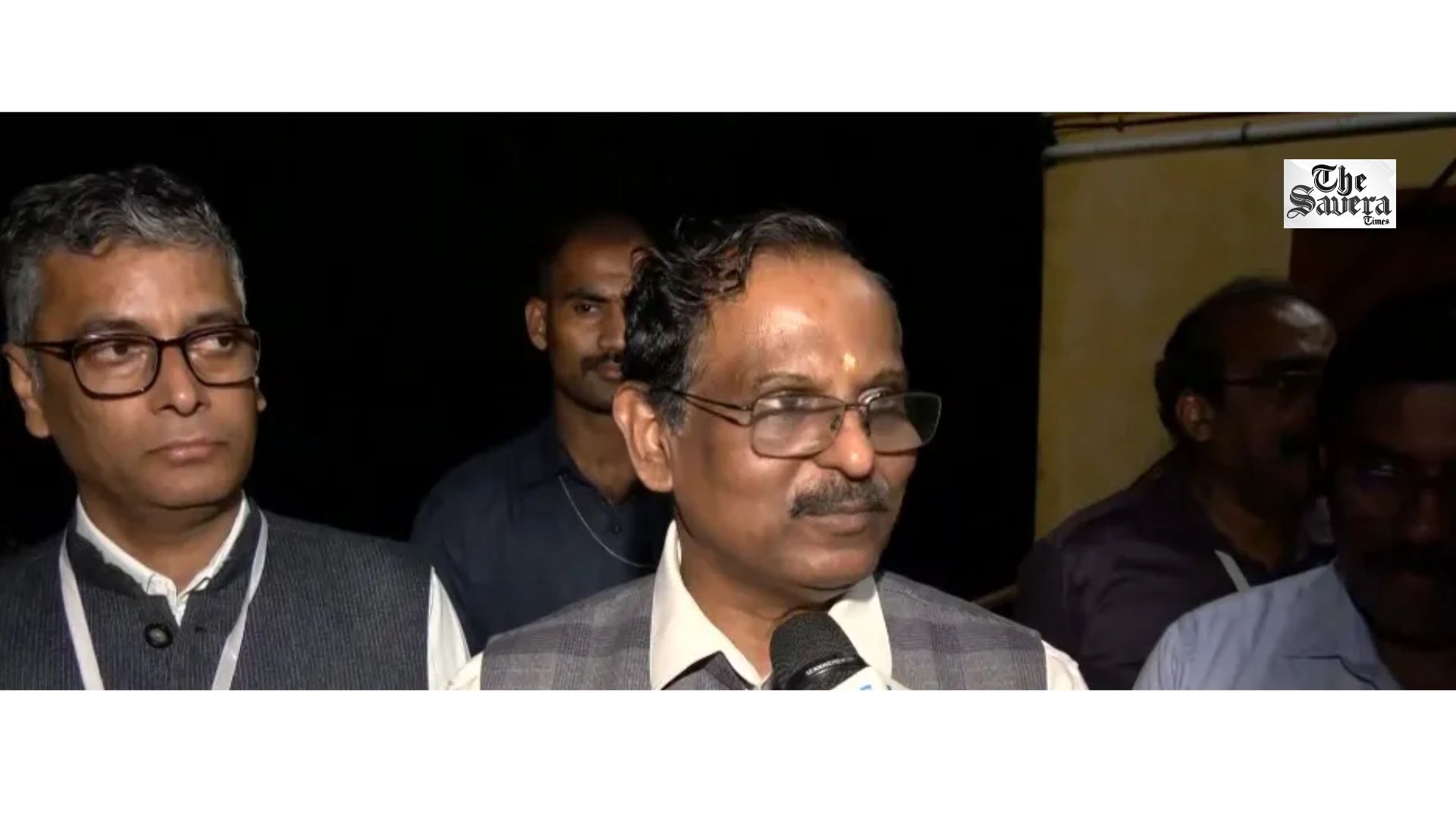
Sriharikota: ISRO Chairman Dr V Narayanan has defended the growing role of private companies in India’s space sector, saying the Indian Space Research Organisation (ISRO) alone cannot meet the country’s rapidly increasing demand for satellites and space-based services.
Speaking about criticism over the increasing participation of private players in the space sector, Narayanan said India’s space economy and overall space ecosystem need to expand to meet future requirements.
“Please understand, our country’s space economy has to grow and the space ecosystem has to grow because ISRO alone cannot meet the needs of the country. Right now, we have 56 satellites, but the requirement is for hundreds of satellites,” he said.
ISRO backs wider private participation
Narayanan said the government’s space sector reforms were aimed at enabling greater participation from private companies and expanding India’s space industry.
He said ISRO would continue to support these efforts and help build a stronger space ecosystem.
“We have to really ensure that the space ecosystem in our country grows. Therefore, we will have a lot of job opportunities, the economy will grow and more satellites will be produced,” Narayanan said.
He said the expansion of the sector would not only increase India’s satellite capacity but also create employment opportunities and contribute to economic growth.
GSLV-F17 launch a proud moment for India
Commenting on the successful GSLV-F17 launch carrying EOS-05, Narayanan described the mission as an important achievement for India’s space programme.
“This mission is a very important mission and a proud moment for every Indian because, for the first time, the heaviest satellite has been lifted by the GSLV Mark II vehicle,” he said.
Narayanan said the GSLV Mark II’s capability had improved significantly since the beginning of the programme. Its initial capacity was 1,536 kg, while the vehicle has now achieved nearly a 40 per cent improvement in capability.
The GSLV-F17 carrying EOS-05 successfully lifted off from the Satish Dhawan Space Centre in Sriharikota at 2:55 a.m. on Friday, marking another milestone for India’s space programme.
Kulasekarapattinam spaceport, Gaganyaan on track
Narayanan also provided an update on the Kulasekarapattinam spaceport project, saying construction was progressing well and remained on schedule. The project is expected to be completed by March.
On India’s human spaceflight programme, he said the Gaganyaan mission was progressing as planned, with the first uncrewed mission targeted for this year.
The developments come as India continues to expand its space capabilities while encouraging greater participation from private companies. According to Narayanan, a larger space ecosystem will be essential for meeting the country’s growing demand for satellites and space-based services.
Singapore: Two Singapore-registered container vessels were reportedly struck by unknown projectiles while transiting the Strait of Hormuz on...

Shimla: The Himachal Pradesh government has constituted a four-member commission to examine the reorganisation of administrative units in...
New Delhi: The Supreme Court on Wednesday listed for November 17 the appeal filed by self-styled godman Asaram...
Ranchi: Doctors in Jharkhand launched a protest on Wednesday over a slew of demands concerning their safety and...

Greater Noida: Police and Anti-Narcotics Team in Uttar Pradesh’s Greater Noida have seized ‘ganja’ worth Rs 1 crore...

New Delhi: The Enforcement Directorate (ED) has attached assets worth Rs 2,032.81 crore belonging to Reliance Power Ltd...